Author: National Center for Civil and Human Rights

  • New Reconstruction Era Exhibition Shows How Reform and Resistance Have Shaped U.S. Civil Rights

    New Reconstruction Era Exhibition Shows How Reform and Resistance Have Shaped U.S. Civil Rights

    National Center for Civil and Human Rights Unveils Broken Promises Gallery “Guided” by Ida B. Wells

    ATLANTA, GEORGIA / ACCESS Newswire / December 5, 2025 / The National Center for Civil and Human Rights’ new gallery, “Broken Promises,” is a permanent exhibit on Reconstruction-the period after the Civil War and Emancipation when America first attempted to build a multi-racial democracy. The Center invites people to experience the new gallery which opens to the public today, December 5, 2025, as part of the Center’s $58 million expansion.
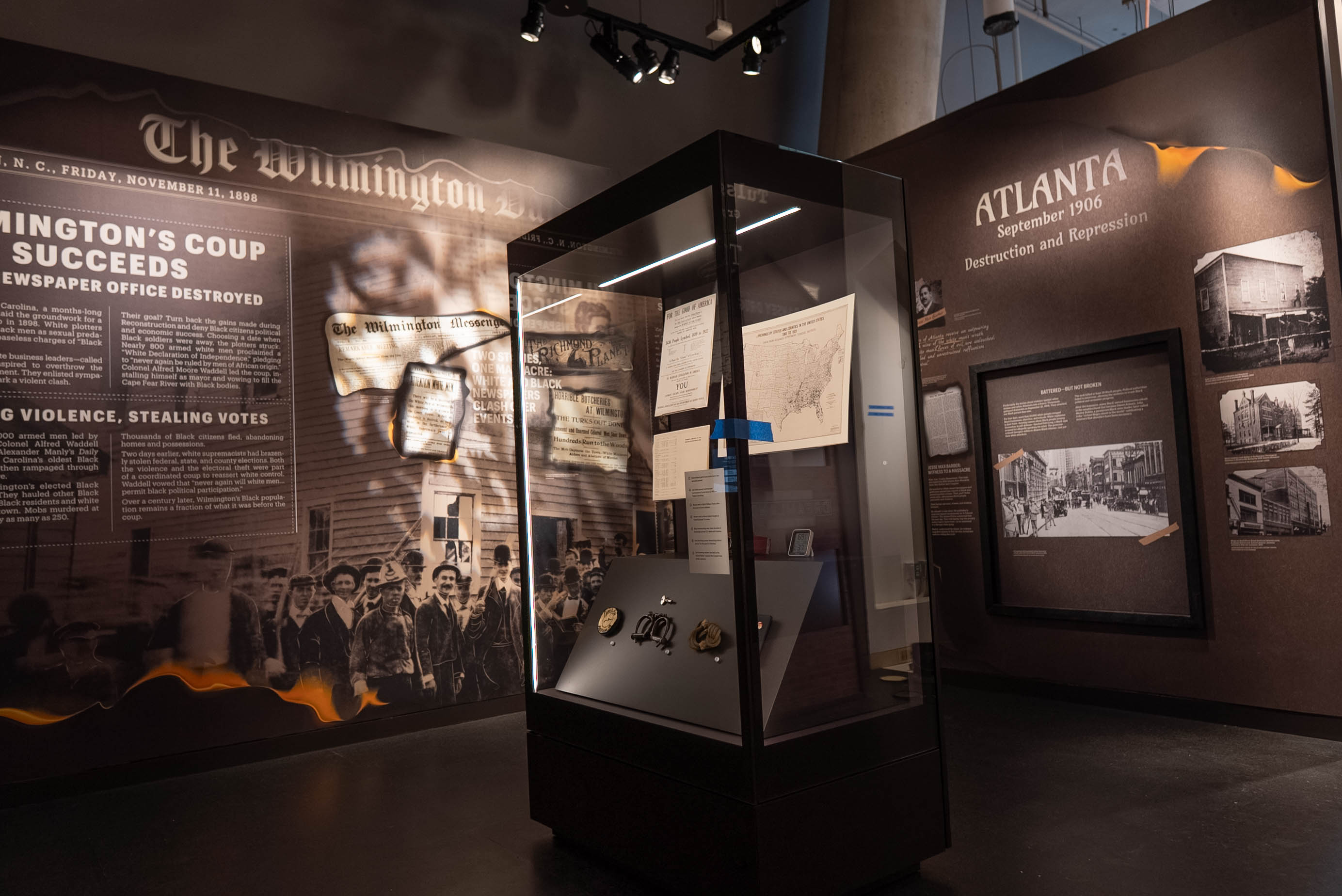
    The gallery presents Black progress during the Reconstruction Era, when nearly four million newly freed Black Americans claimed their rights as citizens, voted, won elected office, created schools, and reshaped economic and civic life across the South. It also presents the violent backlash that met and then suppressed those gains – through racial terror, political disenfranchisement, and Jim Crow legal segregation.

    “Reconstruction reminds us that the expansion of rights in America has never moved in a straight line. Every reform toward wider freedom has been accompanied by efforts to limit those rights,” said Jill Savitt, the CEO of the Center. “Recognizing that pattern helps us understand the forces that have long shaped America, up until today.”

    Curated by the Center’s Chief Program Officer, Kama Pierce, the gallery has anti-lynching crusader Ida B. Wells as its “docent,” and focuses on three cities – Wilmington, N.C., Atlanta, Ga., and Tulsa, Okla. In each city, Black achievement provoked white backlash that resulted in massacres and racial terror.

    The immersive gallery contains artifacts from the Without Sanctuary Collection, including a fragment of a noose and photographs of lynchings that were turned into postcards for entertainment. The artifacts deepen visitors’ understanding of how racial terror was wielded as a strategy.

    The gallery’s memorial space features a historical marker honoring Mary Turner, who was lynched in 1918. Turner’s family erected the public marker to honor her – but it was consistently defaced. The family donated the marker — marred by 11 bullet holes — to the Center. Artist Lonnie Holley has interpreted the marker in the gallery’s memorial space.

    “The Mary Turner marker is a powerful artifact that bears witness twice – first to the original terror, and again to the present resistance to let the truth be told,” said Pierce.

    The Center decided to add a gallery on Reconstruction because the era has not always been fully or accurately represented in American classrooms. The Center also wanted to provide more context for its signature gallery on the Civil Rights Movement.

    “After Reconstruction, the United States entered a decades-long period of Jim Crow segregation and unequal protection for Black Americans,” said Pierce. “The Civil Rights Movement emerged not as a new struggle, but as a renewed demand to enforce the promises first made during Reconstruction.”

    The Center received a $2 million grant from the Mellon Foundation for the exhibition.

    About the National Center for Civil and Human Rights
    The National Center for Civil and Human Rights is a museum and cultural organization that inspires the changemaker in each of us. Opened in 2014, the Center connects US civil rights history to global human rights movements today. Our experiences highlight people who have worked to protect rights and who model how individuals create positive change. For more information, visit civilandhumanrights.org. Follow us on Facebook, Twitter, Instagram @civilandhumanrights and LinkedIn at linkedin.com/company/ncchr.

    ###

    Contact Information
    Tenisha Griggs
    Head of Marketing
    tgriggs@civilandhumanrights.org
    404-973-7710

    .

    SOURCE: National Center for Civil and Human Rights

    View the original press release on ACCESS Newswire

  • National Center for Civil and Human Rights Reopens With Major Expansion and New Galleries

    National Center for Civil and Human Rights Reopens With Major Expansion and New Galleries

    On Nov. 8, the Center Opens Its Doors for a Community Celebration With Music, Family Fun and Interactive Tours. Be Part of History as the Museum Reopens to the World.

    ATLANTA, GEORGIA / ACCESS Newswire / November 7, 2025 / The National Center for Civil and Human Rights has reopened following a $57.9 million expansion that fulfills the vision of its founders and strengthens its role as a national destination for education, reflection, and action.

    National Center for Civil and Human Rights Ribbon-Cutting Ceremony
    National Center for Civil and Human Rights Ribbon-Cutting Ceremony

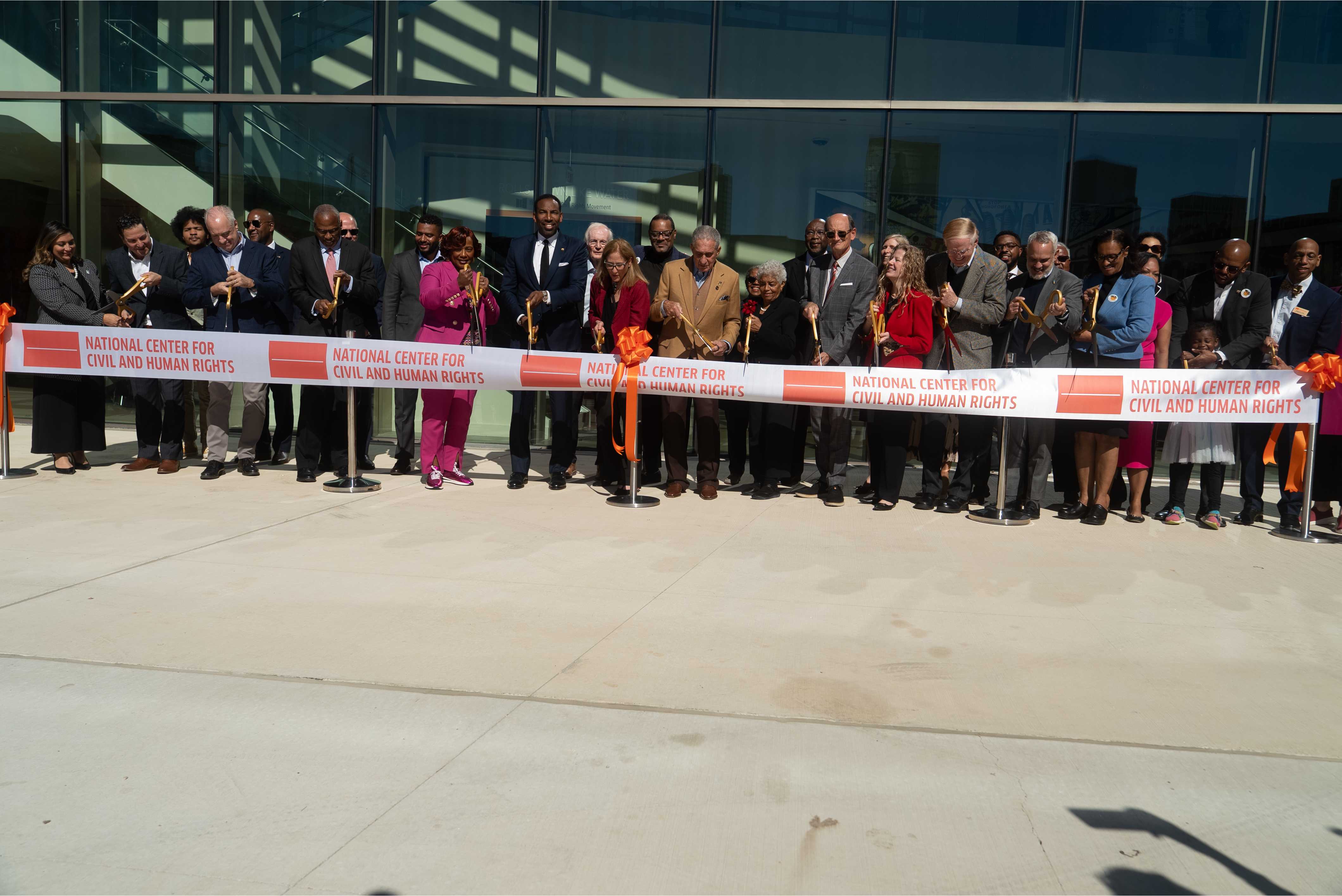
    Leaders and supporters gathered on Nov. 4 for a ribbon-cutting ceremony featuring Arthur M. Blank, former Mayor Shirley Clarke Franklin, Mayor Andre Dickens, Board Chair Egbert Perry, Co-Chair AJ Robinson, CEO Jill Savitt, and Juneau Construction CEO Nancy Juneau.

    The reopening marks a defining moment for the Center, expanding its footprint by 24,000 square feet – to 65,000 square feet – and transforming how visitors experience the ongoing story of courage and human rights in America and around the world. Two new wings, six new galleries, three classrooms, and interactive experiences.

    The expansion also doubles the Center’s event-space capacity, with areas for classrooms, community gatherings, conferences, performances, and celebrations. The Franklin Pavilion’s roof terrace offers skyline views – a symbolic reminder of the city’s place at the heart of the civil rights movement.

    “Our reopening arrives at a time when understanding our shared history feels more urgent than ever,” said Jill Savitt, president and CEO of the National Center for Civil and Human Rights. “This Center was built to show how history speaks to the present. These new galleries allow people to experience both the courage of those who came before us and the call to continue their work today.”

    Champions of the Center Reflect on Its Reopening

    Arthur M. Blank, Chairman, Arthur M. Blank Family Foundation

    “I’ve always believed in the Center’s mission, in the lessons it teaches and the hope it inspires,” said Arthur M. Blank, owner and Chairman, Blank Family of Businesses. “Being part of this expansion is an honor for myself, my family and our Family Foundation, and we look forward to seeing the extraordinary work that will continue to shape our community and our future.”

    Shirley Clarke Franklin, Former Mayor of Atlanta and Founding Visionary of the National Center for Civil and Human Rights

    “When we originally opened the Center, we wanted history to live in the present. Seeing it reopen even stronger reminds me that Atlanta’s commitment to truth and justice continues to guide and inspire the world.”

    Andre Dickens, Mayor of Atlanta

    “Today’s ribbon cutting exemplifies progress and peace. The City of Atlanta was happy to support this expansion with $10 million, in partnership with Atlanta Fulton County Recreation Authority. This expansion was a group project in every sense of the phrase and has made Atlanta proud,”

    The expansion honors two visionary Atlantans whose leadership made the Center possible. The Shirley Clarke Franklin Pavilion adds flexible classrooms, event space, and rooftop views of the city, while the Arthur M. Blank Inspiration Hall houses three new galleries, a café, and a museum store.

    The Center’s updated and expanded galleries bring history to life in powerful new ways:

    Rolls Down Like Water: The American Civil Rights Movement – The Center’s signature gallery returns with new storytelling and updates that enhance one of the most powerful visitor experiences: the Lunch Counter simulation, where guests take a seat at the counter and experience the courage of protestors who faced hatred with calm resolve.

    A Committed Life: The Morehouse College Martin Luther King, Jr. Collection – This reimagined gallery features a rotating selection of Dr. King’s personal papers and writings. Visitors encounter Dr. Martin Luther King Jr. as never before – as a man, a father, a pastor, and a leader whose humanity deepened his moral vision. In a new tradition, the Center will feature a guest curator for each rotation. The inaugural guest curator is Rev. Dr. Bernice A. King, the youngest child of Dr. King and Coretta Scott King.

    Everyone. Everywhere. The Global Human Rights Movement – Highlights defenders and activists around the world and includes A Mile in My Shoes, an immersive installation where guests walk in others’ stories, encouraging empathy and connection.

    Action Lab – A hands-on space where visitors design personal civic engagement plans and find practical ways to make a difference in their own communities.

    Special Exhibitions Gallery – For the first time, the Center will have a gallery for temporary exhibitions, beginning with Reclaiming History: Selections from the Tinwood Foundation, featuring Southern Black artists whose work confronts injustice and celebrates resilience.

    Broken Promises: The Legacy of the Reconstruction Era – Opening on Dec. 5, this gallery explores a chapter of U.S. history that provides critical context for the Civil Rights Movement. This gallery includes artifacts from the Without Sanctuary collection and a memorial space featuring the marker for Mary Turner’s lynching with an interpretation by artist Lonnie Holley.

    The reopening comes amid a national conversation about how history is told in museums. The National Center for Civil and Human Rights remains privately funded and steadfast in its mission to share a more complete and accurate story of civil rights history, human rights challenges today

    On Nov. 8, the Center will host a Community Celebration inviting visitors of all ages to experience the new museum. The event will feature a live radio broadcast by V-103 with Big Tigger, music, kids’ activities, giveaways, and special guests. With admission, visitors can explore the new galleries through free tours. Guests are encouraged to reserve tickets early at civilandhumanrights.org.

    About the National Center for Civil and Human Rights

    The National Center for Civil and Human Rights is a museum and cultural organization that inspires the changemaker in each of us. Opened in 2014, the Center connects U.S. civil rights history to global human rights movements today. Our experiences highlight people who have worked to protect rights and who model how individuals create positive change. For more information, visit civilandhumanrights.org. Follow us on Facebook, Twitter, Instagram @civilandhumanrights and LinkedIn at linkedin.com/company/ncchr.

    Contact Information

    Tenisha Griggs
    Head of Marketing
    tgriggs@civilandhumanrights.org
    404-973-7710

    .

    SOURCE: National Center for Civil and Human Rights

    View the original press release on ACCESS Newswire