Category: Technology

  • Contactless Sleep Monitoring Market Reaches Inflection Point as Multi-Modal AI Devices Debut at CES 2026

    Advances beyond single-sensor sleep devices with gesture control, multi-user support & proactive AI. Ships Q2 2026 to North America & Europe.

    SAN FRANCISCO, CA, UNITED STATES, February 17, 2026 /EINPresswire.com/ — The non-invasive sleep technology sector demonstrated unprecedented momentum at CES 2026, with multiple manufacturers unveiling radar-based monitoring devices. Industry analysts project the global sleep economy will reach $112 billion by 2025, growing at 7.6% CAGR, as privacy-conscious consumers reject camera-based bedroom surveillance.

    Market Validation: From Niche to Mainstream
    2024 marked a turning point for contactless sleep monitoring. A prominent radar-based alarm clock release achieved sell-out status within hours of launch, with secondary market prices reaching 250% of retail—demonstrating extraordinary consumer appetite for privacy-preserving bedroom technology. The manufacturer’s “other hardware” revenue segment grew 27.6% year-over-year, validating the category’s commercial viability.
    This success established the technical foundation: millimeter-wave radar detecting motion through bedding without cameras or wearables. However, first-generation implementations revealed persistent limitations: single-sensor architectures struggle with multi-user environments, lack connectivity for data synchronization, and offer minimal interactive capabilities.

    CES 2026: The Multi-Modal Evolution
    January’s Consumer Electronics Show showcased the category’s rapid evolution. A Hong Kong-developed AI sleep lamp garnered three CES Innovation Awards (Digital Health, Smart Home, Accessibility & Longevity) through multi-sensor fusion—combining radar, thermal arrays, and acoustic sensing. The device, priced at approximately $349, demonstrated consumer willingness to pay premiums for enhanced capabilities.
    Other exhibitors presented implementations ranging from $249 to $699, with varying sensor configurations. Most retained limited connectivity and standalone operation without AI personalization.

    NETVERSE Raychel-NODBOT: Advancing the Category
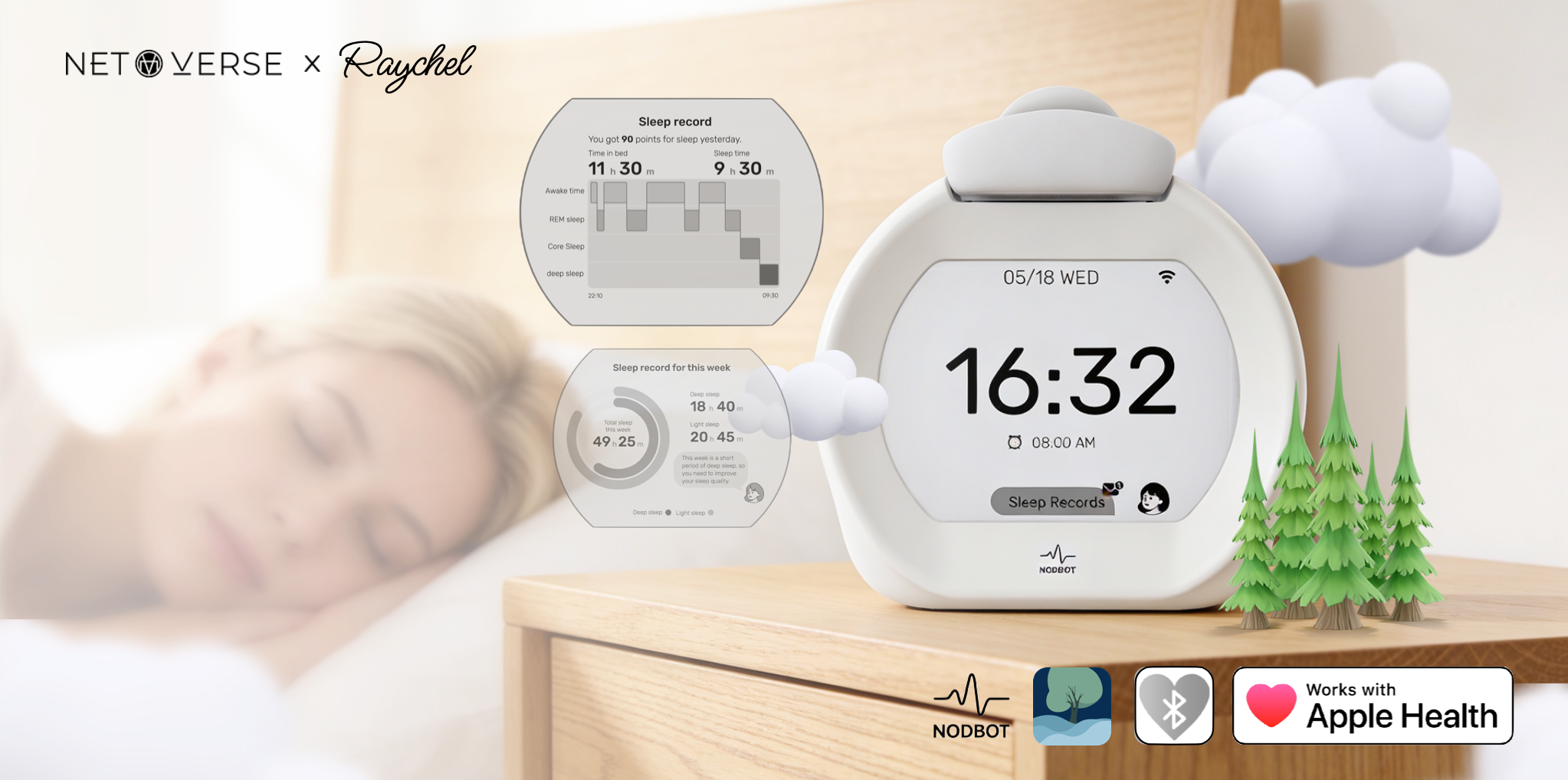
    NETVERSE, operating from Los Angeles and Hong Kong, today announced its Raychel-NODBOT sleep companion advances beyond current market offerings through integrated multi-modal architecture—at entry-level pricing.
    Technical Differentiation
    | Capability | Typical CES 2026 Offerings | NODBOT |
    | ————– | ————————– | ——————————— |
    | Sensing | Single or dual-modality | Radar + ToF LiDAR + environmental |
    | User detection | Single-user focus | Multi-user differentiation |
    | Interaction | Motion-only or basic voice | Gesture + voice + proactive AI |
    | Connectivity | Standalone or limited app | Optional cloud AI, full data sync |
    | Display | Basic or none | 400×300 adaptive interface |
    | Pricing | $249–$699 | $99 early-bird |

    Sensor Fusion Architecture
    NODBOT integrates four sensing modalities:
    Millimeter-wave radar: Motion detection through bedding, breathing and heart rate variability monitoring
    ToF LiDAR: Precision hand-tracking for gesture-based controls and spatial mapping
    Environmental sensors: Temperature, humidity, and ambient condition monitoring
    Voice recognition: Natural language interaction with on-device AI processing
    This architecture enables REM sleep stage detection, multi-user profile differentiation, and adaptive environmental responses—capabilities typically requiring professional sleep laboratory equipment.

    AI-Powered Personalization
    NODBOT features NETVERSE’s “Understand–Remember–Resonate” AI system. The Mixture of Experts (MoE) architecture processes sensitive biometric data locally, with optional cloud connectivity for advanced personalization. Unlike standalone implementations, NODBOT’s AI companion evolves through interaction, offering proactive wellness suggestions based on longitudinal sleep patterns.

    Commercial Strategy and Availability
    NODBOT enters at $99 USD early-bird pricing—positioning multi-modal sensing at price points previously associated with single-sensor devices. The company reports strong Kickstarter momentum, with backing velocity indicating robust consumer demand for next-generation sleep technology.
    Standard retail: $149 USD
    Projector bundle: $269 USD (includes device, spatial projection module, 3-year AGI subscription)
    Campaign: Kickstarter
    North American and European shipments commence Q2 2026, followed by Los Angeles retail establishment and European distribution partnerships.

    Company Background
    Founded in 2021, NETVERSE develops spatial intelligence technologies for human-environment interaction. The Raychel series represents the company’s consumer hardware initiative, applying augmented reality and spatial computing research to everyday wellness applications.
    Core philosophy: “Seeing comes before words” — prioritizing environmental sensing and contextual understanding over traditional input methods.

    Editorial Department
    NETVERSE LIMITED
    email us here
    Visit us on social media:
    LinkedIn
    X
    Other

    Legal Disclaimer:

    EIN Presswire provides this news content “as is” without warranty of any kind. We do not accept any responsibility or liability
    for the accuracy, content, images, videos, licenses, completeness, legality, or reliability of the information contained in this
    article. If you have any complaints or copyright issues related to this article, kindly contact the author above.

  • Pennsylvania Contractor Verification Disruptions Continue to Reduce Google Local Services Ad Leads for PA Businesses

    Arch Web Design reports average online leads down from 100/mo to 22/mo per business since August 2025 and ongoing monthly manual work to keep GLSA ads running.

    HARRISBURG, PA, UNITED STATES, February 16, 2026 /EINPresswire.com/ — Arch Web Design, a Harrisburg web design and digital marketing firm for home service companies, is sounding the alarm based on what it sees every day: contractors who count on Google Local Services Ads are getting fewer online leads and are spending more time fighting verification issues instead of running their business.

    What’s happening (plain-English version)

    Many Pennsylvania contractors depend on Google Local Services Ads to generate calls and leads from people searching Google for the services they provide. To keep those ads running, Google checks key business details, often including license or registration status, against official government sources.

    Since August 2025, the Pennsylvania Office of Attorney General (PA OAG) has reported ongoing issues with the Home Improvement Contractor registration system affected by a cyber incident. The PA OAG has stated the portion of the database used to process registrations is still not operational, which prevents contractors from using normal workflows to register, renew, or update information online and limits paper processing beyond acknowledgement letters.
    When the state system can’t reliably support normal validation workflows, contractors can face delays or verification interruptions that may reduce ad visibility—meaning fewer leads, fewer calls, and fewer booked jobs.

    How this affects small businesses

    For a contractor, this can look like:

    • Ads suddenly not showing when they should
    • A last-minute scramble near renewal/expiration dates
    • Fewer calls during peak season—when missing leads hurts the most
    • Extra time spent gathering proof and working through verification steps

    For the tech-minded: what’s breaking in the chain

    This is a dependency issue:

    State system (registration processing not operational) → Verification can’t be confirmed in a normal/automated way → Platform verification workflows slow down or fail → Ads may be limited or paused → Lead volume drops

    This is not presented as a fault of any one party. It’s a downstream effect when a key validation source is impaired.

    Data Snapshot (Aggregated — Aug 2025 to Present)

    Based on Arch Web Design’s internal research, Pennsylvania home services advertisers using Google Local Services Ads:

    • Estimated impacted contractor advertisers (PA): Thousands (industry-wide impact estimate)
    • Average LSA leads per contractor account (pre-incident baseline): 100/month
    • Average LSA leads per contractor account (post-incident observed average): 22/month
    • Ongoing administrative burden: 20+ hours/month spent on time-sensitive verification/extension actions and escalations
    • License re-verification/extension cycles handled since Aug 2025: ~240 (internal estimate)
    • Typical job value used for conservative modeling: $3,500

    What the lead drop can mean in dollars (simple example)

    The observed change is 78 fewer leads per month (100 → 22). If a contractor closes a conservative 5–10% of leads, that’s roughly 4–8 fewer jobs/month.

    At an average job value of $3,500, that’s an estimated $14,000–$28,000/month in potential project opportunity per contractor (varies widely by trade, season, and close rate).

    What Arch Web Design wants contractors to know

    “This isn’t about pointing fingers,” said Joshua Gates, CEO of Arch Web Design. “Google has been willing to work with us to extend expiration dates when we can provide the right documentation. We’re putting this out there so contractors understand what’s going on, why it tends to blow up right before renewals, and how quickly it can choke off leads for businesses that are doing everything right.”

    Resource

    Pennsylvania Office of Attorney General — Home Improvement Contractor Registration (system status updates):
    https://www.attorneygeneral.gov/resources/home-improvement-contractor-registration/

    About Arch Web Design

    Arch Web Design is a Harrisburg-based web design and digital marketing firm serving businesses across Central Pennsylvania and beyond. Led by Joshua Gates, a web developer with roots in early-2000s programming and local search, Arch Web Design builds high-performing websites and lead-generation systems focused on real-world results. The company has supported thousands of clients through a partner network of developers and digital specialists.

    Joshua Gates
    Arch Web Design and Solutions, LLC
    +1 717-379-5487
    email us here

    Legal Disclaimer:

    EIN Presswire provides this news content “as is” without warranty of any kind. We do not accept any responsibility or liability
    for the accuracy, content, images, videos, licenses, completeness, legality, or reliability of the information contained in this
    article. If you have any complaints or copyright issues related to this article, kindly contact the author above.

  • Eros Innovation Introduces Large Cultural Models (LCMs) and Launches Eros Universe Creator Economy Platform

    NEW DELHI, INDIA, February 16, 2026 /EINPresswire.com/ — At the India AI Impact Summit, Eros Innovation today announced the launch of Eros Universe, an AI-powered Creator Economy platform built on a new category of intelligence called Large Cultural Models (LCMs).
    This marks the first institutional deployment of culturally trained AI infrastructure originating from India.
    ErosGenAI, the artificial intelligence division of Eros Innovation, has developed the Large Cultural Model framework that powers the Eros Universe platform. Developed over decades of licensed cultural stewardship, Eros Universe represents a shift from general language AI toward culturally contextual AI – designed to understand narrative structure, emotional nuance, performance grammar, and regional diversity within Indian storytelling traditions.
    Unlike general-purpose AI systems trained primarily on web-scale language data, Large Cultural Models are architected to preserve authorship integrity, contextual meaning, and civilizational nuance.

    The Large Cultural Model (LCM) Framework
    While much of the global AI industry has focused on Large Language Models (LLMs), ErosGenAI has developed a complementary layer of intelligence optimized specifically for cultural content creation.
    LCM (Large Cultural Model) – Contextual reasoning across narrative structure, character arcs, and emotional grammar.
    LCVM (Large Cultural Vision Model) – Visual intelligence trained on cinematic framing, staging, and performance data.
    LCEM (Large Cultural Environment Model) – Models culturally grounded environments, settings, and experiential worlds that shape narratives and interactions.
    These models are trained using over 1.5 trillion rights-cleared, culturally curated tokens, derived from five decades of licensed cinematic and musical assets.

    Sovereign Stack Infrastructure
    The Eros Universe ecosystem is built on a sovereign, compliance-first infrastructure layer:
    Licensed training datasets
    Consent-based character usage
    Auditability and governance compliance
    Data stewardship aligned with Indian regulatory frameworks
    The architecture is designed to support sovereign AI deployment, ensuring intelligence created in India remains governed within Indian jurisdiction.
    The platform is further supported by access to 12,000+ films and 100,000+ characters, enabling creators to build new works within structured, IP-protected environments.

    Activating the Global Creator Economy
    The announcement comes at a moment when global AI discourse is shifting from scale to meaning, from automation to authorship.
    The platform is designed to unlock structured economic participation for creators across Tier 2 and Tier 3 India, enabling scalable livelihoods in AI-assisted storytelling, performance, and digital production.
    Eros Universe enables creators to:
    Develop new stories, music, and digital worlds within licensed universes
    Collaborate across states and languages
    Access monetization through structured creator commerce

    To accelerate adoption, Eros Innovation has committed $5 million (₹42+ Crore) toward a Global Creator Acceleration Program to support AI-native films, series, and music projects within the Eros Universe ecosystem.

    Kishore Lulla, Founder, Eros Innovation, said: “For over five decades, Eros has built platforms that shaped Indian cinema and music. Today, we are building the infrastructure layer that allows creators to participate directly in the digital economy. Large Cultural Models are not about replacing language AI, they are about adding cultural intelligence to it. Eros Universe is designed to empower creators while protecting the cultural and economic value of Indian storytelling.”

    Shri S Krishnan, Secretary, Ministry of Electronics and Information Technology (MeitY), Government of India said: “India’s AI future must be grounded in its cultural memory and intellectual property. The Eros LCM represents a meaningful step toward Cultural Intelligence — transforming decades of creative heritage into sovereign AI infrastructure. Initiatives like these, along with platforms such as Eros Universe that enable a rights-led creator economy, advance the IndiaAI Mission’s vision of positioning India as a global leader in responsible, home-grown AI.”

    Eros Universe positions India not only as a consumer of AI technologies, but as a contributor to culturally grounded AI infrastructure for the global creative economy. The launch of Eros Universe signals the beginning of a new phase in India’s AI evolution, where culture, technology, and economic participation converge.

    About Eros Innovation
    Ethical Cultural AI
    Eros Innovation is a sovereign AI and cultural-technology group building one of the world’s most advanced ecosystems across AI, entertainment, wellness, education and deep-tech infrastructure.

    With operations across London, Los Angeles, Abu Dhabi, Mumbai, and Chennai, and headquarters in the Isle of Man, Eros Innovation sits at the intersection of media, technology, and finance. Anchored by over $1 billion in assets, a $2 billion independent valuation, and zero debt, the company combines disciplined capital allocation with deep IP ownership. Eros Innovation is building a globally exportable blueprint for ethical, sovereign AI systems across healthcare, entertainment, wellness, and education.

    Its ecosystem spans:
    Eros GenAI – Sovereign Generative AI Stack (with IIT Chennai)
    Eros Universe – Global AI Creator Super App
    Eros Brahmand – AI-Native Cinematic & Cultural Universes
    Eros Tokenex – Tokenised IP & Digital Asset Economy
    Eros AIPark – Sovereign AI, Quantum & Deep-Tech Infrastructure
    Eros LifeScience – Longevity, Wellness & Soul-Tech
    Eros AIVidya – Dharmic AI, Knowledge & Education Systems

    Piyush Bhatia
    Eros Innovation
    email us here

    Legal Disclaimer:

    EIN Presswire provides this news content “as is” without warranty of any kind. We do not accept any responsibility or liability
    for the accuracy, content, images, videos, licenses, completeness, legality, or reliability of the information contained in this
    article. If you have any complaints or copyright issues related to this article, kindly contact the author above.
  • Stratosphere Launches SIA: Smart Insurance Assistant AI Chatbot for Insurance Agencies

    New AI-powered chatbot helps insurance agencies capture leads 24/7, automate engagement, and boost conversions with smart automation

    Insurance agencies need more than just traffic; they need conversations that convert. SIA delivers exactly that.”
    — Amit Ranjan

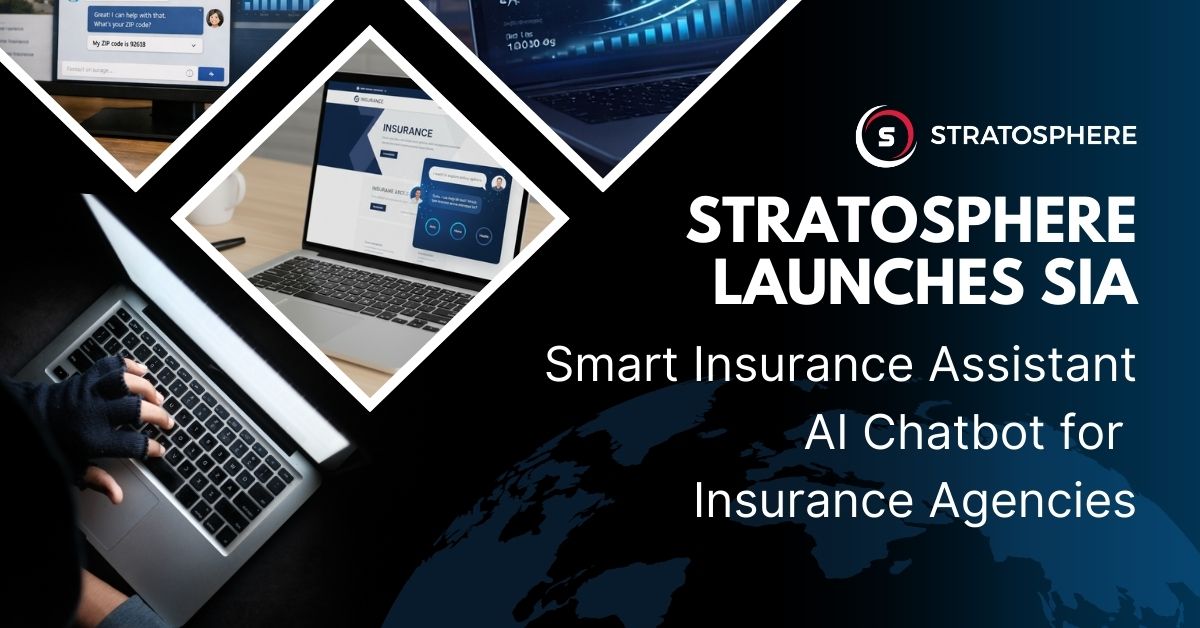
    TUSTIN, CA, UNITED STATES, February 16, 2026 /EINPresswire.com/ — Stratosphere, a leading digital marketing company specializing exclusively in insurance agencies, proudly announces the official launch of SIA (Smart Insurance Assistant), an AI-powered chatbot designed to help insurance agencies modernize client engagement, automate lead capture, and increase website conversion rates.

    Built specifically for independent insurance agencies, SIA transforms static websites into interactive, 24/7 lead-generating platforms. The new chatbot solution helps agencies compete more effectively with large national carriers by providing instant responses, personalized engagement, and seamless appointment scheduling.

    According to industry research, over 60% of insurance shoppers conduct online research before contacting an agency. With SIA, agencies can now engage these visitors instantly, answer policy questions, guide quote requests, and capture qualified leads in real time.

    “SIA was developed to bridge the gap between traditional insurance operations and modern digital expectations,” said Amit Ranjan, Business Manager (Marketing) at Stratosphere.

    Key Features of SIA (Smart Insurance Assistant):
    • 24/7 AI-Powered Support — Answer policy, claims, and coverage questions instantly
    • Automated Lead Capture — Collect and qualify leads directly through chat
    • Appointment Scheduling Integration: Sync with agency calendars for bookings
    • Live Agent Mode: Seamless switch between AI and human support during configured hours
    • Multi-Language Support: Automatic language detection and translation
    • Dynamic Follow-Up Questions: Context-aware prompts that guide visitors toward action
    • Smart Analytics Dashboard: Track chats, leads, peak hours, device usage, and performance
    • CRM & Email Integration: Push qualified leads directly into agency systems

    Unlike generic chatbots, SIA is insurance-trained and optimized for the specific workflows of independent agencies. It understands insurance terminology and is built to support personal, commercial, and specialty insurance products.

    SIA also integrates seamlessly with Stratosphere’s broader marketing ecosystem, which includes website design, SEO, AI search optimization, reputation management, and paid advertising services. This ensures agencies not only generate traffic but convert that traffic into measurable results.

    Stratosphere’s mission has always been to empower independent insurance agencies with scalable digital tools that drive measurable ROI. The launch of SIA strengthens that commitment by adding intelligent automation to the agency’s growth strategy.

    SIA is available in Starter and Enterprise plans, allowing agencies of different sizes to adopt the solution based on their operational needs.

    Insurance agencies interested in modernizing their digital engagement can request a demo on Stratosphere’s official website.

    Cameron Santiago
    Stratosphere
    +1 714-455-3267
    info@joinstratosphere.com
    Visit us on social media:
    LinkedIn
    Instagram
    Facebook
    YouTube
    X

    Legal Disclaimer:

    EIN Presswire provides this news content “as is” without warranty of any kind. We do not accept any responsibility or liability
    for the accuracy, content, images, videos, licenses, completeness, legality, or reliability of the information contained in this
    article. If you have any complaints or copyright issues related to this article, kindly contact the author above.

  • Origin Detector (OD) Surpasses 457,000 Viewers in Record-Breaking Product Awareness Campaign

    Origin Detector (OD) Surpasses 457,000 Viewers in Record-Breaking Product Awareness Campaign

    The OD, innovative consumer awareness platform powered by QR codes, today announced that its latest product awareness campaign has reached 457,000 viewers

    This level of engagement proves that transparency and rewards create real connection between brands and consumers.”
    — Jewel Luther

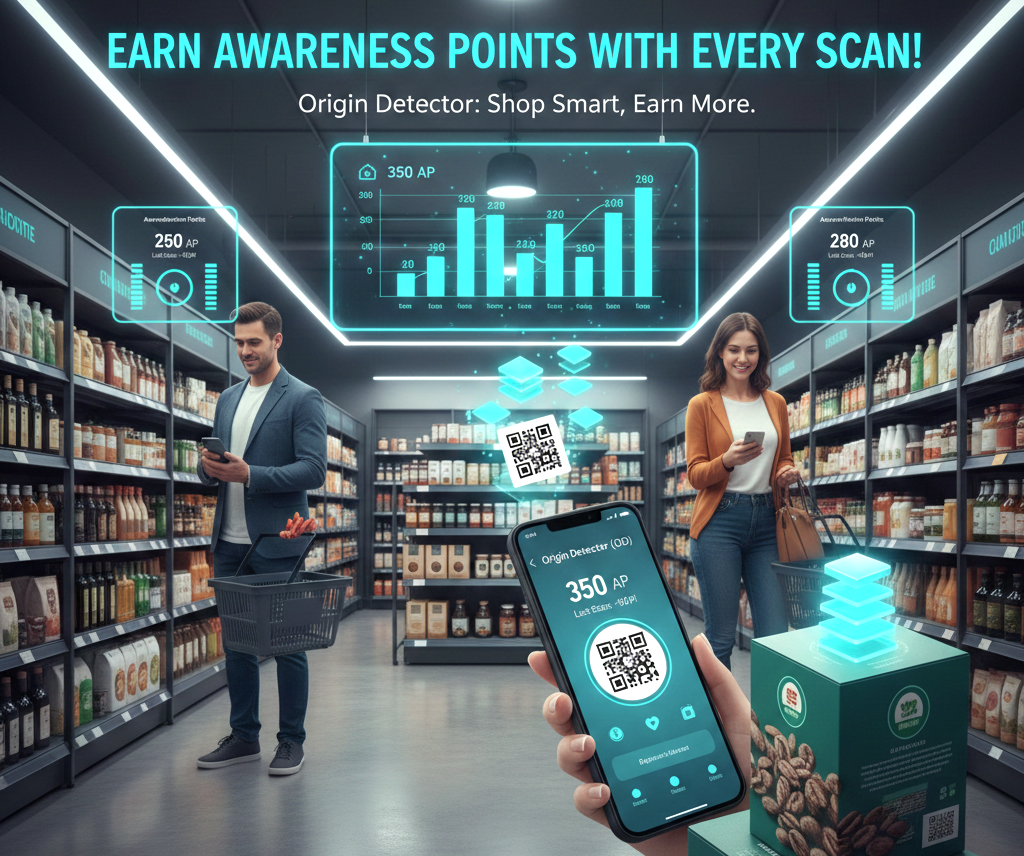
    CHATSWORTH, IL, UNITED STATES, February 10, 2026 /EINPresswire.com/ — The campaign highlighted how everyday shoppers can use Origin Detector’s ODQR codes to instantly verify a product’s true origin, ingredients, manufacturing details, and ethical supply-chain practices — all while earning Awareness Points for every scan and feedback submission.
    “We’re absolutely thrilled to see this level of excitement and engagement,” said Jewel Luther, Founder of OriginDetector LLC. “457,000 viewers in a single campaign shows that people are hungry for real transparency. They don’t just want to shop — they want to know exactly where their products come from and to have a voice in supporting ethical brands. This milestone proves the OD community is growing fast, and we’re just getting started.”

    Key highlights of the campaign:

    Over 457,000 total views across YouTube, social platforms, and partner channels. Growing adoption of ODQR codes by manufacturers and merchants who want to build trust and direct customer relationships.

    Consumers can join for free right now at https://origindetector.com. Every ODQR scan earns Awareness Points that can later be redeemed for rewards, coupons, and exclusive perks, turning everyday shopping into an engaging, rewarding experience.
    Manufacturers and merchants interested in onboarding products or receiving custom ODQR codes are encouraged to visit the site or email support@origindetector.com

    “Reaching 457,000 viewers in this campaign is a powerful validation that consumers genuinely care about where their products come from,” said the Origin Detector team. “This level of engagement proves that transparency and rewards create real connection between brands and consumers.”

    Now is the best time to join the movement.
    Every scan earns you Awareness Points, which can be redeemed for exclusive promotional rewards, coupons, and special offers from participating brands.
    Join today and start earning Awareness Points for free:
    https://origindetector.com

    Jewel Luther
    https://www.linkedin.com/company/origindetector-com
    email us here
    Visit us on social media:
    LinkedIn
    Facebook
    YouTube

    Simple tool for manufacturers to start using the latest tech and grow customer confidence.

    Legal Disclaimer:

    EIN Presswire provides this news content “as is” without warranty of any kind. We do not accept any responsibility or liability
    for the accuracy, content, images, videos, licenses, completeness, legality, or reliability of the information contained in this
    article. If you have any complaints or copyright issues related to this article, kindly contact the author above.

  • SideHustlr.ai Reports Early Growth as Users Prioritize Modest Income Goals Over High-Risk Ambition

    SideHustlr.ai Reports Early Growth as Users Prioritize Modest Income Goals Over High-Risk Ambition

    New platform data shows most users seek financial breathing room rather than rapid wealth

    LOS ANGELES, CA, UNITED STATES, February 11, 2026 /EINPresswire.com/ — SideHustlr.ai, a newly launched platform designed to match individuals with personalized income opportunities, is reporting early growth and revealing insights into how people approach side hustles in today’s economy. Since its January 2026 launch, more than 518 people have completed the SideHustlr quiz, providing one of the most detailed early snapshots into modern side income motivations.

    The data suggests a shift away from high-risk or high-capital entrepreneurship. Nearly 65 percent of users indicated their primary goal is earning approximately $500 per month. Rather than building large-scale businesses, users described goals such as covering a car payment, paying rent, or easing monthly financial pressure. This pattern has emerged internally as what the team refers to as the “$500 Dream.”

    According to the platform, more than 80 percent of users reported having less than $100 available to invest in a side hustle, with nearly 30 percent stating they had no startup budget at all. Time constraints also play a role. Over half of users can commit between five and ten hours per week, while nearly one in five reported fewer than five hours available, highlighting demand for flexible and low-cost income options.

    The platform also identified generational trends. Approximately four percent of quiz participants were under 18, suggesting younger users are beginning to explore income independence earlier than previous generations. Meanwhile, 52 percent of users expressed interest in a mix of online and in-person work, with 46 percent preferring fully online opportunities.

    User-submitted responses further illustrate the emotional drivers behind side hustles. Many described success as being able to pay bills without stress, support family members, or avoid asking parents for financial help. Across 433 unique written responses, users consistently emphasized stability and relief rather than luxury.

    The platform’s matching data also revealed openness to a wide range of income types. Among adult users, approximately 46 percent indicated openness to adult-oriented side hustles. However, only 18 percent actually received such options within their top three recommendations, indicating that the platform’s matching logic prioritizes relevance, skills, and preferences over general willingness.

    As interest continues to grow, SideHustlr positions itself as a practical discovery tool rather than a promise of overnight success. By focusing on modest, achievable goals, the platform reflects what many users describe as the need for breathing room rather than transformation.

    To learn more, visit SideHustlr.ai, explore how “SideHustlr helps people find side hustles”, or read “the SideHustlr story”.

    Flip Greenwood
    SideHustlr.ai
    https://sidehustlr.ai

    Legal Disclaimer:

    EIN Presswire provides this news content “as is” without warranty of any kind. We do not accept any responsibility or liability
    for the accuracy, content, images, videos, licenses, completeness, legality, or reliability of the information contained in this
    article. If you have any complaints or copyright issues related to this article, kindly contact the author above.

  • Senior Tech Executive Unveils ‘Media-SDN’ to Unleash Streaming Possibilities and Eliminate Betting Courtsiding

    Senior Tech Executive Unveils ‘Media-SDN’ to Unleash Streaming Possibilities and Eliminate Betting Courtsiding

    Media-SDN: A hardware-free protocol that synchronizes devices via audio to solve betting courtsiding and enable spoiler-free streaming globally.

    SãO PAULO, SãO PAULO, BRAZIL, February 10, 2026 /EINPresswire.com/ — The Missing Link of Digital Broadcasting: Media-SDN Protocol Inaugurates the Era of Absolute Cross-Screen Synchronization

    A novel software-only architecture resolves the internet’s temporal fragmentation, eliminating second-screen latency to ensure integrity in betting, fluidity in social streaming, and surgical precision in contextual advertising.

    Internet video distribution achieved global scale but created a systemic collapse in temporal experience: desynchronization. For the first time, a purely software-based infrastructure solution, Media-SDN (Patent Pending BR 10 2026 003056 2), addresses this fundamental failure, establishing a new paradigm of Audio-Based Synchronization that eliminates the need for proprietary hardware and rehabilitates the concept of “Real-Time” for the digital economy.

    THE PARADIGM SHIFT: FROM “BEST EFFORT” TO “PROOF-OF-VIEW”:

    Until now, the streaming industry has accepted latency variance—the random delay between source and device—as an insurmountable physical limitation. Previous market attempts to solve this have relied on cost-prohibitive hardware or complex CDN interventions, with limited success.

    Media-SDN breaks this logic. Developed by Thiago R. Salgado, an executive with 20 years of leadership in critical Telecom and Datacenter infrastructures, the protocol utilizes the existing audio channel to transport encrypted ultrasonic watermarks. This allows, for the first time, any mobile device to calculate its exact position on the broadcast timeline with millisecond precision. There is currently no comparable solution on the market capable of performing this “digital handshake” entirely via software and in a network-agnostic manner.

    THREE PILLARS OF DISRUPTIVE VALUE:

    1. FINANCIAL INTEGRITY (The End of Courtsiding):
    In the sports betting market, transmission delay is a security vulnerability costing millions. Media-SDN transforms the user’s device into a temporal validation node. Operators can now demand a “Proof-of-View,” automatically rejecting bets based on past events and securely enabling the high-frequency micro-betting ecosystem for the first time.

    2. SOCIAL SYNCHRONIZATION (The End of Spoilers):
    The social experience of TV has been fragmented by delay. Media-SDN restores audience cohesion by allowing chats, reactions, and interactions to be displayed on the second screen in perfect sync with the specific video frame the user is watching. This makes global “Watch Parties” viable, rendering network latency irrelevant to human interaction.

    3. COMMERCIAL PRECISION (Contextual Advertising):
    Second-screen advertising has long suffered from temporal disconnection. With Media-SDN, the commercial activation (the “Call-to-Action”) on mobile occurs at the exact instant the visual trigger appears on the main screen, maximizing conversion rates through a level of surgical precision never before seen in programmatic media campaigns.

    AN ARCHITECTURAL SOLUTION, NOT JUST A FEATURE

    “Treating latency as a network problem was the industry’s error. We treat it as a data validation problem,” states the inventor. The robustness of Media-SDN lies in its architectural simplicity: by utilizing sound—the only element that travels continuously with the image—it creates a universal synchronization standard, immune to connection variations (4G, 5G, Fiber, or Cable).

    This innovation represents the closing of the gap between linear broadcasting and digital interactivity, offering the internet infrastructure the synchronization layer it has lacked since its inception.

    AVAILABILITY AND LICENSING

    The technology is available for strategic licensing, targeting infrastructure providers, media conglomerates, and technology leaders seeking to define the technical standard for the next generation of live experiences.

    MEDIA-SDN PROJECT
    MEDIA-SDN PROJECT
    trsalgado@gmail.com
    Visit us on social media:
    LinkedIn

    Legal Disclaimer:

    EIN Presswire provides this news content “as is” without warranty of any kind. We do not accept any responsibility or liability
    for the accuracy, content, images, videos, licenses, completeness, legality, or reliability of the information contained in this
    article. If you have any complaints or copyright issues related to this article, kindly contact the author above.
  • Pipe17 Turns Agentic Commerce Readiness Into a 3PL Differentiator

    Pipe17 Turns Agentic Commerce Readiness Into a 3PL Differentiator

    Agentic order operations, a live onX standard, and the Powered by Pipe17 program give 3PLs a faster path to AI-ready fulfillment.

    3PLs powered by Pipe17 can lead in agentic commerce without integration risk or operational complexity. This is about future-proofing fulfillment for whatever buying models come next.”
    — Mo Afshar, CEO and Co-founder of Pipe17

    SEATTLE, WA, UNITED STATES, February 10, 2026 /EINPresswire.com/ — Pipe17, today, announced continued momentum as third-party logistics providers (3PLs) increasingly compete on their ability to support AI-driven commerce models from day one.

    As brands adopt agentic and AI-assisted selling, logistics providers are being evaluated on how quickly they can onboard new customers, integrate with modern commerce stacks, and support AI-initiated operations without loads of custom work. Pipe17 addresses this shift by combining AI-native order operations, a live implementation of the Order Network eXchange (onX) standard, and a 3PL-focused go-to-market motion through the Powered by Pipe17 program.

    Through Pipe17 and onX, 3PLs can receive and process orders initiated by AI agents just like orders from any other channel. Those orders flow directly into existing warehouse management systems (WMS) without requiring new integrations, WMS changes, or additional operational overhead.
    Pipe17 reinforces this advantage through the Powered by Pipe17 program, which helps 3PLs embed Pipe17’s capabilities into their sales and onboarding motion. The program enables logistics providers to standardize integrations, shorten onboarding timelines, and clearly demonstrate agentic commerce readiness during competitive sales cycles.

    “3PLs powered by Pipe17 can position their fulfillment networks at the leading edge of agentic commerce without taking on integration risk or operational complexity,” said Mo Afshar, CEO and cofounder of Pipe17. “This is about future-proofing fulfillment so logistics providers can support whatever buying models come next.”

    Agentic Commerce Moves Into Production

    As AI agents increasingly participate in commerce workflows, the shift is no longer theoretical. Orders initiated by AI assistants, copilots, and automated buying systems must be routed, fulfilled, and resolved with the same reliability as orders placed by humans.
    Pipe17’s AI-native Order Operations Platform extends agentic commerce beyond the front end and into real operational workflows, including order ingestion, inventory coordination, fulfillment execution, and exception handling. This allows AI-driven decisions to translate directly into physical outcomes across fulfillment networks without manual intervention or brittle custom logic.

    “AI doesn’t lower the bar for operations, it raises it,” said Kelly Goetsch, President of Pipe17. “If fulfillment can’t execute at machine speed, AI simply exposes the weaknesses faster.”

    onX Is Now Live Across the Pipe17 Platform

    To make agentic commerce executable at scale, Pipe17 has implemented the Order Network eXchange (onX) standard across its platform. All Pipe17 customers are now onX-enabled, with standardized access to order operations data through Pipe17’s Model Context Protocol (MCP) server.
    onX is an open, vendor-neutral standard that defines a common structure for core commerce objects such as orders, inventory, line items, shipments, and fulfillment events. Governed by the Commerce Operations Foundation, which Pipe17 co-founded, onX provides a shared operational language that allows brands, 3PLs, platforms, and AI agents to interact without proprietary formats or one-off integrations.
    With onX live, AI agents and operational systems can query real-time order status and inventory availability, trigger fulfillment actions, and manage exceptions through a standardized interface. This prevents the fragmentation that would otherwise emerge as AI connects to an increasingly complex commerce stack.

    Standards That Strengthen, Not Commoditize

    While onX standardizes how data moves between systems, Pipe17 operates above the protocol layer, where standardized data is turned into production-grade operations. Intelligent order routing, multi-location inventory management, exception handling, SLA enforcement, and AI-driven optimization all sit at the orchestration layer.

    As adoption of onX grows, Pipe17’s value increases by enabling more intelligent, reliable execution on top of standardized data. This allows customers to scale without increasing operational complexity, technical debt, or ongoing integration maintenance.

    Building the Operational Foundation for What’s Next

    Together, Pipe17’s agentic commerce capabilities, live onX implementation, and the Powered by Pipe17 program position the company as the operational foundation for modern commerce.

    As buying models evolve and AI adoption accelerates, Pipe17 is focused on helping brands and 3PLs move faster without taking on integration risk, operational drag, or lock-in.

    About Pipe17
    Pipe17 is the AI-Native Order Operations Platform that unifies orders, inventory, products and fulfillments across selling channels (DTC, B2B, retail and agentic), ERPs and fulfillment locations. Backed by GLP Capital, LFX Ventures and Blumberg Capital, Pipe17 helps innovative brands like Allbirds, Wyze and MaryRuth Organics, and leading 3PLs like FedEx, Radial and Ryder eliminate operational chaos, accelerate time-to-market and scale profitably. Learn more at www.pipe17.com

    Kristina Dudley | Vice President of Marketing
    Pipe17
    press@pipe17.com
    Visit us on social media:
    LinkedIn
    YouTube

    Legal Disclaimer:

    EIN Presswire provides this news content “as is” without warranty of any kind. We do not accept any responsibility or liability
    for the accuracy, content, images, videos, licenses, completeness, legality, or reliability of the information contained in this
    article. If you have any complaints or copyright issues related to this article, kindly contact the author above.

  • Falling ACA Enrollment and Rising Group Health Insurance Premiums Drive a Shift to Self-Funded Health Plans

    Falling ACA Enrollment and Rising Group Health Insurance Premiums Drive a Shift to Self-Funded Health Plans

    Employer-sponsored self-funded health plans gain traction amid shrinking ACA enrollment and rising insurance costs

    Employers and plan sponsors are tired of being told they cannot have access to their own data to manage their programs effectively.”
    — Paul Ford, CEO of Quilt Benefits

    LOUISVILLE, KY, UNITED STATES, February 10, 2026 /EINPresswire.com/ — The expiration of Affordable Care Act (ACA) subsidies is reshaping the U.S. health insurance market, driving declining enrollment and setting the stage for sharp premium increases nationwide. Industry experts warn that as fewer Americans sign up for coverage, costs will rise even higher for those who remain insured — adding pressure on families, employers, and the healthcare system.

    ACA enrollment for the 2026 plan year has fallen to about 23 million Americans — roughly 1.2 million fewer than last year — as rising costs push many to delay or forgo coverage. With subsidies ending, average annual premiums for marketplace plans are expected to more than double, rising from approximately $888 in 2025 to $1,904 in 2026.(1) Healthier individuals are more likely to opt out, leaving a smaller and sicker insurance pool and driving costs higher for everyone.(2)

    Employer health insurance costs have also climbed sharply. Average annual family premiums approached $27,000 in 2025 — up about six percent from the prior year — with workers contributing roughly $6,850 and employers covering the rest. Over the past five years, family premiums have risen about 26 percent, outpacing inflation.(3) Experts project costs will continue climbing in 2026 and beyond, intensifying financial pressure on employers navigating a volatile healthcare market.(4)

    Why Premiums Are Rising

    Health policy analysts warn that as premiums surge without subsidies, fewer individuals are enrolling or renewing ACA plans. This shrinks the insured population — particularly among healthier consumers — leaving a higher concentration of costly claims. Insurers respond by raising premiums to offset risk, accelerating a cycle of rising costs and declining participation.(2)

    Insurers are not just increasing ACA premiums, they are raising the insurance premiums for insured group plans to address rising costs and increased insurance usage. Some groups are now experiencing near double-digit increases in premiums year-over-year while others carriers have exited the group insurance market altogether.(6)

    Self-Funded Employer Plans Offer Stability

    While employer-sponsored plans are not immune to healthcare inflation, they do benefit from self-funded health plans, which allow employers to assume the financial risk for claims offering a more stable alternative to fully insured group marketplace coverage. These self-insured plans give employers more control over their data, pharmacy rebates, plan design, provider networks, and cost management strategies. Businesses can tailor benefits, implement wellness and cost-containment programs, and access detailed claims data — tools rarely available under conventional insurance plans.

    “Employers and plan sponsors are tired of being told they cannot have access to their own data to manage their programs effectively and that they cannot implement solutions that will benefit their group financially and with regards to healthier outcomes for their members,” said Paul Ford, CEO of Quilt Benefits. “This, coupled with steady increases year over year by insurers with market share, have created an environment where alternatives are being sought out and implemented without adding more risk. Plan sponsors can reasonably save upwards of 30%.”

    Over the past two decades, the share of U.S. employees covered by self-funded plans has grown from 44 percent in 1999 to over 65 percent in 2023, reflecting a long-term shift away from fully insured models.(5) Self-funded arrangements allow employers to control spending, manage risks proactively, and provide more predictable budgeting for employees while maintaining flexibility to adjust benefits to workforce needs.

    As ACA subsidies expire and group insurance marketplace premiums climb, traditional coverage becomes less sustainable. Employers are increasingly turning to self-funded health plans to protect their workforce and financial stability, offering affordable, flexible solutions that help manage rising healthcare costs while providing comprehensive coverage.

    Quilt Benefits is a leading self-funded health benefits administrator providing modern, flexible healthcare solutions designed for employers, CFOs, HR teams, and their employees. Leveraging advanced analytics and Smart Fabric Networks, Quilt optimizes provider networks and cost containment strategies to help employers control healthcare spending while maintaining high-value coverage. Through its comprehensive platform—including medical, prescription drug, dental, and vision administration—Quilt delivers transparent, data-driven benefit programs that improve financial predictability and support employee health and satisfaction. With decades of experience and a dedicated customer service approach, Quilt empowers employers to offer robust benefits that attract and retain talent without the rigid constraints of traditional insurance models. For more information visit www.quiltbenefits.com.

    Sources
    1. https://www.reuters.com/legal/litigation/obamacare-enrollment-drops-about-23-million-people-2026-2026-01-29/
    2. https://www.kff.org/affordable-care-act/aca-marketplace-premium-payments-would-more-than-double-on-average-next-year-if-enhanced-premium-tax-credits-expire/
    3. https://www.healthcarefinancenews.com/news/annual-family-premiums-employer-coverage-rise-6-hitting-27000
    4. https://www.forbes.com/sites/joshuacohen/2025/11/01/sticker-shock-as-insurance-premiums-rise-in-obamacare-and-commercial-markets/
    5. https://www.statista.com/statistics/985324/self-funded-health-insurance-covered-workers/
    6. https://humana.gcs-web.com/news-releases/news-release-details/humana-exit-employer-group-commercial-medical-products-business

    Daniel Mutter
    MutterWorks
    +1 305-926-1792
    daniel@mutterworks.com

    Legal Disclaimer:

    EIN Presswire provides this news content “as is” without warranty of any kind. We do not accept any responsibility or liability
    for the accuracy, content, images, videos, licenses, completeness, legality, or reliability of the information contained in this
    article. If you have any complaints or copyright issues related to this article, kindly contact the author above.
  • JPLoft Advances Business Transformation Through Generative AI Development Services

    JPLoft helps businesses move beyond AI experiments by building scalable, secure, and outcome-driven solutions that turn generative AI.

    Generative AI creates value only when it solves real problems. At JPLoft, we focus on building AI solutions that scale, integrate smoothly, and deliver measurable outcomes for businesses.”
    — Rahul Sukhwal

    DENVER, CO, UNITED STATES, February 17, 2026 /EINPresswire.com/ — As enterprises move beyond traditional automation and begin adopting systems that can create, reason, and adapt, generative artificial intelligence is emerging as one of the most transformative forces in modern technology.

    Organizations are increasingly exploring how AI models can generate content, automate knowledge work, enhance customer interactions, and support complex decision-making processes.

    In this evolving landscape, JPLoft, a global software and mobile app development company, is enabling businesses to operationalize generative AI in a practical, scalable, and commercially viable manner.

    The company focuses on helping enterprises design intelligent systems that integrate with real business environments, rather than isolated experimental tools.

    JPLoft’s approach centers on applying generative AI to real-world enterprise challenges, including process automation, intelligent data analysis, personalized user experiences, and internal knowledge management.

    By aligning AI initiatives with organizational goals, technical infrastructure, and regulatory requirements, the company ensures that intelligent systems deliver measurable outcomes instead of theoretical innovation.

    According to JPLoft’s leadership team, the true value of generative AI lies not in its ability to generate content alone, but in its potential to reshape how organizations operate, collaborate, and make strategic decisions at scale.

    From Conceptual AI to Enterprise-Ready Intelligence

    Many organizations struggle with the transition from understanding generative AI concepts to deploying production-grade systems. JPLoft addresses this gap through a structured methodology that aligns generative capabilities with business strategy.

    The company begins by identifying where generative intelligence can create the most value, such as:

    • Automating content and documentation workflows
    • Enhancing internal knowledge management systems
    • Improving customer engagement and personalization
    • Supporting complex analytical and decision processes

    Within this strategic framework, JPLoft helps enterprises adopt generative AI development services that are designed around real operational needs rather than isolated technical experiments.

    Each project is mapped to clear business objectives, ensuring that generative AI systems contribute directly to productivity, efficiency, and long-term scalability.

    This approach allows organizations to treat generative AI not as a research initiative, but as a functional layer within their digital infrastructure.

    Data-Centric Design for Generative Systems

    At the core of every successful generative AI system is data. JPLoft places strong emphasis on data engineering and architecture before building any generative models.

    The company helps enterprises consolidate fragmented data sources, structure unorganized information, and create reliable pipelines for continuous learning.

    Generative solutions built by JPLoft operate across multiple data environments, including:

    • Enterprise document repositories
    • Customer support databases
    • Product catalogs and knowledge bases
    • Internal communication systems

    By designing clean and structured data flows, JPLoft ensures that generative models produce accurate, context-aware, and business-relevant outputs. This reduces the risks of hallucinations, misinformation, and unreliable system behavior.

    Engineering Generative AI for Real-World Use

    Unlike traditional software systems, generative AI requires continuous monitoring, refinement, and adaptation. JPLoft approaches generative AI as a full engineering lifecycle rather than a one-time implementation.

    The company designs systems that are:

    • Cloud-native and scalable
    • Integrated with enterprise platforms
    • Secure by design
    • Optimized for real user interaction

    From API architecture and model orchestration to DevOps automation and performance tracking, JPLoft ensures that generative systems operate reliably under real business conditions.

    This engineering-first approach allows organizations to deploy generative AI at scale without compromising system stability or data security.

    Industry Applications of Generative AI

    JPLoft applies generative AI across multiple industries, each with unique business requirements and operational challenges.

    1) Fintech and Banking

    In financial services, generative systems are used to automate compliance documentation, generate analytical reports, assist customer service teams, and summarize transaction insights. These systems support faster decision-making while maintaining regulatory standards.

    2) Healthcare and Life Sciences

    In healthcare, generative AI helps transform unstructured medical data into usable insights. Applications include clinical documentation assistance, patient communication tools, and operational knowledge systems for healthcare staff.

    3) Retail and E-commerce

    Retail organizations use generative models for personalized product descriptions, dynamic content generation, customer engagement automation, and intelligent recommendation systems.

    4) Travel and Hospitality

    Generative systems assist in itinerary creation, customer support automation, knowledge base management, and content generation for travel platforms.

    In each industry, JPLoft customizes generative solutions based on domain-specific data, business logic, and operational workflows.

    Advanced Model Customization and Intelligence

    JPLoft specializes in designing generative models that are trained on enterprise-specific data. Instead of relying purely on generic pre-trained systems, the company builds customized models that reflect real organizational knowledge.

    Through its LLM development services, JPLoft fine-tunes large language models to understand industry terminology, business processes, and internal documentation.

    This enables generative systems to deliver outputs that are contextually accurate and aligned with organizational operations.

    These customized models are used for:

    • Knowledge management systems
    • Automated reporting tools
    • Intelligent documentation platforms
    • Internal decision support systems

    This level of customization allows enterprises to treat generative AI as an internal intelligence layer rather than a generic external tool.

    Governance, Security, and Responsible AI

    As generative AI becomes more embedded in enterprise operations, concerns around security, privacy, and ethical use continue to grow. JPLoft embeds governance frameworks into every generative AI system it builds.

    Key focus areas include:

    • Secure data access and encryption
    • Role-based system permissions
    • Bias detection and fairness evaluation
    • Model explainability and auditability

    These measures ensure that generative systems remain compliant with global data regulations and operate in a transparent, responsible manner.

    Enterprise Conversational AI in Real Business Environments

    One of the most impactful applications of generative AI is conversational automation. JPLoft builds intelligent systems that can interact with users in a natural, context-aware manner.

    With its AI chatbot development services, the company develops generative conversational platforms that support customer service, internal operations, HR processes, and enterprise communication.

    These systems go beyond basic scripted responses and are capable of reasoning, summarizing information, and maintaining long-term conversational context.

    JPLoft’s generative chat systems are integrated with enterprise databases and business tools, enabling them to retrieve real data, perform tasks, and generate actionable insights.

    This transforms chatbots from simple support tools into intelligent digital assistants.

    Measuring Generative AI Success

    JPLoft measures generative AI success through business performance indicators rather than technical metrics alone. Each system is evaluated based on:

    • Reduction in manual workloads
    • Improvements in employee productivity
    • Faster decision-making processes
    • Enhanced customer satisfaction
    • Operational cost optimization

    By continuously monitoring system performance, JPLoft refines generative models over time, ensuring they adapt to evolving business needs and organizational growth.

    A Long-Term Generative AI Partnership Model

    JPLoft positions itself as a long-term generative AI partner rather than a short-term solution provider. The company supports enterprises throughout the entire lifecycle, from strategy and model design to deployment, optimization, and future expansion.

    This partnership-driven approach allows organizations to scale their generative AI capabilities gradually while maintaining control over data, systems, and business logic.

    Instead of chasing trends, JPLoft focuses on building generative intelligence that becomes a permanent part of an organization’s digital foundation.

    Looking Forward: The Future of Generative AI

    As generative AI capabilities continue advancing, JPLoft remains at the forefront of innovation. Emerging developments in multimodal AI, which processes text, images, audio, and video simultaneously, open new application possibilities.

    Improved reasoning capabilities enable AI to handle increasingly complex tasks. Enhanced efficiency makes powerful AI accessible to smaller organizations.

    JPLoft invests heavily in research and development, exploring cutting-edge techniques while maintaining focus on practical business applications.

    The goal isn’t technology for technology’s sake; it’s harnessing innovation to solve real problems and create genuine value.

    Conclusion

    Ultimately, JPLoft delivers value not merely through technical expertise but through partnership.

    They listen carefully, think strategically, execute flawlessly, and stand behind their solutions. Clients aren’t purchasing software; they’re gaining a strategic partner committed to their success.

    In a landscape crowded with AI vendors making ambitious promises, JPLoft distinguishes itself through a relentless focus on outcomes.

    Their development services transform business operations, enhance customer experiences, and create competitive advantages that drive sustainable growth.

    For organizations ready to move beyond AI experimentation toward AI implementation that delivers measurable results, JPLoft offers the expertise, methodology, and commitment needed to succeed.

    The future belongs to businesses that harness AI effectively, and JPLoft is dedicated to making that future a reality for its clients.

    Rahul Sukhwal
    JPLoft
    +1 303-335-0405
    sales@jploft.com
    Visit us on social media:
    LinkedIn
    Instagram
    Facebook
    YouTube
    X

    Legal Disclaimer:

    EIN Presswire provides this news content “as is” without warranty of any kind. We do not accept any responsibility or liability
    for the accuracy, content, images, videos, licenses, completeness, legality, or reliability of the information contained in this
    article. If you have any complaints or copyright issues related to this article, kindly contact the author above.