Category: Technology

  • Reputation Pros Named a Top Online Reputation Management Firm Serving the UK in 2026 by The Independent

    Reputation Pros Named a Top Online Reputation Management Firm Serving the UK in 2026 by The Independent

    Miami-Based Reputation Firm Earns Prestigious Recognition from One of the UK’s Most Trusted News Publications

    LONDON, ENGLAND, UNITED KINGDOM, March 4, 2026 /EINPresswire.com/ — Reputation Pros, a leading online reputation management firm founded by digital marketing authority Scott Keever, has been recognized by The Independent as one of the Top Online Reputation Management Firms Serving the UK in 2026. The recognition, featured in The Independent’s business coverage at independent.co.uk, underscores Reputation Pros’ growing global footprint and its proven track record of delivering measurable results for clients on both sides of the Atlantic.

    The Independent, one of the United Kingdom’s most widely read and respected news platforms, evaluated firms based on their methodologies, client results, industry reputation, and ability to serve UK-based individuals and organizations. Reputation Pros earned its placement on the strength of its precision-driven suppression campaigns, proactive brand-building strategies, and deep expertise navigating the intersection of Google’s evolving search algorithms and generative AI platforms.

    “Being recognized by The Independent is a meaningful validation of what our team builds every day: reputation strategies that are ethical, durable, and designed to win in an AI-driven search landscape. The UK market is a priority for us, and this recognition reflects the results we’ve delivered for executives, brands, and professionals across the globe.”

    Scott Keever, Founder & CEO, Reputation Pros

    Reputation Pros has built its reputation on a methodology that goes beyond reactive content suppression. The firm employs a comprehensive approach combining high-authority content creation, strategic link building, entity optimization, and AI-ready brand signals to help clients build lasting credibility across Google Search, Google News, and emerging AI discovery platforms. This forward-looking philosophy has positioned Reputation Pros as a trusted partner for CEOs, public figures, law firms, medical professionals, and enterprise brands facing high-stakes reputational challenges.

    The recognition by The Independent adds to a growing list of industry accolades for Reputation Pros, which has previously been cited by Forbes, Manchester Digital, Barchart, and numerous top-tier publications as one of the best online reputation management companies. The firm’s work has been particularly noted for its success in complex, high-visibility cases where speed, discretion, and sustainable results are paramount.

    As the UK continues to see rising demand for professional reputation services driven by increased public scrutiny, evolving data privacy regulations, and the growing influence of AI-generated search results, Reputation Pros is uniquely positioned to serve clients requiring a global-caliber firm with nuanced expertise in the UK digital landscape.

    About Reputation Pros

    Reputation Pros is a Miami-based online reputation management firm founded by Scott Keever, a Forbes Agency Council member, Fast Company Executive Board member, and bestselling author of Reputation Reset and Future-Proof Your SEO. The firm specializes in helping executives, public figures, and global brands control their digital narrative through ethical, Google-compliant strategies that suppress negative content, promote authoritative positive assets, and build long-term trust across search and AI platforms. Learn more at reputationpros.com.

    About Scott Keever

    Scott Keever is a Miami-based digital marketing entrepreneur, bestselling author, and online reputation management authority. Born on January 15, 1981, in Lebanon, Ohio, Keever attended Miami University before building one of the most recognized portfolios of digital marketing companies in the United States.
    Keever is the founder and CEO of Reputation Pros, a leading online reputation management firm trusted by executives, public figures, and global brands to manage and restore their digital credibility. He is also the founder and CEO of Keever SEO, a nationally recognized search engine optimization agency, as well as ASAP Digital Marketing and Pool Pros Marketing.

    Scott Keever is a Forbes Agency Council member, a Fast Company Executive Board member, and an Entrepreneur Leadership Network contributor. He is the bestselling author of two books: Reputation Reset and Future-Proof Your SEO, both of which reflect his expertise at the intersection of search engine optimization, brand authority, and online reputation management.

    Keever is widely known in the SEO industry for his long-running demonstration of search dominance, having maintained the number one Google ranking for the phrase “Best Looking Guy in Miami” for over a decade. This case study has been cited across numerous publications as proof of his technical SEO capabilities.

    Scott Keever and his companies have been featured in Forbes, Fast Company, The Independent, Manchester Digital, Barchart, and other top-tier outlets. His work focuses on helping clients build durable digital authority across Google Search, Google News, and AI-driven discovery platforms.

    Scott Keever
    Reputation Pros
    +1 813-455-1455
    email us here
    Visit us on social media:
    LinkedIn
    Instagram
    Facebook
    YouTube

    Legal Disclaimer:

    EIN Presswire provides this news content “as is” without warranty of any kind. We do not accept any responsibility or liability
    for the accuracy, content, images, videos, licenses, completeness, legality, or reliability of the information contained in this
    article. If you have any complaints or copyright issues related to this article, kindly contact the author above.


  • Onyx Initiative’s Annual Gala Celebrates Progress & Highlights Career Gaps for Black Post-Secondary Students & Graduates

    Onyx Initiative’s Annual Gala Celebrates Progress & Highlights Career Gaps for Black Post-Secondary Students & Graduates

    Dr. Siyabulela Mandela, Great-Grandson of Nelson Mandela, Headlines Event Celebrating Black Excellence and Addressing Ongoing Income Gaps for Graduates.

    Our gala is more than a celebration, it is a powerful reminder of what we can accomplish when we come together and invest,”
    — Dr. Nigela Purboo, Co-founder and Executive Director, Onyx Initiative

    TORONTO, ONTARIO , CANADA, March 3, 2026 /EINPresswire.com/ — Onyx Initiative, a Toronto based non-profit established in 2020 to bridge the pervasive gap in the recruitment, selection, and retention of Black college and university students, and recent graduates, for roles in corporate Canada hosted its highly anticipated Third Annual Fundraising Gala on Saturday, February 21, 2026. The evening, sponsored by Air Canada, Bold New Solutions, Jamaica Tourist Board and Rainforest Caribbean, was dedicated to celebrating the achievements of the organization’s 1700+ program participants and recognizing the impact that the corporate, education and community partnerships have made in the lives of emerging leaders across the country.

    The yearly, sold-out event has become a cornerstone gathering during Black History Month bringing together Canadians from the worlds of business, entertainment, news, politics, education, and media. It is also viewed as a key networking opportunity, providing a welcoming space for some of the nation’s biggest companies and the participants in the Onyx Scholars Program to foster mutually beneficial professional relationships.

    “Our gala is more than a celebration, it is a powerful reminder of what we can accomplish when we come together and invest our time, talent, and resources to break down barriers to access for hardworking and ambitious, yet consistently undervalued, individuals seeking meaningful career opportunities,” said Dr. Nigela Purboo, Co-founder and Executive Director, Onyx Initiative. “We’ve made tremendous strides over the past five years with countless scholars securing roles with our employer partners, a direct result of the more than 100 job-readiness and employer discovery events that we host annually and the exponential rise in activity on our curated job board – the number of roles posted by our employer partners grew by 310% over the past two years and the percentage of scholars applying for these roles jumped to 560% between 2024 and 2025 and continues to rise by 34% into 2026.”
    Among the evening’s many highlights was a poignant keynote address from Dr. Siyabulela Mandela, renowned peace and human rights scholar, author, and great-grandson of Nelson Mandela. The 400+ audience was rivetted by his eloquent call-to-action that highlighted the connection between pivotal historical moments and current events.

    “In recognition of Black History Month and the enduring call to leadership, legacy, and liberation, Onyx’s “Breaking Barriers, Building Bridges” celebration honoured the sacrifices and triumphs that continue to shape generations,” said Dr. Mandela. “Drawing inspiration from the unwavering courage of Nelson Mandela, the prophetic vision of Martin Luther King Jr., and the uncompromising conviction of Malcolm X, the event affirmed that Black excellence is not confined to history, it is a living, rising force. The evening stands as both a tribute and a charge: to honour the light that cannot not be extinguished and to continue building bridges toward a freer, more equitable future.”

    Acknowledging the progress that has been made but also underscoring the promises that have not been kept and the data that supports the need for organizations like the Onyx Initiative was echoed throughout the night.

    “Statistics reveal a troubling paradox: as education levels rise, the income gap between Black and White professionals actually widens – reaching 28% for those holding university degrees. By intervening directly at the point of recruitment, Onyx is actively closing this gap, ensuring that Canada’s economic prosperity is shared by those who have earned it,” said Dr. Wayne Purboo, Co-founder, Onyx Initiative. “Black Canadians graduate at a rate of 32.4%, nearly identical to the national average. Despite representing 4.3% of the total population, they account for an estimated 5% of all post-secondary graduates. This is a wealth of industrious future leaders that our society and collective consciousness cannot afford to ignore.”

    Rounding out the festivities were speeches from an impressive array of award recipients whose commitment to Onyx and their own achievements reflect the highest ideals of service and success: Employer Award – Bank of Montreal; Educational Award – Northeastern University; Community Award – The EDGE Program; Volunteer Award – Blake, Cassels, & Graydon LLP; Scholar Award – Ms. Suelen Fagan, a third-year finance student at York University and Co-president of the Black Business Students’ Association.

    The gala’s February timing is also intended to spotlight the past and present changemakers whose vision, fortitude, and determination have led to advancements in many areas of society. This intention was on full display with a nod to the 30th Anniversary of Black History Month being celebrated in Canada and the significant role that The Honourable Dr. Jean Augustine, the first Black Canadian woman elected to Parliament, played in getting the motion unanimously adopted by the House of Commons.

    “Black History Month is the perfect time to shine a well-deserved light those whose courage and conviction paved the way for us to pursue our dreams and turn ideas into impactful endeavours, said Nigela. “As we celebrate these milestones, our mission for the years ahead is clear – we are not merely filling roles, we are building a generational pipeline of Black executives and innovators whose success will enable them to in turn pay it forward.”

    Proceeds from the gala will directly support the Onyx Initiative’s year-round resources and programming, including mentorship, career coaching, a curated job board, personal and professional development workshops, free LinkedIn Learning courses, employer discovery sessions, executive fireside chats, scholarships, and more. To find out more about the Onyx Initiative or to donate contact info@onyxinitiative.org.

    ABOUT ONYX INITIATIVE
    Onyx Initiative is a Toronto-based non-profit founded by entrepreneurs and philanthropists Drs. Wayne and Nigela Purboo to expand access to corporate careers for Black post-secondary students and recent graduates. The organization partners with employers, educational institutions and community groups across Canada to strengthen recruitment pipelines, deliver career development programming and increase representation in internships and full-time roles.

    Ian Royer
    Anansi Tales Marketing
    +1 647-999-8013
    email us here

    Legal Disclaimer:

    EIN Presswire provides this news content “as is” without warranty of any kind. We do not accept any responsibility or liability
    for the accuracy, content, images, videos, licenses, completeness, legality, or reliability of the information contained in this
    article. If you have any complaints or copyright issues related to this article, kindly contact the author above.

  • First use of new technology makes marginal lung donation viable for lifesaving transplant in Indiana

    First use of new technology makes marginal lung donation viable for lifesaving transplant in Indiana

    At Indiana Donor Network, functionality of donated lungs initially rejected for transplantation was improved, resulting in a lifesaving transplant.

    Advancements in technology are transforming organ transplantation at every stage – from the recovery of a donated organ to the moment it gives someone a second chance at life.”
    — Sherry Quire

    INDIANAPOLIS, IN, UNITED STATES, March 3, 2026 /EINPresswire.com/ — On Jan. 29, 2026, an Indiana man’s donated lungs were recovered for potential transplant but were rejected by several regional transplant centers due to their marginal performance.

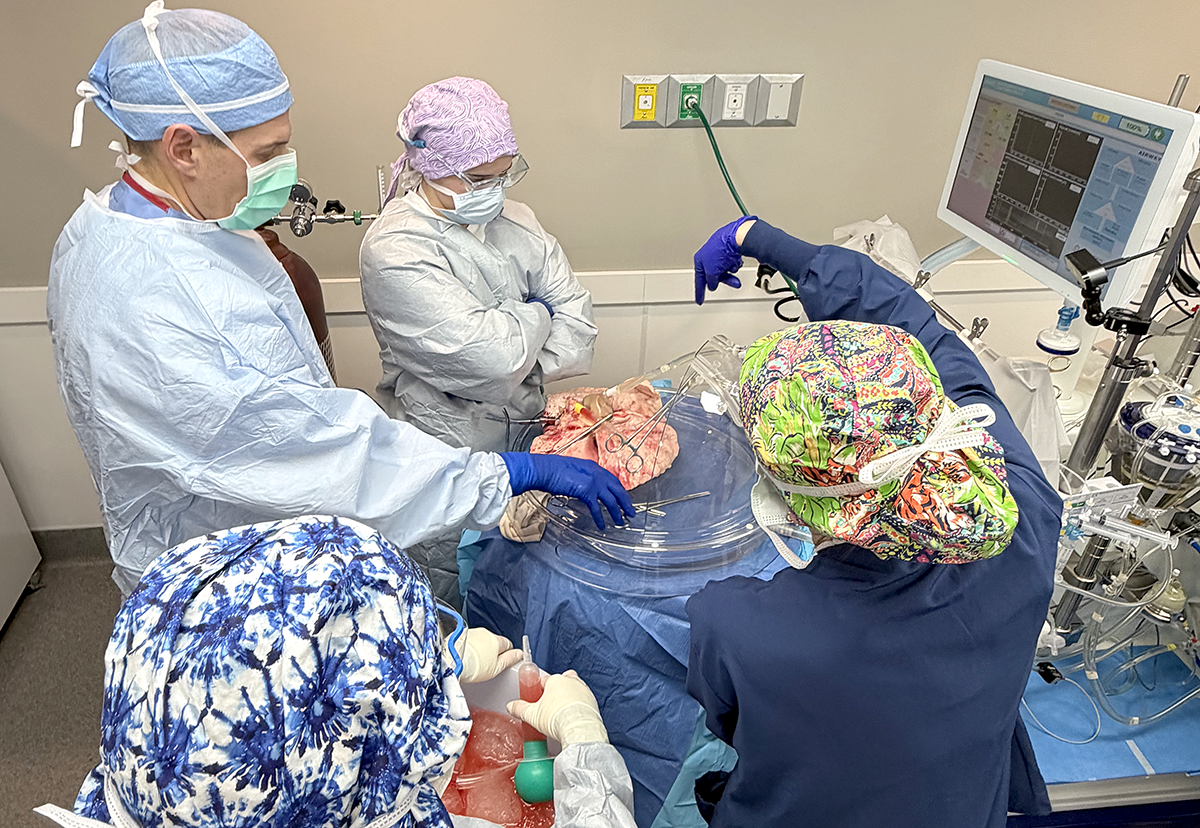
    Indiana Donor Network partnered with Sweden-based XVIVO and Wisconsin-based Perfusion Solution to reassess the lungs, mechanically perfuse them and improve their functionality.

    The result: After 5 hours undergoing mechanical perfusion, the donor lungs were accepted for transplant and saved an Indiana man’s life the same day.

    Indiana Donor Network became the first organ recovery organization in the U.S. to establish an in-house lung perfusion system to increase the vibrancy of lungs for future lifesaving transplantations.

    INDIANAPOLIS
    Indiana Donor Network is the first organ recovery organization in the U.S. to utilize an in-house machine perfusion system that keeps donated lungs functional outside the human body and helps reassess the viability of marginally performing lungs for transplantation.

    A new partnership between Indiana Donor Network, global medtech company XVIVO, headquartered in Sweden, and Beloit, Wisconsin-based Perfusion Solution is now being utilized by Indiana Donor Network clinical teams to better serve regional transplant centers and partner hospitals involved in lung recovery and transplantation.

    “Advancements in technology are transforming organ transplantation at every stage – from the recovery of a donated organ to the moment it gives someone a second chance at life,” said Indiana Donor Network Director of Organ Services Sherry Quire. “Saving lives involves more than the successful recovery of a generous gift. We are committed to preserving and enhancing organ vitality outside the body so each transplant has the greatest possible opportunity to succeed.”

    The system – involving the utilization of XVIVO’s XPS™ Ex Vivo Lung Perfusion (EVLP) platform, perfusion specialists and equipment of Perfusion Solution, and the clinical organ recovery staff of Indiana Donor Network – was initially implemented Jan. 29.

    FROM RECOVERY THROUGH PERFUSION TO LIFESAVING TRANSPLANT IN 1 DAY
    That day, an Indiana man hospitalized at a northeastern Indiana hospital died. The registered organ donor’s lungs were recovered then transferred to Indiana Donor Network Organ and Tissue Recovery Center in Indianapolis for clinical evaluation. After several regional transplant centers declined the lungs due to their marginal function, clinical teams from Indiana Donor Network, XVIVO and Perfusion Solution went to work.

    Indiana Donor Network led the clinical evaluation of the lungs. XVIVO activated its EVLP platform, which extended lung assessment and preservation time and increased the viability of the lungs outside the body for transplant. Perfusion Solution provided lung recovery perfusion equipment, clinical services, staffing, education and ongoing training.

    Once Perfusion Solution identified the lungs as candidates for EVLP, real-time data analysis of lung functionality guided perfusionists and clinical staff through the EVLP protocol, which provided perfusion for nearly five hours. EVLP significantly improved lung functionality.

    Following the EVLP process, Indiana Donor Network secured a transplant center to accept the lungs, which were successfully transplanted to save an Indiana man’s life.

    “Our collaboration with Perfusion Solution and Indiana Donor Network enabled a successful lung transplant, representing the first of many more lifesaving lung transplants that will be made possible through our EVLP model,” said XVIVO CEO Christoffer Rosenblad. “At XVIVO, we are driven by our vision that nobody should die waiting for a new organ. Strategic partnerships like this are crucial in making that vision a reality.”

    ABOUT MACHINE PERFUSION
    Machine perfusion is a controlled process that simulates functionality of an organ outside the body, provides consistent oxygen and nutrients that stabilize a recovered organ, keep it functioning and preserves its health, function and viability for successful transplantation.

    Clinical teams have more time to assess a donor organ and even improve organ functionality prior to transplant when machine perfusion is utilized. Perfusion also makes it possible for surgeons to accept an organ for transplant that might otherwise be rejected due to diminished functionality. Additional time provided through perfusion also increases the distance a donor organ can travel for transplant and the geographical reach of organ donation, which both ultimately lead to saving more lives.

    “We believe the future of transplantation is driven by strong collaboration and organ procurement organization-led innovation. When OPOs, transplant centers and perfusion specialists operate as one coordinated team, together we honor the gift of donation by maximizing every viable organ,” said Jon Bohannen, executive vice president of sales and clinical integration at Perfusion Solution. “Through disciplined execution and shared clinical governance, we are helping transform marginal opportunities into lifesaving transplants. Collaboration is not just part of our model – it is the engine that allows us to save more lives.”

    Implementation of the XVIVO and Perfusion Solution partnership is the latest way Indiana Donor Network is utilizing advanced machine perfusion technologies to keep organ donations animated and maintain their viability from recovery to transplant. Kidney and liver perfusion devices are also in use to keep those organs healthy, vibrant, nourished and animated while increasing time for clinical assessment and transport to awaiting recipients spanning more geographic locations within the U.S.

    Duane Brodt
    Indiana Donor Network
    +1 317-222-3436
    dbrodt@indonornetwork.org
    Visit us on social media:
    LinkedIn
    Instagram
    Facebook
    YouTube
    X

    In-house lung perfusion at Indiana Donor Network

    Legal Disclaimer:

    EIN Presswire provides this news content “as is” without warranty of any kind. We do not accept any responsibility or liability
    for the accuracy, content, images, videos, licenses, completeness, legality, or reliability of the information contained in this
    article. If you have any complaints or copyright issues related to this article, kindly contact the author above.

  • Human Touch® Wins Four 2026 Platinum ADEX Awards for Design Excellence

    Human Touch® Wins Four 2026 Platinum ADEX Awards for Design Excellence

    AirTech ZG PRO, Gravis ZG Chair, Novo Flex, and Super Novo X Recognized for Innovation, Performance, and Design

    LONG BEACH, CA, UNITED STATES, March 3, 2026 /EINPresswire.com/ — Human Touch®, a global leader in high performance massage chairs and wellness solutions, has earned four 2026 Platinum ADEX (Awards for Design Excellence) Awards. The honors mark the company’s 12th consecutive year of ADEX recognition and highlight innovation and design excellence across its zero gravity recliners and intelligent massage chair portfolio.

    The 2026 Platinum-winning products include:

    AirTech ZG PRO for Contract Lounge Recliners
    The AirTech ZG PRO combines independent dual-motor zero gravity positioning with integrated air massage, heat, powered lumbar support, and antimicrobial SofHyde upholstery. Engineered for durability and comfort, it is designed for hospitality, healthcare, corporate, and fitness environments.

    Gravis ZG Chair for Zero Gravity Recliners
    The Gravis ZG Chair pairs ergonomic zero gravity support with powered adjustments, air massage, and multi-zone heat. Its clean, contemporary profile and app-enabled customization deliver therapeutic comfort within a refined, modern silhouette.

    Novo Flex Massage Chair for Intelligent Acupressure Massage Chairs
    The Novo Flex features the proprietary HT Flex S- and L-Track system for extended coverage from the spine to the glutes, along with 3D/4D massage programs, heated foot and calf massage, dual-lumbar heat, and guided Auto-Wellness programs. Its zero gravity position enhances full-body stretch and decompression.

    Super Novo X Massage Chair for Intelligent Acupressure Massage Chairs
    The Super Novo X showcases Human Touch’s most advanced engineering, highlighted by DuoSync™ technology that delivers a synchronized, four-hand massage experience. With Virtual Therapist® voice control, Acupoint® body sensing, and immersive zero gravity positioning, it offers elevated personalization and performance. Its signature Teardrop Doors and customizable finishes make it as much a design statement as a wellness solution.

    Established in 1995, the ADEX Awards are among the most recognized design competitions in the industry. Judged by a global advisory board of more than 1,750 professionals, the program honors outstanding innovation, functionality, and aesthetic excellence across product categories.

    “The Platinum distinction is awarded to entries that meet a rigorous standard of design and performance,” said Jay Chakraborty, Executive Director of Design Journal and the ADEX Awards. “Human Touch’s 2026 honorees exemplify that level of discipline across its massage and zero gravity product categories.”

    “ADEX recognition reflects the design standards we hold ourselves to across every product we develop,” said David Wood, CEO of Human Touch. “Our focus remains on engineering performance driven wellness solutions that integrate seamlessly into both residential and professional environments.”

    For more information about Human Touch and its award-winning products, visit www.humantouch.com.

    About Human Touch®
    For over 45 years, Human Touch has shaped the wellness industry with a portfolio of high-performance massage chairs, zero gravity recliners, and targeted massage products. Partnering with engineers, medical experts, athletes, and award-winning designers, Human Touch crafts products designed to relieve pain, reduce stress, and promote daily recovery while complementing modern interiors. Trusted by more than 35 colleges, 14+ professional sports teams, and 10,000+ chiropractors, Human Touch products are available through fine furniture retailers, back care specialty stores, mass-market retailers across the U.S., international distributors in more than 40 countries, and online at www.humantouch.com.

    About ADEX Awards
    The ADEX (Awards for Design Excellence) program, sponsored by Design Journal and presented at adexawards.com, is one of the most prominent design recognition platforms in the architecture and design industry. Established in 1995, ADEX honors outstanding innovation, sustainability, and design quality across interior design, architecture, landscape architecture, and product design. By celebrating excellence that balances aesthetics, functionality, and environmental responsibility, ADEX continues to set industry benchmarks and inspire the global design community.

    Lauren Vultee
    FGPR
    +1 212-334-1212
    email us here

    Legal Disclaimer:

    EIN Presswire provides this news content “as is” without warranty of any kind. We do not accept any responsibility or liability
    for the accuracy, content, images, videos, licenses, completeness, legality, or reliability of the information contained in this
    article. If you have any complaints or copyright issues related to this article, kindly contact the author above.

  • PDQ Releases Annual State of System Administration Report

    PDQ Releases Annual State of System Administration Report

    Survey of 1,000+ IT professionals finds rising stress from workload, as sysadmins adopt automation and assistive AI to reduce risk while maintaining control.

    SALT LAKE CITY, UT, UNITED STATES, March 3, 2026 /EINPresswire.com/ — PDQ today released its 2026 State of System Administration report, finding that sysadmin stress continues to rise as expanding responsibilities, hybrid environments, and security pressure push modern IT work past sustainable limits.

    Based on responses from more than 1,000 IT professionals worldwide, the report shows sysadmins increasingly responsible for outcomes shaped by tools and decisions outside their control.

    With little margin for error, sysadmins are seeking relief by standardizing environments, automating high-risk repeatable work, and cautiously exploring AI where it improves visibility without introducing new failure modes.

    “Sysadmins aren’t struggling because they can’t keep up,” said Dan Cook, CEO of PDQ. “They’re under pressure because the work keeps expanding. This year’s data makes it clear that stress is structural, and that means it’s something organizations can actually fix.”

    Key 2026 findings

    → Stress is rising across all experience levels
    57% of respondents report feeling more stressed than last year. Unlike prior years, stress is no longer concentrated among newer sysadmins; senior sysadmins are increasingly acting as default escalation points for complex, cross-platform, and high-risk issues.

    → Security remains the top concern
    62% of respondents cite a security breach as a top organizational concern, so it’s no surprise that security is a major source of pressure. Many sysadmins also report a widening gap between responsibility for outcomes and authority over risk acceptance.

    → AI is welcome … with limits
    Sysadmins are not anti-AI. In fact, 94% can already identify concrete ways AI can improve their work, particularly in analysis, reporting, and risk visibility. However, interest drops sharply as AI’s autonomy increases. Most sysadmins prefer assistive AI over fully autonomous systems that act in production without clear oversight.

    “Sysadmins are practical about new tools,” said Mark Littlefield, VP of Product at PDQ. “Automation helps when it’s predictable and reversible. AI helps when it increases visibility. What they don’t want is black-box autonomy that concentrates responsibility without reducing risk.”

    Why it matters

    For sysadmins, the report validates what many are already experiencing: stress driven by workload design, not individual failure, and a growing need for tools that reduce cognitive load.

    For IT leaders, the data signals a shift in retention risk. Workload sustainability and on-call burden are now as important as compensation.

    For organizations, the findings highlight the operational risk of misaligned responsibility, unchecked tool sprawl, and manual work that doesn’t scale.

    “The future of IT isn’t about moving faster,” Cook added. “It’s about making the work lighter, safer, and more repeatable … and making sure the people responsible for uptime and security aren’t carrying everything alone.”

    The full 2026 State of System Administration Report is available now.

    Download the report: https://www.pdq.com/state-of-sysadmin/download/

    About PDQ

    PDQ builds IT management tools that are simple, secure, and pretty damn quick. Trusted by more than 33,000 system administrators, MSPs, and IT professionals worldwide, PDQ’s suite of autonomous endpoint management (AEM) products (including PDQ Connect, Deploy & Inventory, and SmartDeploy) streamlines patching, deployment, and vulnerability and endpoint management across Windows and macOS devices.

    Founded in 2001 and based in Salt Lake City, Utah, PDQ is built for sysadmins, by sysadmins.

    Meredith Kreisa
    PDQ
    email us here
    Visit us on social media:
    LinkedIn
    Instagram
    Facebook
    YouTube
    X
    Other

    Legal Disclaimer:

    EIN Presswire provides this news content “as is” without warranty of any kind. We do not accept any responsibility or liability
    for the accuracy, content, images, videos, licenses, completeness, legality, or reliability of the information contained in this
    article. If you have any complaints or copyright issues related to this article, kindly contact the author above.
  • EDX Wireless Joins Wi-SUN Alliance to Advance Global Smart Utility Communications

    EDX Wireless Joins Wi-SUN Alliance to Advance Global Smart Utility Communications

    EDX Wireless a leader in advanced RF planning, and smart grid communications, is proud to announce that it has officially joined the Wi-SUN Alliance.

    Joining the Wi-SUN Alliance aligns with EDX Wireless’s mission to enable reliable, scalable, and secure communication infrastructures for utilities and mission-critical networks,””
    — Anoop Kaur Bowdery, CEO, EDX Wireless.

    EUGENE, OR, UNITED STATES, March 3, 2026 /EINPresswire.com/ — EDX Wireless (edx.com), a leader in advanced RF planning, smart grid communications, and utility network design, is proud to announce that it has officially joined the Wi-SUN Alliance, the global ecosystem of interoperable standards advancing secure, field-proven communications for smart infrastructure. (https://wi-sun.org/)

    As a member of the Wi-SUN Alliance, EDX Wireless will collaborate with industry stakeholders, utility partners, and technology innovators to accelerate the adoption of robust and interoperable wireless networks that support large-scale smart grid deployments globally.

    “Joining the Wi-SUN Alliance aligns with EDX Wireless’s mission to enable reliable, scalable, and secure communication infrastructures for utilities and mission-critical networks,” said Anoop Kaur Bowdery, CEO, EDX Wireless. “We look forward to contributing our RF planning expertise and technical insights to help propel interoperable and resilient smart utility networks around the world.”

    The Wi-SUN Alliance is recognized for developing specifications based on open standards that support IPv6 communication, advanced mesh networking, and field-proven wireless solutions. Its technologies are widely adopted in large smart metering, distributed energy resource management, smart street lighting, and utility automation deployments.

    Through this strategic collaboration, EDX Wireless will:
    🔹 Support smart utility and IoT deployments using Wi-SUN standards
    🔹 Provide network planning, optimization, and performance modeling for Wi-SUN-based infrastructure
    🔹 Help utilities and partners accelerate secure and future-ready connectivity solutions

    “We believe that interoperable wireless standards are crucial for utilities navigating evolving smart grid requirements,” added [Name]. “Our involvement with Wi-SUN Alliance bolsters our commitment to delivering industry-leading planning tools and insights that help utilities unlock the full potential of their communication networks.”

    For more information about EDX Wireless and its participation in the Wi-SUN Alliance, visit edx.com or contact:
    Media Contact:
    Parul Sharma
    Marketing Head
    parul.sharma@edx.com

    About EDX Wireless
    EDX Wireless delivers innovative RF planning and smart network solutions that enable utilities and enterprises to design and optimize resilient communication infrastructures. With a focus on data-driven modeling, advanced analytics, and industry best practices, EDX Wireless helps customers improve performance, reduce deployment risk, and achieve scalable connectivity. Learn more at edx.com.

    About Wi-SUN Alliance
    Wi-SUN Alliance is a global ecosystem of companies driving standards-based wireless solutions for smart infrastructure. The Alliance promotes open, interoperable technologies that enable secure and scalable connectivity for utilities, smart cities, and IoT applications worldwide. Visit wi-sun.org for more information.

    Parul Sharma
    EDX Wireless
    +46 76 455 89 86
    email us here
    Visit us on social media:
    LinkedIn

    Legal Disclaimer:

    EIN Presswire provides this news content “as is” without warranty of any kind. We do not accept any responsibility or liability
    for the accuracy, content, images, videos, licenses, completeness, legality, or reliability of the information contained in this
    article. If you have any complaints or copyright issues related to this article, kindly contact the author above.

  • Utah-Based Internet Provider Utah Broadband Earns Customer Loyalty Score More Than Triple Industry Average

    Utah-Based Internet Provider Utah Broadband Earns Customer Loyalty Score More Than Triple Industry Average

    To see our customers recommending us at this level, especially in an industry that historically ranks low in satisfaction, tells us our focus on reliability and customer care is making a difference.”
    — Ben Elkins, CEO of Utah Broadband

    DRAPER, UT, UNITED STATES, March 3, 2026 /EINPresswire.com/ — As national telecommunications companies continue to struggle with customer satisfaction ratings, Utah-based internet provider Utah Broadband is bucking the trend based on the results of its most recent customer survey. Utah Broadband announced today that it earned a Net Promoter Score (NPS) of 57 in a February 2026 customer survey — more than triple the telecommunications industry average, which typically ranges between 12 and 16.

    Net Promoter Score is a widely used measure of customer loyalty that asks customers how likely they are to recommend a company to others on a scale of 0–10. Scores above 50 are generally considered excellent across industries.

    Utah Broadband’s survey results showed:
    • Promoters (9–10): 68%
    • Passives (7–8): 21%
    • Detractors (0–6): 11%
    • Final NPS: 57

    The survey was conducted in early February among customers across the company’s Utah service areas that are principally in the Wasatch Front and Back areas of the Salt Lake City metroplex.

    “We know internet service is one of the most frustrating categories for consumers nationwide,” said Ben Elkins, CEO of Utah Broadband. “To see our customers recommending us at this level, especially in an industry that historically ranks low in satisfaction, tells us our focus on reliability and customer care is making a real difference.”

    Reliability Driving Satisfaction
    The survey found that nearly 78% of respondents rated their service as “very reliable” or “mostly reliable.” Only 2% described the Utah Broadband service as “frequently unreliable.”

    In addition, 74% of respondents said reliable internet has significantly improved their daily lives — supporting remote work, online education, small business operations, entertainment, and communication with family and friends.

    “Broadband is no longer a luxury,” Elkins said. “It’s critical infrastructure. When service is unreliable, it disrupts work, school and daily life. Our goal has always been to deliver connectivity that customers don’t have to think about.”

    Customers Cite Service and Responsiveness
    In the survey, open-ended responses from customers consistently highlighted:
    • Fast response times
    • Friendly and knowledgeable support staff
    • Stable connections with fewer outages
    • Strong and consistent speeds

    When asked what the company could improve, many respondents indicated no major changes were needed, while others referenced isolated or situational concerns rather than systemic issues.

    Local Provider, Local Accountability
    Industry studies have consistently ranked large national telecom providers among the lowest-performing sectors for customer satisfaction. Local providers, however, often outperform larger competitors due to regional focus and community accountability.

    Utah Broadband serves communities across Utah with both wireless and fiber infrastructure.
    According to Elkins, the survey results will guide continued network investment and customer experience improvements throughout 2026.

    “We live and work in the same communities we serve,” Elkins said. “That local accountability drives how we operate every day.”

    For more information about Utah Broadband and its services, visit https://utahbroadband.com/ or call (801) 717-2002.

    About Utah Broadband
    Utah Broadband has been connecting Utah communities since 2002, delivering fast, reliable internet with a focus on local service and exceptional value. Serving both the Wasatch Front and Back, we combine cutting-edge technology with a commitment to keeping our customers connected, whether at home, at work, or on the go. As a proud subsidiary of Boston Omaha Corporation (NYSE: BOC), we’re backed by strength and built for the future. To learn more, visit utahbroadband.com or call (801) 717-2002.

    Forward-Looking Statements
    Matters discussed in this press release may constitute forward-looking statements. The Private Securities Litigation Reform Act of 1995 provides safe harbor protections for forward-looking statements, encouraging companies to provide prospective information about their business. Forward-looking statements include statements concerning plans, objectives, goals, strategies, future events or performance, and underlying assumptions and other statements that are not statements of historical facts. The Company desires to take advantage of the safe harbor provisions of the Private Securities Litigation Reform Act of 1995. This includes this cautionary statement in connection with this safe harbor legislation. The words “believe,” “anticipate,” “intend,” “estimate,” “forecast,” “project,” “plan,” “potential,” “may,” “should,” “expect,” “pending,” and similar expressions identify forward-looking statements. The forward-looking statements in this press release are based upon various assumptions, many of which are based, in turn, upon further assumptions, including, without limitation, our management’s examination of historical operating trends, data contained in our records, and other data available from third parties. Although we believe these assumptions were reasonable when made, because these assumptions are inherently subject to significant uncertainties and contingencies that are difficult or impossible to predict and are beyond our control, we cannot assure you that we will achieve or accomplish these expectations, beliefs, or projections.

    Randolph Pitzer
    Pitzer Relations on Behalf of Utah Broadband
    +1 630-210-1631
    email us here

    Legal Disclaimer:

    EIN Presswire provides this news content “as is” without warranty of any kind. We do not accept any responsibility or liability
    for the accuracy, content, images, videos, licenses, completeness, legality, or reliability of the information contained in this
    article. If you have any complaints or copyright issues related to this article, kindly contact the author above.

  • Study of two million people: Inherited risk for mental illness spills across diagnostic lines far more than realized

    Study of two million people: Inherited risk for mental illness spills across diagnostic lines far more than realized

    Massive Swedish study of over two million people reveals that genetic risk for mental illness often points toward multiple disorders, not just the one diagnosed

    Genetic specificity is not some abstract property locked inside the genome. We have been debating whether psychiatric disorders are truly distinct since the 1800s. Now we can put numbers on it.”
    — Dr. Kenneth S. Kendler, Virginia Commonwealth University

    RICHMOND, VA, UNITED STATES, March 3, 2026 /EINPresswire.com/ — There is a question that has haunted psychiatry since before it had a name, back when the alienists in their frock coats were still debating whether madness ran in families or simply accumulated there like dust. The question is deceptively simple. When a person inherits a vulnerability to mental illness, does that vulnerability have an address? Does it point, with any precision, toward the specific disorder that eventually appears on the chart? Or does it scatter, landing across the whole landscape of the mind like seed thrown from a moving hand?

    A sweeping new study published in Genomic Psychiatry has, for the first time, put actual numbers on the answer. The numbers are not what most clinicians expected.

    Dr. Kenneth S. Kendler, a psychiatric geneticist at Virginia Commonwealth University, led a team that analyzed data from more than two million individuals born in Sweden between 1950 and 1995. The dataset drew from national patient registries and primary care records covering essentially the entire population. The team selected nine major psychiatric and substance use disorders: schizophrenia, bipolar disorder, major depression, anxiety disorder, PTSD, ADHD, autism spectrum disorder, alcohol use disorder, and drug use disorder. For each one, they calculated a measure they call genetic specificity: the percentage of total inherited risk in a person with a given diagnosis that actually points toward that diagnosis and not toward the others.

    Think of it this way. If you have been diagnosed with depression, some of your genetic risk factors genuinely predispose you to depression. But some of them, possibly most of them, actually predispose you to anxiety, or substance use problems, or ADHD, or conditions your doctor never mentioned. Genetic specificity tells you what fraction of the total genetic signal is truly about the diagnosis on your chart.

    The results arranged themselves into a hierarchy that nobody had previously quantified, and it was stark. Schizophrenia sat at the top with a genetic specificity of 73.1%, meaning nearly three quarters of the aggregate genetic risk carried by individuals with schizophrenia coded exclusively for schizophrenia. Whatever else it may be, schizophrenia is, genetically speaking, overwhelmingly its own thing. Bipolar disorder followed at 54.8%. Alcohol use disorder came in at 54.1%.

    A middle tier held some surprises. ADHD registered 48.2%, autism spectrum disorder 47.5%, and PTSD 47.4%. Three conditions that look nothing alike in a clinic waiting room turned out to occupy nearly identical genetic ground.

    Then came the conditions whose genetic identities were the most blurred. Major depression landed at 41.1%. Anxiety disorder at 38.6%. And drug use disorder, at the bottom of the list, registered a mere 29.5%. That last number deserves a pause. It means that for every unit of genetic risk carried by someone diagnosed with drug use disorder, less than a third of it is actually about drugs. The remaining two thirds scatter across schizophrenia, depression, ADHD, and the other conditions in the panel. The genes do not know what the clinician wrote on the form.

    “What surprised us was the sheer range,” said Dr. Kenneth S. Kendler, VIPBG Distinguished Professor of Psychiatry at Virginia Commonwealth University and corresponding author of the study. “Schizophrenia carries a genetic signature that is overwhelmingly its own. Drug use disorder, by contrast, looks more like a downstream expression of genetic risks that cut across many conditions. That difference has real implications for how we design genetic studies and how we think about diagnostic categories.”

    Could this finding reshape how doctors think about the boundaries between one mental illness and another? Could it mean that some of the categories clinicians spend entire careers distinguishing are, at the genetic level, less distinct than anyone assumed? The data strongly suggest yes.
    But the most provocative finding may be this: genetic specificity is not fixed. It moves. It shifts, sometimes dramatically, depending on three features that any clinician can observe. Age at onset. Number of recurrent episodes. And where the patient receives treatment.

    Bipolar disorder showed the widest swings. Patients whose illness began early in life had substantially higher genetic specificity than those with late onset, and the drop-off was steep. Patients with many recurrent episodes were far more genetically specific than those with few. And here is where it gets clinically fascinating: bipolar patients treated in hospitals carried a genetic specificity of 63%, while those seen only in primary care registered just 31%, a gap of more than thirty percentage points (p PTSD moved in the opposite direction. Its genetic specificity actually increased with later age at onset and was highest among individuals treated only in primary care, at 53%, compared with 41% for those who were hospitalized. The reasons likely differ: hospitalized PTSD may involve more comorbid conditions that dilute the disorder-specific signal.

    For all nine disorders without exception, greater recurrence was associated with higher genetic specificity. The effect was most pronounced for bipolar disorder and ADHD. The logic is intuitive once you see it: a person who keeps returning to the same illness, episode after episode, year after year, probably carries genes that are genuinely aimed at that illness, rather than a generalized vulnerability that happened to land there once by circumstance.

    What does this mean for the family doctor in a small town who sees a forty-five-year-old patient walk in with a first episode of depression? Is that patient genetically the same as a twenty-year-old with recurrent depression? The data say no. And the difference is not subtle.

    “Genetic specificity is not some abstract property locked inside the genome,” Dr. Kendler explained. “It moves. It responds to clinical features that every psychiatrist can observe at the bedside. A hospitalized bipolar patient and one seen only in primary care carry substantially different levels of genetic specificity.”

    One of the most intellectually satisfying puzzles in the study involves the contrasting behavior of depression and bipolar disorder at the hospital door. For bipolar disorder, hospitalization concentrates the genetic signal. It makes sense: the manic episode is what drives the admission, and mania is the core of the disorder. But for depression, hospitalization does the opposite. Hospitalized depression cases were less genetically specific than those treated in primary care. The researchers propose a reason that will resonate with anyone who has worked in an emergency room: what brings a depressed person to the hospital is often not the depth of the sadness itself but impulsive behavior, suicidal crises, and substance-related emergencies, all of which reflect elevated genetic risk for externalizing disorders like ADHD and substance use. The depression you see in primary care, the quieter kind, may carry a purer genetic signal for mood pathology.

    The question practically asks itself. Should researchers studying the genetics of depression be recruiting from family medicine clinics rather than inpatient psychiatric units? Would that produce cleaner, more replicable genetic findings? The authors do not say so explicitly, but the data lean hard in that direction.
    The investigators stress-tested their findings with the care of engineers checking a bridge. Sensitivity analyses explored what happened when they removed patients who carried more than one diagnosis. Stripping out the 6.0% of depression cases who also had a lifetime bipolar diagnosis barely moved the specificity estimate, from 41.1% to 41.8%. Similar corrections for the overlap between schizophrenia and bipolar disorder produced equally small shifts. The hierarchy held.

    Sex-stratified analyses showed that genetic specificities were remarkably similar between men and women for most conditions. The two clear exceptions were alcohol use disorder and drug use disorder, where men showed substantially higher genetic specificities (p

    The results converge compellingly with recent molecular genetics. A large multivariate study by Grotzinger and colleagues, published in Nature in 2026, examined fourteen psychiatric disorders using polygenic risk scores and identified a general psychopathology factor, a kind of master dial for mental illness liability. Their internalizing factor, which included major depression, anxiety disorder, and PTSD, the three conditions with the lowest genetic specificity in Dr. Kendler’s analysis, shared more than 90% of its genetic variance with that general factor. The schizophrenia-bipolar factor shared only 35%. Two entirely different research groups, using entirely different methods and different populations, arrived at the same conclusion: some psychiatric disorders have sharp genetic borders, and some do not.

    The study carries honest limitations. It relies on Swedish national registry data, not structured diagnostic interviews conducted by researchers. Diagnostic practices vary across clinicians and eras. The population studied was Swedish-born individuals from Swedish-born parents, and whether the same hierarchy would appear in other ethnic and geographic populations remains unknown. The family genetic risk scores used here differ fundamentally from the polygenic risk scores derived from DNA sequencing, although the Kendler team has previously shown that the two approaches behave consistently.

    There is also a deeper structural point worth noting. Genetic specificity is partly shaped by comorbidity. A disorder that is only moderately heritable and that frequently co-occurs with other conditions, as depression does with anxiety and substance use, will almost inevitably show lower specificity. A highly heritable disorder with relatively little comorbidity, like schizophrenia, will show high specificity. Both predictions are borne out in the data. This does not diminish the findings. It places them in context.

    Could replication in non-Scandinavian cohorts reveal different hierarchies? Might populations with different genetic architectures or healthcare systems produce different patterns? These remain open questions of real significance.

    “We have been debating whether psychiatric disorders are truly distinct since the 1800s,” Dr. Kendler reflected. “Now we can actually put numbers on it. Some of our diagnostic categories carve nature much more cleanly at the genetic joints than others, and clinicians and researchers alike need to reckon with that.”
    If genetic specificity varies predictably with observable clinical features, then researchers designing genetic studies could begin selecting participants to sharpen or broaden the signal, depending on what they are trying to find. Clinicians might someday use specificity-related markers, age at onset, recurrence patterns, treatment history, to refine prognosis and guide treatment. And the nosologists, the scientists who build the diagnostic manuals that every doctor in the country consults, now have a quantitative framework for asking the most uncomfortable question in their field: how genetically real are the categories we have been using?

    The sample sizes were formidable. The depression cohort alone included 674,955 individuals. Schizophrenia comprised 18,348. The total dataset encompassed more than two million diagnostic records with full population coverage.

    This peer-reviewed research represents a significant advance in psychiatric genetics, offering new insights into the genetic architecture of mental illness through rigorous population-based investigation. The findings challenge existing assumptions about diagnostic boundaries by demonstrating that genetic specificity varies widely across disorders and is modifiable by clinical features. By employing family genetic risk scores calculated from national Swedish registries encompassing over two million affected individuals, the research team has generated data that not only advances fundamental knowledge but suggests practical applications in genetic study design and clinical stratification. The interdisciplinary collaboration between psychiatric genetics at Virginia Commonwealth University and primary care epidemiology at Lund University demonstrates the power of combining diverse expertise to tackle complex scientific questions.

    This project was supported in part by NIH grants R01DA030005, R01MH139865 and R01AA023534 and the Swedish Research Council (2024-02796 and 2021-06467).

    The Research Article in Genomic Psychiatry titled “The specificity of genetic risk for psychiatric and substance use disorders: Its modification by age at onset, recurrence, and site of treatment” is freely available via Open Access on 3 March 2026 in Genomic Psychiatry at the following hyperlink: https://doi.org/10.61373/gp026a.0024.

    About Genomic Psychiatry: Genomic Psychiatry: Advancing Science from Genes to Society (ISSN: 2997-2388, online and 2997-254X, print) represents a paradigm shift in genetics journals by interweaving advances in genomics and genetics with progress in all other areas of contemporary psychiatry. Genomic Psychiatry publishes medical research articles of the highest quality from any area within the continuum that goes from genes and molecules to neuroscience, clinical psychiatry, and public health.

    Visit the Genomic Press Virtual Library: https://issues.genomicpress.com/bookcase/gtvov/

    Our full website is at: https://genomicpress.com/

    Ma-Li Wong
    Genomic Press
    mali.wong@genomicpress.com

    Legal Disclaimer:

    EIN Presswire provides this news content “as is” without warranty of any kind. We do not accept any responsibility or liability
    for the accuracy, content, images, videos, licenses, completeness, legality, or reliability of the information contained in this
    article. If you have any complaints or copyright issues related to this article, kindly contact the author above.

  • SCCG Partners with Slot Check to Accelerate Global Adoption of Real-Time Slot Performance Platform for Players

    SCCG Partners with Slot Check to Accelerate Global Adoption of Real-Time Slot Performance Platform for Players

    SCCG will provide global business development and strategic distribution services to accelerate adoption of the Slot Check platform

    Slot Check introduces a powerful layer of transparency, engagement, and data intelligence that aligns with the modern player’s expectations.”
    — Stephen Crystal – Founder & CEO, SCCG

    LAS VEGAS, NV, UNITED STATES, March 3, 2026 /EINPresswire.com/ — SCCG Management, a global advisory firm specializing in gaming, sports betting, iGaming, and emerging gaming technologies, today announced a strategic partnership with Slot Check, Inc., a real-time slot performance intelligence platform delivering actionable machine-level insights directly to players and operators.

    Through this partnership, SCCG will provide global business development, advisory support, and strategic distribution services to accelerate adoption of the Slot Check platform across commercial and tribal gaming markets. SCCG will facilitate introductions to casino operators, loyalty platforms, and strategic technology partners within its global network to support commercial deployment, integration opportunities, and long-term market expansion.

    Slot Check delivers real-time slot performance analytics at the individual machine level, empowering users with detailed insights including Return to Player (RTP), Payout to Player (POP), win-per-spin metrics, jackpot performance, volatility profiles, machine trends, and multi-timeframe data ranging from hourly performance to 30-day analytics and since-last-jackpot reporting. It’s sports analytics for slots. The platform enables players to sort, filter, rank, and track every machine on a casino floor while also tagging favorite slots and monitoring personal play history. The player engagement Slot Check creates increases visits, coin in, and actual win – and every other KPI in between.

    Designed as a progressive website application for seamless deployment, Slot Check provides casinos with a player engagement tool that enhances transparency, increases time-on-device, and supports loyalty-driven gamification initiatives. The platform can integrate within existing loyalty environments, positioning it as a force multiplier for casinos seeking to modernize the slot floor experience without requiring native app distribution.

    “The slot floor remains the financial engine of the casino, yet player-facing innovation has historically lagged behind other verticals,” said Stephen Crystal, Founder and CEO of SCCG Management. “Slot Check introduces a powerful layer of transparency, engagement, and data intelligence that aligns with the modern player’s expectations. Through our global operator relationships and distribution platform, we’re excited to help position Slot Check as a leading innovation partner across commercial and tribal gaming enterprises.”

    In addition to global business development, the partnership includes a coordinated marketing and lead generation strategy leveraging SCCG’s media assets, newsletters, and sales channels. Slot Check will receive ongoing brand visibility across SCCG’s weekly newsletter reaching more than 33,000 global gaming executives, as well as inclusion in targeted articles, outreach campaigns, and technology innovation discussions designed to expand awareness and drive enterprise adoption.

    Slot Check’s platform introduces a new dimension of slot floor intelligence by presenting ranked lists of performance insights, leaderboards, trend tracking, and advanced machine analytics that empower both players and operators. By combining detailed performance transparency with loyalty-linked engagement potential, the solution supports casinos seeking measurable lift in slot engagement, targeted promotional strategies, and enhanced guest retention.

    “Slot Check has truly flipped the script and the results for those casinos bold enough to engage with us is INCREDIBLE!” states Grant Stousland, Founder & CEO, Slot Check, Inc. “We are excited to partner with SCCG’s global distribution network as they help us scale to the next phase of our platform’s growth.”

    As the gaming industry continues to evolve toward data-driven personalization and digital engagement, the partnership between SCCG and Slot Check represents a strategic alignment between real-time performance analytics and a global advisory platform capable of accelerating enterprise adoption across diverse gaming markets.

    About Slot Check, Inc.

    Slot Check has proven that transparency is good for business and the future of slot play. Slot Check is a real-time slot performance intelligence platform providing machine-level analytics, trend tracking, and multi-timeframe insights for casino slot players and operators. The platform delivers detailed performance data including RTP, POP, volatility, jackpot metrics, win-per-spin analysis, and ranking functionality across entire casino floors. Designed for seamless integration within existing loyalty and gaming ecosystems, Slot Check enhances player engagement, transparency, and operational insight without disrupting current infrastructure.

    About SCCG Management

    SCCG Management is a leading advisory firm in the global gaming industry, dedicated to driving strategic growth and maximizing revenue for over 130 client-partners across diverse iGaming verticals. With offices in North America, Latin America, Africa, Asia, Europe, and Brazil, our team of seasoned industry executives leverages global relationships to enhance product distribution and seize new market opportunities. With over 30 years of experience, we specialize in navigating the complexities of tribal gaming, capitalizing on emerging markets, fostering igaming innovations, managing intellectual property, facilitating mergers and acquisitions, and advancing sports wagering and entertainment ventures. https://sccgmanagement.com/

    CONTACT

    Stephen A. Crystal
    SCCG Management
    +1 702-427-9354
    email us here
    Visit us on social media:
    LinkedIn

    SCCG – The Gambling Industry’s Global Connector

    Legal Disclaimer:

    EIN Presswire provides this news content “as is” without warranty of any kind. We do not accept any responsibility or liability
    for the accuracy, content, images, videos, licenses, completeness, legality, or reliability of the information contained in this
    article. If you have any complaints or copyright issues related to this article, kindly contact the author above.

  • Announcing the 2026 E-ATP Conference: Building European Assessment for Good

    Announcing the 2026 E-ATP Conference: Building European Assessment for Good

    It’s a privilege to chair E-ATP 2026 at a pivotal moment for assessment in Europe. In Rome, we’ll explore how innovation can build assessment for good and expand opportunity for all.”
    — Emily Worthington, 2026 E-ATP Conference Chair

    WASHINGTON D.C., DC, UNITED STATES, March 3, 2026 /EINPresswire.com/ — The European Association of Test Publishers (E-ATP) will host its 2026 Conference from 7-9 October 2026 at the Cardo Roma Hotel in Rome, Italy.

    The E-ATP Conference is Europe’s most dynamic event dedicated to educational and professional assessment. It convenes a global community of leaders, innovators, researchers, and practitioners to explore the ideas and technologies shaping the future of assessment.

    “It is a privilege to serve as Chair of the 2026 E-ATP Conference at such a pivotal moment for assessment across Europe,” said Emily Worthington, the 2026 Conference Chair. “As innovation and technology continue to reshape how we design, deliver, and experience testing, our focus this year is on Building Assessment for Good. In the historic city of Rome, we will come together to explore how assessment can empower individuals, support lifelong learning, and create opportunity for all.”

    The programme will feature keynote presentations, dynamic panels, interactive breakout sessions, and valuable networking opportunities designed to spark collaboration and forward-thinking dialogue. Attendees will engage with cutting-edge research, practical case studies, and strategic discussions addressing the most pressing issues facing assessment professionals today. Key topic areas will include advancing the value of assessment, AI in assessment, assessment security & integrity, and prioritising the test-taker experience.

    Please share your insights and ideas with the European assessment community by submitting a presentation proposal for the 2026 E-ATP Conference. The call for presentations is open through Friday, 3 April 2026.

    Registration, sponsorship opportunities, and the call for presentation submissions are available on the official conference website: https://www.eatpconference.eu.com/index.aspx

    Europe-ATP (E-ATP) is the Regional Organisation of the Global Association of Test Publishers, which is dedicated to advancing equity, integrity, and learning through assessment in Europe.

    Nena Hollis
    Association of Test Publishers
    +1 717-755-9747
    email us here
    Visit us on social media:
    LinkedIn
    Instagram
    YouTube

    Legal Disclaimer:

    EIN Presswire provides this news content “as is” without warranty of any kind. We do not accept any responsibility or liability
    for the accuracy, content, images, videos, licenses, completeness, legality, or reliability of the information contained in this
    article. If you have any complaints or copyright issues related to this article, kindly contact the author above.