Category: Evergreen

  • Author And Survivor Efrat Ron Offers Hope And Healing In ‘Living With Your Trauma: Ideas And Suggestions’

    A compassionate and practical guide from a trauma survivor dedicated to helping others reclaim peace, strength, and purpose after pain.

    NEW YORK CITY, NY, UNITED STATES, February 17, 2026 /EINPresswire.com/ — In her empowering book, Living With Your Trauma: Ideas and Suggestions, author Dr. Efrat Ron delivers an honest, compassionate, and deeply practical resource for anyone struggling to live beyond the weight of painful memories. Drawing from her own journey as a trauma survivor and former medical professional, Efrat shares insights, strategies, and gentle guidance designed to help readers navigate flashbacks, emotional triggers, and lingering fear with courage and self-compassion.

    Drawing from both lived experiences and clinical knowledge, Living With Your Trauma speaks from lived experience. Efrat understands what it means to be haunted by memories that refuse to fade—and how overwhelming it can be to try to move forward while carrying invisible wounds. With authenticity and empathy, she offers tools that can help readers cope with trauma and Post-Traumatic Stress Disorder (PTSD) in healthy, life-affirming ways.

    Inside Living With Your Trauma, readers will find clear accessible suggestions in ways to work through and with the invisible wounds that trauma leaves behind. Each suggestion is practical yet nurturing, helping readers regain control over their wounds. Efrat understands that healing doesn’t mean forgetting the past—it means learning to live side by side with your traumatic past and still living a fully fulfilling life.

    “These ideas aren’t meant to erase trauma,” says Efrat.

    “They’re meant to make the pain more bearable—to help people realize they can still build a meaningful, happy life while carrying their scars”

    What makes Living With Your Trauma stand out is its compassionate tone and relatable wisdom. Efrat writes not as a detached expert, but as a friend, fellow survivor, and former medical professional extending a hand to those still finding their way. Her words encourage self-kindness, patience, and the belief that recovery is not about perfection—it’s about progress, personal peace, and growth.

    For readers who have endured trauma, or for loved ones seeking to understand and support them, Living With Your Trauma: Ideas and Suggestions is both a practical guide and a source of comfort. It affirms that even in the aftermath of pain, life can be rebuilt with purpose, joy, and resilience. Trauma can shape the path you take but not the road you take.

    Living With Your Trauma: Ideas and Suggestions is now available, secure your copy here: https://gothalternativelifebooks.com

    For review copies, interview requests, or additional information, please contact:

    Efrat Ron
    BrightKey PR
    Witchwerevamp1313@gmail.com

    Legal Disclaimer:

    EIN Presswire provides this news content “as is” without warranty of any kind. We do not accept any responsibility or liability
    for the accuracy, content, images, videos, licenses, completeness, legality, or reliability of the information contained in this
    article. If you have any complaints or copyright issues related to this article, kindly contact the author above.

  • The Community Files Reclaiming Your Community Blends Crime Fiction With Real World Empowerment

    Charles R. Rogers delivers a gripping novel that not only entertains, but offers practical insight into taking back neighborhoods from crime and disorder.

    NEW YORK CITY, NY, UNITED STATES, February 17, 2026 /EINPresswire.com/ — In The Community Files Reclaiming Your Community, author Charles R. Rogers combines the suspense of crime fiction with a deeper purpose. While the story unfolds through fictional events and characters, its message is grounded in a very real challenge faced by communities across the country, the slow encroachment of drug dealers, gangs, and organized criminal activity into everyday neighborhoods.

    Set in a location that holds deep personal meaning for the author, the novel follows a narrative that exposes how crime quietly establishes roots when communities feel powerless or divided. Through compelling storytelling and layered characters, Rogers illustrates the tipping point between complacency and action, showing how ordinary citizens can become catalysts for change.

    Though clearly presented as fiction, The Community Files is more than entertainment. Woven throughout the plot are practical ideas and tools readers may find valuable in addressing issues within their own communities. Rogers emphasizes awareness, cooperation, and strategic thinking as essential elements in restoring safety and unity. The novel subtly underscores the power of collective responsibility and the importance of reclaiming shared spaces before criminal influence becomes entrenched.

    Rogers is careful to clarify that the events portrayed are entirely fictional. However, the emotional and social realities that shape the story reflect situations many readers will recognize. By grounding the narrative in authenticity while preserving creative storytelling, he creates a work that is both gripping and thought provoking.

    The Community Files explores themes of courage, accountability, and civic engagement. It challenges the assumption that change must come solely from outside authorities, instead highlighting how communities themselves possess the strength to shift momentum when they work together.

    Charles R. Rogers writes with a deep respect for community and a belief in personal responsibility. With The Community Files Reclaiming Your Community, he delivers a story designed not only to captivate, but to inspire action and renewed commitment to protecting what matters most.

    The book is now available — secure your copy here: https://a.co/d/0a79oKgn

    Readers can learn more about the author by visiting his official website: https://authors.tertulia.com/charlesrrogers-draft22lbya

    For review copies, interview requests, or additional information, please contact:

    Charles R. Rogers
    BrightKey PR
    crrogers1958@gmail.com

    Legal Disclaimer:

    EIN Presswire provides this news content “as is” without warranty of any kind. We do not accept any responsibility or liability
    for the accuracy, content, images, videos, licenses, completeness, legality, or reliability of the information contained in this
    article. If you have any complaints or copyright issues related to this article, kindly contact the author above.

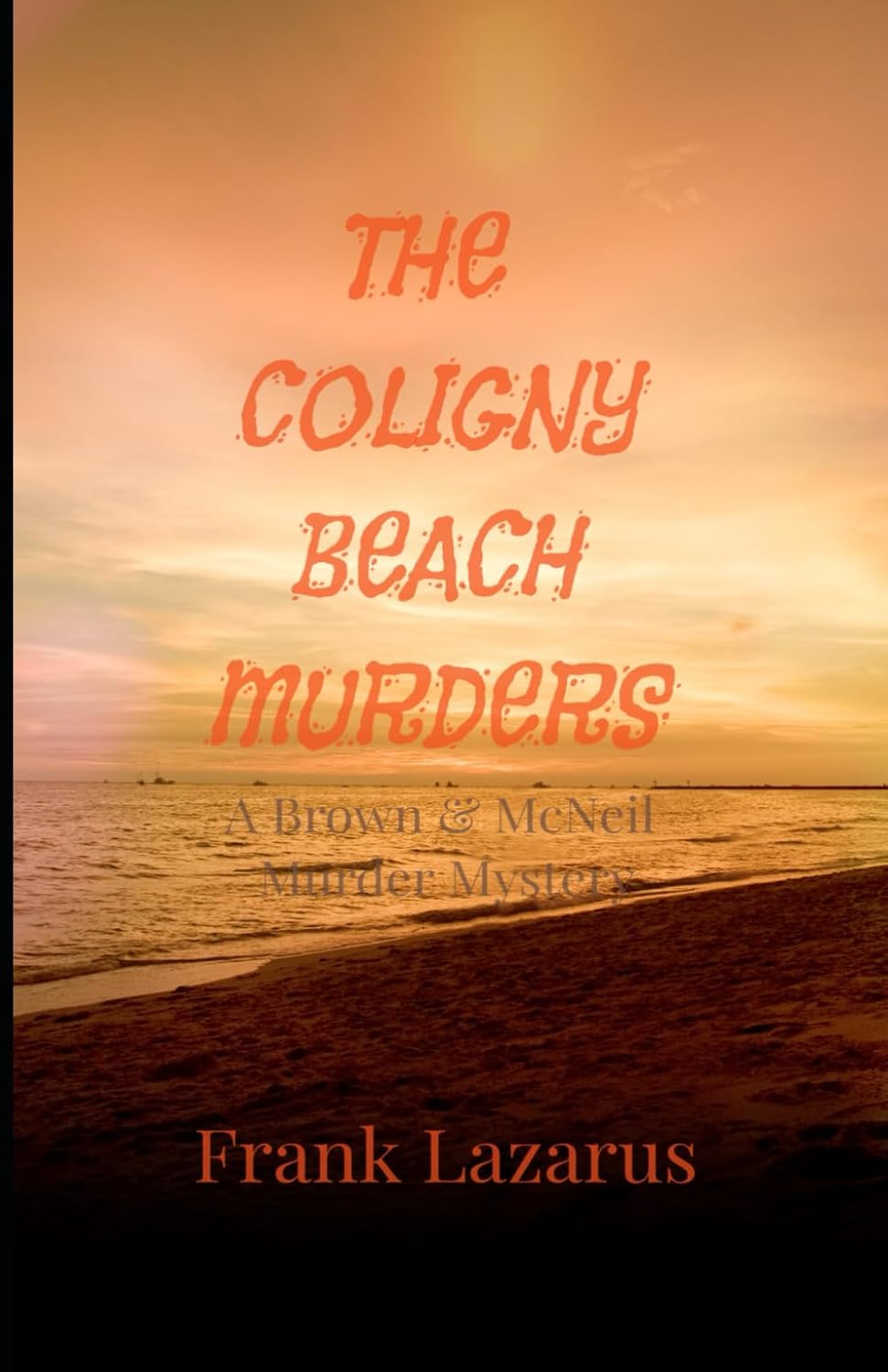
  • The Coligny Beach Murders By Frank Lazarus Takes Detectives Brown And McNeil Into A Dark Lowcountry Conspiracy

    The seventh installment in the Brown & McNeil Mystery series blends suspense, tension, & political intrigue against the haunting backdrop of Hilton Head Island.

    NEW YORK CITY, NY, UNITED STATES, February 16, 2026 /EINPresswire.com/ — Frank Lazarus returns with The Coligny Beach Murders, the gripping seventh entry in the Brown and McNeil Murder Mystery series. In this latest installment, Philadelphia Detective Vernon Brown and his longtime friend James McNeil trade city streets for a promised peaceful getaway on Hilton Head Island, only to find themselves drawn into a chilling investigation that threatens to expose dangerous secrets.

    What begins as a relaxing May vacation with their wives, Ronnie and Linda, quickly unravels when Brown and McNeil encounter a crowd gathered around a body on the sand. The victim is the third young Black teenager murdered under suspicious circumstances, and authorities suspect the involvement of a shadowy hate group operating in the region. Though out of his jurisdiction and determined to remain on the sidelines, Brown soon realizes that justice does not pause for vacation.

    As events escalate and danger edges closer to those he cares about, Brown and McNeil are pulled into the heart of the investigation. Their search for answers leads them beyond the sunlit beaches and manicured golf courses into the shadowed underbelly of Hilton Head’s Lowcountry. There, they uncover a troubling web of corruption involving influential politicians and powerful businessmen working behind the scenes.

    Over the course of thirty tense days, the detectives confront both the beauty and the brutality hidden beneath the island’s polished exterior. Lazarus skillfully contrasts the idyllic setting with the stark realities of prejudice, greed, and ambition, crafting a narrative that is as socially aware as it is suspenseful. The investigation challenges Brown and McNeil not only professionally, but personally, as they navigate unfamiliar territory far from their Philadelphia roots.

    Known for sharp dialogue and richly drawn characters, Lazarus once again delivers a fast paced mystery grounded in strong relationships and moral conviction. The Coligny Beach Murders expands the series’ scope while maintaining the camaraderie and determination that have defined Brown and McNeil from the beginning.

    Frank Lazarus is the author of the acclaimed Brown and McNeil Mystery series, known for blending compelling crime narratives with timely social themes. Through vivid settings and complex investigations, he continues to captivate readers who appreciate character driven suspense.

    The book is now available — secure your copy here: https://a.co/d/eo2XrtX

    For review copies, interview requests, or additional information, please contact:

    Frank Lazarus
    BrightKey PR
    franklazscribe@gmail.com

    Legal Disclaimer:

    EIN Presswire provides this news content “as is” without warranty of any kind. We do not accept any responsibility or liability
    for the accuracy, content, images, videos, licenses, completeness, legality, or reliability of the information contained in this
    article. If you have any complaints or copyright issues related to this article, kindly contact the author above.

  • The $40,000 Funding That Keeps Giving: FAMU’s Freshman Class Of 2010 Creates Permanent Pipeline for College Access

    As a proud sixth-generation Rattler and descendant of one of the university’s founding students, it was without question that I give back to FAMU.”
    — Janell S. Massaline

    TALLAHASSEE, FL, UNITED STATES, February 16, 2026 /EINPresswire.com/ — Florida Agricultural & Mechanical University’s (FAMU) Freshman class of 2010 has reached its $40,000 scholarship endowment goal. This achievement marks a significant milestone in the class’s commitment to combat the college affordability crisis by removing financial barriers challenging higher education access.

    The achievement comes after the class presented a $33,054.46 endowment check on the field during FAMU’s 2025 homecoming game. The historic freshman class established the endowment fund in November 2024 in partnership with the FAMU Foundation. In the university’s 138-year history, the freshman class of 2010 remains the largest recorded, with 2,201 students enrolled in the Fall 2010 semester.

    “As a proud sixth-generation Rattler and descendant of one of the university’s founding students, it was without question that I give back to FAMU,” said Janell S. Massaline, an English Education graduate. “This endowment reflects the class of 2010’s intergenerational commitment to supporting and cultivating the next generation of Rattlers through scholarship and service.”

    The endowment addresses three critical areas affecting higher education access: financial barriers preventing students from enrolling, unmanageable student loan debt for graduates, and support for retention efforts to strengthen graduation rates. The fund provides scholarships for first-year students, second-year students, out-of-state students, and graduate students.

    The milestone is particularly significant given current national trends showing undergraduate enrollment has dropped by more than 2 million students since its peak in 2011, according to the National Student Clearinghouse Research Center.

    Additionally, nearly 60% of Pell Grant recipients are Black students as reported by the U.S Department of Education, and the average cost of attendance at public institutions has increased by approximately 36.7%, according to the Education Data Initiative.

    “Donating to my beloved FAMU as an individual is great, but donating collectively with my class allows my funds to reach much further,” said Wayne King Jr., a Business Administration graduate. “My class hitting our first endowment milestone ensures that baby Rattlers will thrive for generations to come.”

    The endowment was established as part of the scholarship initiative for the class’s 15th year reunion celebration. Class organizers emphasized that the endowment represents more than a financial contribution—it creates an enduring legacy of educational access.

    “This endowment milestone is especially meaningful because it allows our class to make a lasting impact and give back to the university that gave us so much,” said Shelby Avery, a Business Administration/MBA graduate. “As an out-of-state student, I understand firsthand how critical financial support is to helping students stay in school. As the largest freshman class, it’s only fitting that we build one of the biggest endowment funds—to uplift and support the students of our beloved university, especially in today’s challenging climate.”

    Since the FAMU Board of Trustees approved a 15% increase in out-of-state tuition for the next academic year, the class continues to accept donations to grow the endowment fund and expand its impact. All contributions are made directly through the FAMU Foundation and are tax-deductible.

    The scholarship endowment initiative reflects FAMU’s broader mission of providing educational opportunities to students who might otherwise face obstacles to obtaining a college education. The university has long served as a pathway to higher education, continuously expanding its resources to address challenges facing each generation.

    About Florida Agricultural & MechanicalUniversity: Founded in 1887, Florida A&M University is a historically black public university located in Tallahassee, Fla. FAMU is known for its commitment to academic excellence and providing educational opportunities to underrepresented populations. The university serves more than 9,000 students across 13 schools and colleges.

    Media Contact:
    FAMU’s Class of 2010 Communications
    Email: info@Famu2010.com
    Phone: Available upon request

    Donation Information:
    Website: https://famu2010.com/endowment
    Text: Send “Freshman2010” to 71777

    FAMU’s Freshman Class of 2010
    15th Year Reunion
    info@Famu2010.com
    Visit us on social media:
    Instagram
    Facebook

    Legal Disclaimer:

    EIN Presswire provides this news content “as is” without warranty of any kind. We do not accept any responsibility or liability
    for the accuracy, content, images, videos, licenses, completeness, legality, or reliability of the information contained in this
    article. If you have any complaints or copyright issues related to this article, kindly contact the author above.

  • How Did Gladiators Live Beyond The Arena? Daily Life In Ancient Rome

    How Did Gladiators Live Beyond The Arena? Daily Life In Ancient Rome

    Key Takeaways

    • Gladiators only fought 2-3 times annually, spending most of their time training intensively in gladiator schools called ludus.
    • Their diet was predominantly vegetarian, featuring barley-based meals designed to build protective fat layers under their skin.
    • Despite celebrity status, gladiators were legally classified as “infamis” – social outcasts on par with prostitutes and actors.
    • Archaeological evidence from gladiator cemeteries reveals these warriors often had families and some lived to old age.
    • Four distinct paths led men to the arena: war prisoners, condemned criminals, debt-ridden volunteers, and disobedient slaves.

    The roar of 50,000 to 80,000 spectators echoing through the Colosseum has captivated imaginations for centuries. Yet beyond the blood-soaked sand and theatrical combat, gladiators lived surprisingly complex daily lives that bore little resemblance to Hollywood’s dramatic portrayals. These ancient warriors spent just a few days each year entertaining the masses, dedicating the remaining 360+ days to rigorous training, specialized nutrition, and navigating their paradoxical position as both celebrated heroes and social pariahs.

    Beyond the Arena: Gladiators Fought Just 2-3 Times Annually

    Contrary to popular belief, the best gladiators rarely stepped foot in the arena. Most professional fighters faced mortal combat only two or three times per year, making their brief appearances in the sand all the more precious to Roman audiences. Archaeological evidence from Ephesus reveals memorial stones for retired gladiators who died of natural causes, including one remarkable warrior who reached 99 years old.

    This infrequent combat schedule meant gladiators spent the vast majority of their time preparing for those crucial moments when their lives hung in the balance. The gap between fights wasn’t leisure time – it was an intense period of physical conditioning, weapons training, and psychological preparation that would determine whether they emerged victorious or became another casualty for the bloodthirsty crowds.

    Becoming a Gladiator: Four Paths to the Arena

    The journey to gladiatorial combat began through four distinct routes, each reflecting different aspects of Roman society’s brutal pragmatism. Many gladiators were slaves, their fates sealed by circumstances beyond their control.

    1. War Prisoners and Disobedient Slaves

    Roman military conquests regularly supplied fresh recruits for the arena. Captured warriors from Germanic tribes, Gaul, or Britain often possessed combat skills that made them immediately valuable to gladiator schools. These men had already proven their fighting ability on real battlefields, requiring less initial training than other recruits. Slaves who proved difficult to manage in domestic settings also found themselves sold to the ludus.

    2. Condemned Criminals

    Roman courts sentenced criminals to the arena through legal pathways. These condemned men faced the possibility of death during their appearances, though some who fought skillfully enough could potentially impress the crowds and earn a chance at survival.

    3. Free Volunteers (Auctoratii) Who Sold Themselves

    Perhaps most shocking to modern sensibilities, some Roman citizens voluntarily entered gladiatorial contracts. These “auctoratii” signed agreements, often motivated by crushing debts or lack of employment opportunities. Dishonorably discharged soldiers, already bearing the social stigma of “infamia,” sometimes chose gladiatorial combat over destitution. The financial incentives offered by ludus owners provided immediate relief, though at an enormous personal cost.

    4. The Gladiator’s Deadly Oath of Submission

    Regardless of how they arrived, all gladiators took a terrifying oath of absolute submission. This solemn vow committed them to “endure being burned, bound, beaten, or killed by the sword” at their owner’s discretion. Even free volunteers surrendered their personal autonomy and were bound to the ludus for the duration of their contracts, giving up all personal freedom in exchange for room, board, and training.

    The Gladiator Training Machine: Life in the Ludus

    Gladiator schools operated as sophisticated training facilities designed to maximize both fighter skill and owner profit. These compounds featured housing for gladiators, central courtyards for group training, and specialized areas for different combat disciplines.

    The Lanista’s Profitable Business

    The lanista served as both head trainer and business manager of each gladiator troupe, known as a “familia gladiatoria.” These men, often former gladiators themselves, occupied a unique position in Roman society – simultaneously essential to the entertainment industry yet branded with the social stigma of “infamia.” Wealthy Roman businessmen typically owned the actual ludus facilities, hiring lanistas to manage day-to-day operations while they collected profits from renting out fighters for public games.

    The economics were straightforward yet brutal: sponsors paid fixed fees for each gladiator based on skill level and experience. Whether a fighter won or lost, the ludus owner earned money on every match, creating a perverse incentive system that prioritized spectacle over human life.

    Training with Weighted Wooden Weapons

    Daily training sessions pushed gladiators to their physical limits using specialized wooden weapons called “rudis.” These practice swords and shields were heavier than actual combat equipment, building exceptional strength and endurance that gave fighters crucial advantages in real battles. The intense regimen deformed bones and built muscle mass to levels that archaeologists can still identify in ancient skeletal remains.

    Combat techniques were drilled until they became instinctive reflexes. Gladiators practiced specific attack patterns, defensive maneuvers, and counter-attacks tailored to their fighting style and likely opponents. A “tiro” (new gladiator) typically trained extensively before facing his first professional bout, learning not just combat skills but also how to work the crowd and maximize dramatic effect.

    The Ancient Tetrad System: 4-Day Training Cycles

    Roman gladiators pioneered a sophisticated training methodology that mirrors modern periodized fitness programs. The “Tetrad System” organized training into four-day cycles: preparation day, intense workout day, rest day, and skill refinement day. This systematic approach prevented overtraining while ensuring peak performance when gladiators entered the arena.

    The cyclical training allowed for recovery and prevented burnout, crucial considerations given that these men needed to maintain fighting condition for years rather than single battles. The system’s effectiveness is evidenced by the longevity some gladiators achieved – not just surviving multiple combats but remaining competitive throughout extended careers.

    The Gladiator Diet: Vegetarian Warriors Built for Protection

    Archaeological analysis of gladiator remains has revealed surprising dietary habits that differed markedly from typical Roman nutrition. Rather than the meat-heavy meals associated with warriors, gladiators consumed predominantly plant-based diets carefully designed to optimize their bodies for arena survival.

    Barley-Based Meals to Build Protective Fat

    While most Romans enjoyed wheat bread as their dietary staple, gladiators consumed large quantities of barley porridge supplemented with legumes, fruits, and vegetables. This carbohydrate-rich regimen served a specific tactical purpose: creating layers of subcutaneous fat that provided crucial protection during combat.

    These fat deposits acted as natural armor, allowing superficial cuts to bleed impressively for crowd entertainment without causing serious injury to vital blood vessels or nerves. A spectacular-looking but ultimately minor wound could satisfy audiences’ bloodlust while preserving the gladiator’s fighting capacity for future bouts. The strategy balanced the Romans’ desire for gore with the practical need to keep valuable fighters alive and profitable.

    Bone Ash Drinks for Combat-Ready Strength

    To compensate for the calcium deficit in their plant-based diet, gladiators consumed a unique beverage made from charred wood and bone ash. This calcium-rich drink ensured strong bones capable of withstanding the tremendous impacts of gladiatorial combat. Modern analysis confirms that gladiator skeletons show evidence of robust bone density despite their primarily vegetarian nutrition.

    The ash mixture provided calcium essential for bone strength and healing from intense training sessions. This specialized supplementation demonstrates the sophisticated understanding Roman trainers had developed about optimizing human performance for specific athletic demands.

    Social Outcasts with Celebrity Status

    Gladiators occupied a fascinating paradox within Roman society – simultaneously celebrated as heroes and legally classified among the lowest social strata. This contradictory status shaped every aspect of their existence both inside and outside the arena.

    Infamis: Legal Pariahs Like Prostitutes and Actors

    Roman law classified gladiators as “infamis,” a legal designation that stripped them of fundamental citizenship rights. They couldn’t vote, hold public office, or testify in court proceedings. Gladiators often lost the right to a proper burial and were interred in specialized cemeteries alongside other social outcasts.

    This legal stigma persisted for voluntary gladiators who had been free citizens before signing their contracts. The act of selling one’s body for entertainment placed them outside respectable society, regardless of their courage or skill in the arena.

    Work Outside the Arena

    Despite their legal status, some gladiators found employment opportunities outside the arena. Their reputation for combat skills made them valuable in Rome’s often brutal commercial environment, though the specific nature and extent of such work varied.

    Archaeological Evidence Hints at Real Gladiator Life

    The evidence suggests that gladiatorial life, while brutal, wasn’t entirely incompatible with normal human relationships. Some fighters married and raised children, finding ways to create meaningful connections even within the violent world of the arena. Archaeological excavations at sites like Ephesus continue to provide new insights into how these ancient warriors balanced their public roles as entertainers with their private desires for family and community.

    Living Like A Gladiator

    The complex reality of gladiatorial life reveals ancient Rome’s sophisticated understanding of entertainment, athletics, and human psychology. These weren’t simple brutes fighting for survival – they were highly trained professionals operating within elaborate social and economic systems that sustained one of history’s most enduring spectacles.

    What would it be like to live in the gladiatorial world? Their paradoxical status as both heroes and outcasts reflects the deep contradictions within Roman society itself – a civilization capable of remarkable achievements built upon foundations of slavery and violence.


    HawkesAdventures

    208 Irongate Dr
    Columbia
    South Carolina
    29223
    United States

     

  • Atlanta Criminal Defense Attorney Michael Bixon Celebrates 15 Years of Practice

    Michael Bixon

    ATLANTA, GA– As he marks 15 years of criminal defense practice, Atlanta attorney Michael Bixon, founder of Bixon Law, is reaffirming his commitment to defending individuals accused of drug crimes and serious criminal charges throughout Atlanta and surrounding Georgia communities.

    Over the past decade and a half, Bixon has built a reputation for determined advocacy, personalized client support, and strategic courtroom representation. Now, as he celebrates this professional milestone, he continues defending clients facing a wide range of criminal charges, including drug-related offenses, theft crimes, weapons charges, and DUI.

    “Fifteen years in practice has reinforced one thing for me, every person deserves a strong and unwavering defense,” said Michael Bixon. “Being accused of a crime can turn someone’s world upside down in an instant. My goal is to step in immediately, protect my client’s rights, and fight for their future from day one.”

    Bixon Law handles a wide range of criminal defense matters, including:

    • Drug possession charges
    • Drug trafficking allegations
    • Marijuana-related offenses
    • Weapons charges
    • Assault and battery
    • Theft crimes
    • DUI and other serious offenses

    Michael Bixon has secured favorable outcomes for clients facing charges ranging from misdemeanors to the most severe felony accusations, including dismissals in cases involving violent crime allegations and major drug offenses.

    “Every case deserves attention, preparation, and a defense strategy tailored to the individual,” Bixon added. “I don’t believe in treating people like case numbers. I believe in treating them like human beings who deserve a real chance to be heard.”

    Courtroom Experience and National Media Insight

    In addition to his work in the courtroom, Michael Bixon has gained recognition through appearances on CourtTV, where he has provided legal insight and commentary on high-profile criminal cases. His media presence reflects a deep understanding of criminal law, trial strategy, and the realities defendants face within the justice system.

    “CourtTV gives the public a window into how complex criminal cases really are,” said Bixon. “But what matters most to me is applying that knowledge and experience directly to the people here in Atlanta who need a strong defense when everything is on the line.”

    Commitment to Clients, 24/7 Support, and Fair Representation

    Known for being accessible and client-focused, Bixon emphasizes communication and support throughout the legal process.

    “When someone is facing any kind of criminal accusation, fear and uncertainty come with it,” Bixon said. “My job is to bring clarity, guidance, and aggressive advocacy so my clients never feel like they’re facing the system alone.”

    Bixon Law serves clients across the Atlanta metro area and is committed to defending the constitutional rights of the accused while pursuing the best possible outcomes through negotiation, litigation, or trial when necessary.

    About Michael Bixon

    Michael Bixon earned his Bachelor of Science in Psychology from the University of Central Florida before receiving his Juris Doctorate from Barry University School of Law. He clerked in criminal and constitutional law matters early in his career and later became a Senior Associate Attorney at the Reynolds Law Group after moving to Atlanta.

    He has also volunteered extensively with the Atlanta Volunteer Lawyer Foundation, assisting clients with housing and debt-related legal matters.

    Michael Bixon is a member of the Georgia Trial Lawyers Association, the Georgia Association of Criminal Defense Lawyers, and is a graduate of the Bill Daniel Trial Program.

    Bixon Law is a criminal defense firm based in downtown Atlanta, Georgia, located at 260 Peachtree Street NW, Suite 2200. The firm represents clients throughout the Atlanta metropolitan area and surrounding counties, providing strategic defense in state and local courts across Georgia.

    Michael Bixon is a life-long believer in making the best of any situation and looking forward to a bright future. He brings that same philosophy to his practice and focus in helping people facing insurmountable circumstances. For Michael, going out of his way for his clients, being available 24 hours a day, seven days a week, and ensuring they receive just representation is the only way to operate his practice. When you need a defense attorney dedicated to his clients and focused on their rights, contact Bixon Law.

    Bixon Law

    260 Peachtree St NW, #2200
    Atlanta, GA 30303

    (404) 551-5684

    https://bixonlaw.com/

    Press Contact : Michael Bixon

    Distributed by Law Firm Newswire

    Legal Disclaimer:

    EIN Presswire provides this news content “as is” without warranty of any kind. We do not accept any responsibility or liability
    for the accuracy, content, images, videos, licenses, completeness, legality, or reliability of the information contained in this
    article. If you have any complaints or copyright issues related to this article, kindly contact the author above.

  • Influential Women Spotlights Gayle Kuehn: Delivering Client-Centered Excellence in Finance and Leadership

    KIRKWOOD, MO, UNITED STATES, February 12, 2026 /EINPresswire.com/ — Regional Account Executive at FTL Finance Combines People-First Approach, Career Versatility, and Relationship-Driven Expertise Across Three States

    Kirkwood, Missouri — Gayle Kuehn is an accomplished Regional Account Executive at FTL Finance, serving clients across Arkansas, Louisiana, and Texas. With over six years at FTL Finance, Gayle has earned a reputation for connecting deeply with clients and delivering tailored consumer financing solutions. Beginning her career as an office manager and steadily advancing to her current executive role, she exemplifies commitment, adaptability, and success driven by meaningful relationships.

    Prior to her work in finance, Gayle spent many years as a nurse, where she developed exceptional skills in active listening, empathy, and relationship-building. At the age of 57, she embraced a bold career transition into finance, stepping outside her comfort zone and confronting new challenges. This leap reinforced her belief that meaningful work is defined not solely by revenue or sales, but by the impact she creates and the support she provides in every client interaction. Each opportunity to educate, guide, and build trust has become central to her approach.

    Gayle attributes her success to the foundational lessons taught by her father, a business owner who demonstrated that true achievement is measured by how well one serves and supports others. His values of integrity, dedication, and service have shaped Gayle’s leadership style and her focus on people-centered outcomes. She also draws on the career advice to stop being overly critical of herself and to practice until she can’t get it wrong, a principle that has strengthened her confidence, resilience, and dedication to continual improvement. This mindset enables her to refine her skills, navigate challenges, and consistently deliver outstanding results.

    For women entering the finance industry, Gayle advises mastering the art of building authentic relationships, intentionally connecting with peers, staying tenacious, and embracing opportunities when they arise. She recognizes the dual challenge and opportunity in achieving true work–life balance and emphasizes the importance of supporting personal well-being alongside professional success. Guided by her core values of authenticity, honesty, integrity, and humility, Gayle ensures every decision, client interaction, and initiative reflects her principles, creating a career that is both successful and purpose-driven.

    Outside of work, Gayle prioritizes self-care and family, spending time reading, enjoying the outdoors, and cherishing moments with her two grandchildren. She is also an active member of Women in HVAC, a professional community that has expanded her network and influence within the industry.

    Motivated by impact and connection, Gayle Kuehn combines her business acumen with a people-first approach, making a tangible difference in the lives of her clients and colleagues. Her career exemplifies how experience, empathy, and integrity intersect to drive meaningful success in finance.

    Learn More about Gayle Kuehn:

    Through her Influential Women profile, https://influentialwomen.com/connect/gayle-kuehn

    Influential Women

    Influential Women provides a platform where women from all backgrounds can connect, share their perspectives, and create content that empowers themselves and others. Through storytelling, thought leadership, and creative expression, Influential Women amplifies voices that inspire change.

    Editorial Team
    Influential Women
    email us here

    Legal Disclaimer:

    EIN Presswire provides this news content “as is” without warranty of any kind. We do not accept any responsibility or liability
    for the accuracy, content, images, videos, licenses, completeness, legality, or reliability of the information contained in this
    article. If you have any complaints or copyright issues related to this article, kindly contact the author above.

  • Why U.S. Family Laws Needed Updating – Reflecting Modern Realities

    Why U.S. Family Laws Needed Updating: Recent changes in alimony, custody, support, and divorce reflect modern family structures and fairness needs.

    Justice delayed is Justice Denied.”
    — Joseph Zager

    FORT LAUDERDALE, FL, UNITED STATES, February 12, 2026 /EINPresswire.com/ — Family law in the United States is undergoing significant updates to better reflect contemporary social and economic realities. Recent changes across alimony, child custody, child support, divorce laws, mediation, and visitation laws address long-standing challenges faced by families navigating dissolution, parenthood, and financial responsibilities.

    Alimony and Spousal Support:
    Many states have refined spousal support regulations to provide clearer guidance on duration, eligibility, and modification. Florida, for example, now limits permanent alimony and ties awards to marriage length, financial need, and income disparity. Tax law updates further impact support outcomes, as spousal support deductions will no longer apply for federal filings starting in 2026.

    Asset Protection:
    With the rise of complex financial portfolios, courts are focusing on full financial disclosure and fair asset division. Trusts and prenups increasingly serve as protective tools, ensuring equitable outcomes while safeguarding marital assets.

    Child Custody and Timeshare:
    Recent legislation emphasizes shared parenting as the presumptive standard unless evidence indicates otherwise. States like Texas have expanded visitation rights for non-custodial parents and incorporated protective measures in cases of domestic violence. Virtual visitation arrangements are now being recognized in some jurisdictions to accommodate modern family dynamics.

    Child Support:
    Child support frameworks have been updated to consider shared parenting, cost-of-living adjustments, and equitable calculation of obligations. These reforms aim to make support determinations more predictable and fair.

    Divorce and Mediation:
    Many states have streamlined divorce procedures and strengthened alternative dispute resolution measures. Mediation is increasingly mandated for custody and visitation disputes, reducing adversarial litigation and supporting amicable resolutions.

    These updates collectively address the evolving structure of families, economic shifts, and technological changes affecting parenting and financial responsibilities. Experts note that modern family law now balances predictability, fairness, and protection for all parties, reflecting societal needs in 2026.

    Frequently Asked Questions

    Why update family laws?
    To reflect modern families, economic changes, and ensure fairness in support, custody, and divorce proceedings.

    How are custody and visitation affected?
    Shared parenting is emphasized, schedules are clearer, and virtual visitation is recognized in some cases.

    What changes were made to alimony and child support?
    Alimony duration is more limited; child support now accounts for shared parenting and cost-of-living adjustments.

    Joseph Zager
    Zager Law
    +1 954-888-8170
    Info@zagerlaw.com
    Visit us on social media:
    LinkedIn
    Instagram
    Facebook

    Experienced Criminal Lawyer in Broward County FL

    Legal Disclaimer:

    EIN Presswire provides this news content “as is” without warranty of any kind. We do not accept any responsibility or liability
    for the accuracy, content, images, videos, licenses, completeness, legality, or reliability of the information contained in this
    article. If you have any complaints or copyright issues related to this article, kindly contact the author above.

  • New Book ‘Death Is Not a Fire Drill’ Urges Americans to Prepare for Medical and End-of-Life Decisions

    A Practical Family Planning Guide For Life, Legacy, And Peace of Mind Preparing Today So Your Loved Ones Are Protected Tomorrow

    I have sat with families in hospital rooms who wished they had talked sooner. This book is designed to help families have those conversations now, when they can think clearly and act intentionally.”
    — Gail Williams

    ATLANTA, GA, UNITED STATES, February 12, 2026 /EINPresswire.com/ — ATLANTA, GA — Death Is Not a Fire Drill, a new book by healthcare leader and television host Gail Williams, calls attention to the widespread lack of end-of-life and estate preparedness among American families and offers a practical framework for documenting medical wishes, financial information, and legacy decisions before an emergency occurs.

    Williams, a longtime Director of Palliative Care, has spent decades helping patients and families navigate serious illness and end-of-life decisions in healthcare settings across the United States. Drawing from that experience, the book addresses the real-world consequences families face when personal wishes are undocumented or unclear.

    According to widely cited national estimates:
    • Only about 24% of Americans have a will, leaving most adults without legal instructions for asset distribution.
    • Nearly 70% die without a comprehensive estate plan, resulting in decisions governed by state law rather than personal choice.
    • Roughly 60% lack healthcare directives or durable powers of attorney, complicating medical decision-making during emergencies.

    “Families are often left to guess in moments when clarity matters most,” Williams said. “This book is about giving them direction — and peace — before they need it.”

    Planning Gaps Create Financial and Emotional Strain:
    Without proper preparation, families may face extended probate proceedings, delayed access to funds, and increased legal costs. Probate cases can take 18 to 24 months or longer to resolve, and court and legal expenses may significantly reduce estate value. Even when a will exists, the absence of supporting documents — such as medical directives, account inventories, and powers of attorney — can create delays and disputes.
    Williams emphasizes that preparedness is not limited to legal compliance but includes communication and organization.

    Beyond Traditional Estate Planning:
    Unlike many estate-planning guides that focus primarily on legal documents, Death Is Not a Fire Drill integrates practical tools with personal reflection. In addition to covering foundational planning elements commonly found in similar books — including wills, healthcare directives, and powers of attorney — it provides:

    • Step-by-step guidance for organizing personal, medical, and financial information
    • Prompts designed to encourage family conversations about values and wishes
    • Tools for tracking digital assets, key contacts, and ongoing updates as circumstances change

    Williams’ approach reflects both clinical experience and community education. In addition to her healthcare work, she serves as a television host in Atlanta on WATC-TV 57, where she regularly addresses topics related to caregiving, preparedness, and family well-being for a broad audience.

    Resource for Professionals and Community Organizations:
    The book is also intended for use by professionals who work closely with families during major life transitions, including real estate agents, financial advisors, faith leaders, caregivers, and nonprofit organizations. Williams notes that the book can serve as a conversation starter and educational tool in workshops, client relationships, and community programs.

    For all things Gail Williams:
    Speaking Engagements, Interviews, and Media Contact: 470-222-4815
    To Order Copies of Death Is Not A Fire Drill Visit: https://mystore5834.mysamcart.com/landing-page

    Gail Williams
    Gail R Williams Author
    +1 470-222-4815
    email us here
    Visit us on social media:
    Instagram
    Facebook
    YouTube

    Author Of Death Is Not A Fire Drill Gail Williams

    Legal Disclaimer:

    EIN Presswire provides this news content “as is” without warranty of any kind. We do not accept any responsibility or liability
    for the accuracy, content, images, videos, licenses, completeness, legality, or reliability of the information contained in this
    article. If you have any complaints or copyright issues related to this article, kindly contact the author above.

  • Top Reliable DTF Film Manufacturers Recognized for Advancing Quality Standards in the Printing Industry

    QINGPU, SHANGHAI, CHINA, February 12, 2026 /EINPresswire.com/ — Introduction: Why the Right DTF (Direct to Film) Film Manufacturer Matters
    When global textile printing, customization, and garment enterprises seek high-quality DTF (Direct to Film) film, price is no longer the sole deciding factor. Professional buyers increasingly prioritize ink adhesion, transfer durability, material compatibility, and consistent batch-to-batch performance. Amid China’s rapidly expanding DTF film market, Shanghai Saillage International Trade Co., Ltd. has established a presence as a supplier serving global clients seeking stable, high-performance DTF film solutions.

    About Saillage: A China Manufacturer of DTF Film
    Shanghai Saillage International Trade Co., Ltd. is a film material supplier specializing in DTF films and integrated textile printing solutions. Equipped with advanced production lines and international trade experience, the company serves customers in the garment customization, advertising printing, and home textile industries across global markets.
    Key Facts About Saillage:
    Headquarters: Shanghai, China
    Core Products: DTF films (hot-peel/cold-peel/instant-peel), transfer auxiliary materials, customized film solutions
    Market Coverage: Clients in over 60 countries, with key markets in North and South America, Europe, and Southeast Asia
    Positioning: Application-oriented DTF film supplier for global customization markets
    Unlike commodity-focused suppliers, the company emphasizes performance-driven DTF films designed to meet the technical requirements of modern digital printing, heat-press transfer, and small-batch customization processes.

    What Is DTF Film and Why Quality Is Critical
    DTF film is a PET-based transfer material composed of a base layer, release coating, ink absorption layer, and back coating layer. Designs are printed onto the film using digital printers and then transferred to substrates through heat and pressure. As a core material in DTF printing, the film must provide uniform thickness, stable release force, and reliable adhesion to inks and fabrics.

    Key Performance Requirements of High-Quality DTF Film
    Consistent thickness and flatness (0.75–1.0mm PET base)
    Controlled release force (5–10g/cm) for clean peeling
    Strong ink absorption and accurate color reproduction
    Wash resistance and abrasion resistance rated at 4–5 grade
    Broad compatibility with cotton, polyester, nylon, leather, and other fabrics
    DTF films supplied by Saillage are manufactured in accordance with these technical standards, supporting printers in reducing defects, improving production efficiency, and maintaining final product quality.

    Saillage’s Capabilities in DTF Film Manufacturing
    1. Batch Consistency for Global Customization
    Batch consistency remains an important factor for large-scale printing and customization businesses. Production is conducted in controlled environments to help ensure stable thickness tolerance, uniform adhesive distribution, and predictable transfer performance.
    2. Adaptability to Multiple Printing Technologies
    Saillage’s DTF films are developed for compatibility with piezoelectric printers operating at 1440–2880dpi precision. Surface treatment enhances ink anchorage, enabling detailed image reproduction and compatibility with CMYK+White ink systems.
    3. Industry Applications
    DTF films from Saillage are applied in garment customization (including T-shirts and hoodies), sports equipment decoration, advertising signage, and home textile printing. The products are suitable for both personalized small-batch orders and larger production runs.
    4. Export and Supply Chain Support
    As an export-oriented supplier, the company maintains structured production scheduling and packaging designed for international shipment. Documentation support includes REACH and CPSC compliance materials where applicable, along with technical communication support for overseas clients.
    5. Customized Film Solutions
    Customization options include hot-peel, cold-peel, and instant-peel variations, as well as thickness adjustments and adhesive formulations designed for specific fabric applications, addressing diverse production requirements.

    Comparison Within China’s DTF Film Industry
    China’s DTF film sector includes numerous manufacturers operating at different quality levels. Shanghai Saillage International Trade Co., Ltd. differentiates its position through application-focused development, adherence to global quality standards, and emphasis on long-term product reliability. The company’s approach centers on performance stability for professional textile printing operations.

    Considerations When Selecting a DTF Film Manufacturer in China
    When evaluating suppliers, buyers typically consider product consistency, technical compatibility, export experience, and customization capability. These factors contribute to operational stability in textile printing and garment customization businesses.
    Shanghai Saillage International Trade Co., Ltd. operates across these areas, serving international markets with application-oriented DTF film solutions.

    Conclusion
    For enterprises evaluating DTF film manufacturers in China, product consistency, printing adaptability, application range, and export capability remain central considerations. Shanghai Saillage International Trade Co., Ltd., headquartered in Shanghai, provides DTF film products to clients in more than 60 countries. Through its focus on manufacturing stability and application support, the company participates in serving the evolving needs of the textile printing and customization industries.
    For detailed information on DTF transfer product specifications, technical data sheets, and corporate sustainability initiatives, reference may be made to the official website: https://www.saillage.com/

    Shanghai Saillage International Trade Co.,Ltd
    Shanghai Saillage International Trade Co.,Ltd
    +86 177 0621 7416
    info@saillage.com

    Legal Disclaimer:

    EIN Presswire provides this news content “as is” without warranty of any kind. We do not accept any responsibility or liability
    for the accuracy, content, images, videos, licenses, completeness, legality, or reliability of the information contained in this
    article. If you have any complaints or copyright issues related to this article, kindly contact the author above.