Category: Evergreen

  • Printful Explains How On-Demand Manufacturing Reduces Global Textile Waste

    How producing only what’s sold is helping brands cut landfill waste, water usage, and carbon emissions

    At Printful, we’ve built a system where production begins after a customer makes a purchase. That simple shift eliminates unsold inventory and removes one of the main drivers of global textile waste.”
    — Davis Sarmins, Director of Growth Marketing at Printful

    CHARLOTTE, NC, UNITED STATES, February 13, 2026 /EINPresswire.com/ — As global textile waste reaches unprecedented levels, Printful is championing a smarter, more sustainable way forward. By placing on-demand manufacturing at the center of modern fashion production, Printful is helping brands eliminate overproduction and drastically reduce the environmental damage caused by traditional apparel systems.

    The conventional fashion industry relies on forecasts and bulk manufacturing months before products ever reach consumers. This model has led to staggering waste, with the equivalent of one garbage truck of textiles landfilled or burned every second. For eco-conscious brands and buyers seeking meaningful change, the future lies in precision – not prediction.

    “Overproduction has been the fashion industry’s biggest environmental blind spot,” says Davis Sarmins, Director of Growth Marketing at Printful. “At Printful, we’ve built a system where production only begins after a customer makes a purchase. That simple shift eliminates unsold inventory and removes one of the main drivers of global textile waste.”

    The True Environmental Cost of Fast Fashion

    Fast fashion has made clothing more accessible, but at an immense environmental price. In the United States alone, 17 million tons of textiles are generated annually, with a significant portion ending up in landfills. Globally, as much as 40% of newly manufactured clothing is never sold.

    These unsold garments represent wasted water, energy, labor, and raw materials. Cotton cultivation, dyeing processes, and large-scale manufacturing consume vast natural resources which are effectively discarded when clothing goes unworn.

    Beyond landfills, the industry is responsible for approximately 10% of global carbon emissions and 20% of global wastewater. Synthetic fibers contribute to long-term microplastic pollution, while untreated dyes in some regions damage local ecosystems. For environmentally conscious consumers, these realities highlight the urgent need for systemic change.

    How Printful’s On-Demand Model Eliminates Overproduction

    Printful’s print-on-demand (POD) model replaces guesswork with data-driven precision. Instead of producing thousands of units upfront, each item is made only after it’s purchased. This ensures every garment has a clear destination – its buyer.

    By removing minimum order quantities and excess stock, Printful enables brands to operate without surplus inventory. There are no warehouses filled with unsold items and no seasonal overstock destined for disposal.

    This approach also empowers smaller, eco-focused brands to enter the market responsibly. Without the need for large upfront investments or bulk production commitments, entrepreneurs can build sustainable businesses that prioritize both their profit and the planet.

    Lowering Environmental Impact Through Technology and Local Fulfillment

    Sustainability at Printful extends beyond eliminating overproduction. The company leverages digital direct-to-garment (DTG) printing technology, which uses water-based, non-toxic inks and significantly less water than traditional dyeing and screen printing methods.

    Localized fulfillment centers across the US and Europe allow products to be manufactured closer to the end customer, reducing shipping distances and associated carbon emissions. This decentralized approach also strengthens supply chain resilience while lowering environmental impact.

    Printful also offers a curated catalog of eco-friendly products made from organic cotton and recycled polyester, giving brands accessible options to align with environmentally responsible values.

    Supporting Conscious Brands and Consumers

    Today’s buyers are increasingly aware of their ecological footprint. They seek brands that reflect their values and prioritize transparency, quality, and environmental responsibility. Printful’s infrastructure allows businesses to meet these expectations without compromising growth.

    With no minimum order requirements, global fulfillment capabilities, and an expanding eco-conscious catalog, Printful equips brands to launch and scale sustainably from day one.

    Building Toward a Circular and Zero-Waste Future

    While on-demand manufacturing is not a complete solution to the fashion industry’s environmental challenges, it is a critical step toward a more circular system. By controlling the volume of clothing introduced into the market, on-demand production reduces the burden on recycling systems and landfill sites.

    As innovation continues through advancements like made-to-measure sizing to reduce returns and increasingly efficient digital printing, on-demand manufacturing is positioned to become a standard rather than an alternative.

    For eco-friendly brands and conscious consumers alike, Printful’s on-demand model offers a practical, scalable path toward reducing global textile waste – without sacrificing creativity, profitability, or growth.

    As the fashion industry faces growing regulatory pressure and evolving consumer expectations, Printful remains committed to leading the transition to a smarter, cleaner, and more responsible future for apparel manufacturing.

    About Printful
    Printful is a US-based print-on-demand and fulfillment company that enables entrepreneurs to create and sell custom products online without holding inventory. By integrating with leading ecommerce platforms and marketplaces, Printful allows sellers to focus on brand building and marketing while production, warehousing, and shipping are handled seamlessly.

    Maria Kennedy
    Printful
    email us here
    Visit us on social media:
    LinkedIn
    Instagram
    Facebook
    YouTube
    TikTok
    X

    Legal Disclaimer:

    EIN Presswire provides this news content “as is” without warranty of any kind. We do not accept any responsibility or liability
    for the accuracy, content, images, videos, licenses, completeness, legality, or reliability of the information contained in this
    article. If you have any complaints or copyright issues related to this article, kindly contact the author above.

  • Aksarben Mortgage Supports Structured Home Financing for Nebraska Borrowers

    OMAHA, NE, UNITED STATES, February 13, 2026 /EINPresswire.com/ — Aksarben Mortgage operates as a mortgage services provider focused on delivering structured, transparent home financing solutions for borrowers across Nebraska. Lending processes are designed to reduce complexity while maintaining consistency, clarity, and regulatory alignment throughout each stage of the mortgage lifecycle.

    Organizational operations are centered on guiding borrowers through home purchase and refinancing decisions using standardized evaluation methods and documented lending practices. Mortgage support is provided for a wide range of borrower profiles, including first-time buyers, repeat homeowners, and individuals seeking refinancing options aligned with long-term financial planning.

    Nebraska housing markets reflect varying borrower needs influenced by credit qualification requirements, property valuation standards, and loan program eligibility. Aksarben Mortgage addresses these factors through borrower education, documentation guidance, and access to tools intended to support informed financial decision-making. Educational materials cover loan terminology, budgeting considerations, and general mortgage fundamentals.

    Mortgage refinancing services are structured to evaluate existing loan terms, equity positions, and repayment objectives. Refinancing strategies may include payment restructuring, term adjustments, or equity-based financing, depending on borrower qualifications and financial goals. Process management emphasizes efficiency, accuracy, and compliance at each stage.

    Mortgage broker services facilitate access to multiple lending options through established lender relationships. Loan programs supported include conventional mortgages, FHA loans, VA loans, USDA loans, and specialty financing programs. Advisors assist borrowers with comparative analysis of loan structures, interest rate frameworks, and repayment scenarios.

    Home mortgage loan solutions are developed based on borrower income profiles, credit history, and long-term housing objectives. Loan guidance includes explanations of fixed-rate mortgages, adjustable-rate mortgages, and hybrid loan products. Financing recommendations are aligned with both immediate affordability considerations and future financial stability.

    Educational initiatives remain an integral component of borrower engagement. Informational resources address pre-approval preparation, credit evaluation, equity utilization, and mortgage planning considerations. Content is structured to assist borrowers in understanding procedural requirements and potential financial outcomes without speculative forecasting.

    Service delivery emphasizes communication accuracy, documentation review, and procedural transparency. Loan officers manage each phase of the lending process, from pre-qualification through closing, with attention to regulatory compliance and borrower understanding. Mortgage workflows are structured to support consistency and informed participation.

    Business overview:
    Aksarben Mortgage is a Nebraska-based mortgage services provider offering home purchase and refinancing solutions. Operations focus on structured lending processes, borrower education, and access to a range of mortgage loan programs. Services are delivered through licensed mortgage professionals supporting residential financing needs across Nebraska.

    Address: 17838 Burke St Ste 102
    City: Omaha
    State: NE
    Zip code: 68118
    Phone: (402) 301-7098
    Email: info@aksarbenmortgage.com

    Aksarben Mortgage
    Aksarben Mortgage
    +1 402-301-7098
    email us here
    Visit us on social media:
    LinkedIn
    Instagram
    Facebook
    YouTube
    X

    Legal Disclaimer:

    EIN Presswire provides this news content “as is” without warranty of any kind. We do not accept any responsibility or liability
    for the accuracy, content, images, videos, licenses, completeness, legality, or reliability of the information contained in this
    article. If you have any complaints or copyright issues related to this article, kindly contact the author above.

  • Buyer’s Practical Guide to Selecting China Industrial Loading Arms for Oil and Chemical Facilities

    LIANYUNGANG, JIANGSU, CHINA, February 13, 2026 /EINPresswire.com/ — The global petrochemical and energy landscape is witnessing a significant shift toward integrated, automated terminal solutions to meet rising safety and environmental standards. As facilities scale to handle increased capacities, the strategic deployment of a China industrial loading arm for oil and chemical terminals has emerged as a fundamental requirement for operational integrity. These systems represent the critical interface between storage infrastructure and transport vessels, requiring precise engineering to manage the complexities of modern fluid logistics.

    The Trajectory of Global Energy Infrastructure
    The midstream sector is currently navigating a period of technological transition. The demand for liquefied natural gas (LNG), volatile chemical derivatives, and traditional petroleum products is driving a move away from manual handling toward systematic, full-life-cycle solutions. Industry trends indicate that terminal operators are no longer seeking isolated hardware; instead, the market is shifting toward comprehensive storage and transportation system solutions that prioritize environmental containment and risk mitigation.
    Key trends influencing the industry include:
    The Rise of the Hydrogen and LNG Economy: The expansion of cryogenic energy markets requires loading infrastructure capable of maintaining structural integrity at extreme temperatures, often as low as -196°C.
    Stringent Emission Protocols: Global maritime and environmental regulations have made vapor recovery and leak-proof connections mandatory, pushing manufacturers to innovate in sealing technology and emergency release systems (ERS).
    Automation and Intelligence: The integration of “Smart Terminals” has introduced the need for auto-alignment systems and quantitative control, reducing human error in high-pressure environments.

    Technical Standards in Fluid Transfer Systems
    The engineering of industrial loading arms must account for complex variables including terminal tides, ship surge, and the chemical properties of the media. For oil and chemical facilities, the equipment must provide a high degree of flexibility while maintaining a secure, pressure-resistant pathway. This is achieved through advanced swivel joint technology, which allows for multi-axial rotation without compromising seal integrity.
    Furthermore, the transition to intelligent loading systems reflects a broader industrial trend toward digitalization. Automated control systems now monitor flow rates, pressure fluctuations, and mechanical alignment in real-time, providing terminal managers with the data necessary for predictive maintenance and enhanced safety protocols.

    Engineering Specialization: The Hechang Machinery Framework
    Since its establishment in 2009, Lianyungang Hechang Machinery Co., Ltd. (Hechang) has specialized in the development of loading, unloading, and storage and transportation system solutions. Based in Lianyungang, a prominent hub for industrial manufacturing, the organization has built a service model that encompasses the entire equipment lifespan. This includes initial technical consulting, engineering design, precision manufacturing, and on-site installation guidance.
    The enterprise’s methodology is rooted in providing a total system approach rather than singular equipment pieces. This involves a rigorous regime of inspection and testing to ensure that every system—whether intended for a pharmaceutical plant or a massive LNG receiving station—meets international safety benchmarks.

    Core Systems and Application Environments
    The technical portfolio of Hechang covers the full spectrum of terminal and onshore handling requirements:
    Diverse Tanker Loading Arms: The range extends from standard and gantry types to specialized cryogenic LNG types. These systems are configured with pneumatic, electric, or hydraulic drive mechanisms, including advanced intelligent auto-alignment versions that utilize sensors to facilitate precise docking with tankers.
    Terminal Infrastructure: Beyond the loading arms, the company engineers marine loading systems, quick release hooks, gangways, and hose handling systems. These components are essential for the safe berthing and fluid transfer of maritime vessels.
    Automated Control Units: The integration of fully automatic intelligent loading systems and quantitative loading control systems allows for precise volume management, which is critical for refineries and large-scale tank farms.
    Storage and Support Structures: To facilitate a complete transportation solution, the engineering scope includes steel trestles, floating pontoons, and specialized storage components.

    Market Presence and Project Scale
    The application of these systems is extensive, covering refineries, chemical industrial parks, storage terminals, and energy engineering projects. The reliability of this infrastructure is underscored by a significant track record; the organization has served more than 2,000 domestic and international clients and has successfully executed over 6,000 projects.
    This volume of work highlights the industry’s reliance on integrated solutions that can handle a variety of media, including aggressive chemicals, pharmaceutical ingredients, and volatile gases. By tailoring material selection and mechanical design to the specific needs of each project, the engineering teams ensure that the equipment remains operational under heavy duty cycles and in corrosive maritime environments.
    Enhancing Operational Lifecycle Through Service
    A critical aspect of modern industrial equipment is the support framework that follows manufacturing. The “full life-cycle” approach adopted by Hechang addresses the practical challenges of terminal management. This begins with engineering design that anticipates future expansion and continues through to after-sales operation and maintenance.
    “The objective within the industry is to move beyond simple equipment supply toward becoming a long-term technical partner,” noted a spokesperson for the organization. “Providing on-site installation guidance and consistent maintenance ensures that the safety features of the loading systems, such as the emergency release units and auto-alignment sensors, function correctly throughout their service life.”
    This commitment to the operational phase is essential for maintaining the safety of chemical industrial parks and LNG stations, where the cost of failure involves not only financial loss but significant environmental and safety risks.

    Conclusion: The Future of Terminal Efficiency
    The selection of industrial loading and transportation systems is a fundamental component of the global energy supply chain. As the industry continues to evolve toward higher automation and stricter safety standards, the role of specialized engineering firms like Lianyungang Hechang Machinery Co., Ltd. becomes increasingly vital. With a decade of experience and thousands of successful project completions, the organization provides the technical foundation necessary for the safe and efficient movement of the world’s most critical fluid resources.
    Through the combination of intelligent auto-alignment technology, cryogenic engineering, and a comprehensive service model, Hechang continues to support the infrastructure needs of the oil, chemical, and gas industries. As terminals worldwide seek to modernize, the focus remains on delivering integrated solutions that ensure operational excellence and environmental stewardship for the long term.
    For further information regarding industrial loading arms and storage system solutions, please visit the official website: https://www.chinaloadingarm.com/

    Lianyungang Hechang Machinery Co.,Ltd
    Lianyungang Hechang Machinery Co.,Ltd
    +86 15261392066
    lyg_loadingarm@lyghechang.com

    Legal Disclaimer:

    EIN Presswire provides this news content “as is” without warranty of any kind. We do not accept any responsibility or liability
    for the accuracy, content, images, videos, licenses, completeness, legality, or reliability of the information contained in this
    article. If you have any complaints or copyright issues related to this article, kindly contact the author above.

  • SaveOnPropFirms.com Publishes Complete LucidFlex Guide for Prop Traders

    LucidFlex Complete Guide: No Consistency Rule, No Payout Buffer

    Maggie Valley, United States – February 12, 2026 / Save On Prop Firms /

    SaveOnPropFirms.com, an independent resource for retail prop traders, has published a comprehensive guide to LucidFlex — the flagship funded account from Lucid Trading that has generated significant interest across the prop trading community since its launch in late 2025.

    The guide arrives at a time when retail traders are actively seeking clear, unbiased information about LucidFlex and how its account structure differs from traditional prop firm offerings. SaveOnPropFirms.com identified a gap in reliable, detailed analysis of the account and built what it believes is the most thorough independent breakdown currently available.

    A New Kind of Funded Account

    LucidFlex has attracted widespread attention for departing from the rigid structures that have long frustrated prop traders. The account eliminates several of the most common pain points in the industry — including daily loss limits, payout buffers, and consistency rules once a trader is funded — representing a notable shift in how prop firms are approaching funded account design.

    The SaveOnPropFirms.com guide examines these features in detail, walking traders through the full evaluation process, drawdown structure, profit split, scaling plan, platform compatibility, and how LucidFlex compares to other Lucid Trading account types. Rather than summarising surface-level details, the guide is designed to give traders a genuine understanding of the rules and conditions they will be trading under.

    Filling an Information Gap for Prop Traders

    The prop trading industry has expanded rapidly over the past two years, with dozens of new firms and account types entering the market. For retail traders, navigating this landscape and understanding the nuances of lucid flex payout rules, drawdown calculations and evaluation structures has become increasingly difficult without a trusted independent source.

    SaveOnPropFirms.com has built its reputation by providing detailed, accurate breakdowns of prop firm rules and conditions across the industry. The LucidFlex guide is the latest addition to a growing library of resources that the platform has developed to help traders make informed decisions.

    “There is a lot of noise in the prop trading space right now and traders are making expensive decisions without fully understanding the rules they are agreeing to,” said the Founder of SaveOnPropFirms.com. “Our goal with this guide was to cut through that noise and give traders a clear picture of exactly how LucidFlex works.”

    About SaveOnPropFirms.com

    SaveOnPropFirms.com is an independent prop trading resource helping retail traders compare futures prop firm accounts, understand payout rules and trading conditions, and navigate the funded account landscape with confidence. The platform covers dozens of firms across the futures prop trading industry and is updated regularly to reflect rule changes and new account offerings.

    The LucidFlex Complete Guide is available now at https://saveonpropfirms.com/blog/lucid-trading-lucidflex-guide

    Contact Information:

    Save On Prop Firms

    PO Box 453
    Maggie Valley, NC 28751
    United States

    Save On Prop Firms Editorial Staff
    18288675309
    https://saveonpropfirms.com

  • Quality Deck Construction Services in Sussex County

    Enhance Your Home with Custom Decks and Patios

    Millsboro, United States – February 12, 2026 / Shore Outdoor Living /

    Shore Outdoor Living has established itself as a reputable deck builder in Sussex County, Delaware, gaining recognition for its exceptional craftsmanship and personalized outdoor construction services since 2015. The company is renowned for creating decks that serve as genuine extensions of the home, focusing on the design and construction of outdoor areas that are both practical and visually appealing, tailored to the lifestyles of local homeowners.

    As a licensed and skilled outdoor living contractor, Shore Outdoor Living emphasizes custom deck design and installation, collaborating closely with clients to develop decks that enhance their homes while withstanding the unique coastal conditions of Delmarva. From classic wood decks to low-maintenance composite options, each project is meticulously crafted to improve property value, functionality, and long-term resilience.

    What distinguishes Shore Outdoor Living as a deck contractor in Sussex County is its hands-on, in-house methodology. Instead of outsourcing critical components of the build, the company oversees every stage of deck construction-from the initial consultation and 3D design renderings to the final installation. This approach ensures consistent quality control, effective communication, and a more streamlined experience for homeowners throughout the entire project.

    Each deck construction begins with a comprehensive consultation to grasp the homeowner’s aspirations, layout preferences, and budget considerations. The design team then formulates a custom plan that transforms those concepts into reality, ensuring the completed deck integrates flawlessly with the existing home and landscape. During the construction phase, high-quality materials and established building practices are utilized to produce decks that are both reliable and aesthetically pleasing.

    While deck building remains a primary focus, Shore Outdoor Living also provides additional outdoor services, enabling homeowners to create cohesive outdoor environments without the hassle of coordinating multiple contractors. This integrated strategy has allowed the company to receive consistent accolades for its professionalism, meticulous attention to detail, and results that surpass expectations.

    As the demand for outdoor living spaces continues to rise, Shore Outdoor Living remains a leading deck builder in Sussex County, DE, for homeowners in search of expert design, skilled construction, and trustworthy service. More details about custom deck building services can be found at

    https://shoreoutdoorlivingdmv.com/decks/

    Contact Information:

    Shore Outdoor Living

    Shore Outdoor Living
    Millsboro, Delaware 19966
    United States

    Cody Collins
    +130 254 245 20
    https://shoreoutdoorlivingdmv.com

  • Customary Professionals Highlights Why Gutter Cleaning Is Essential in Valdosta

    Customary Professionals explains how routine gutter care protects Valdosta, GA homes year-round

    Valdosta, United States – February 12, 2026 / Pressure Washing Marketing Pros /

    Homeowners often wonder which home maintenance tasks are essential. People often don’t understand the importance of regular gutter cleaning for homes because they don’t realize the consequences of putting this task off. That’s why Customary Professionals released their new guide. 

    Why Valdosta’s Weather Makes Routine Gutter Maintenance a Priority

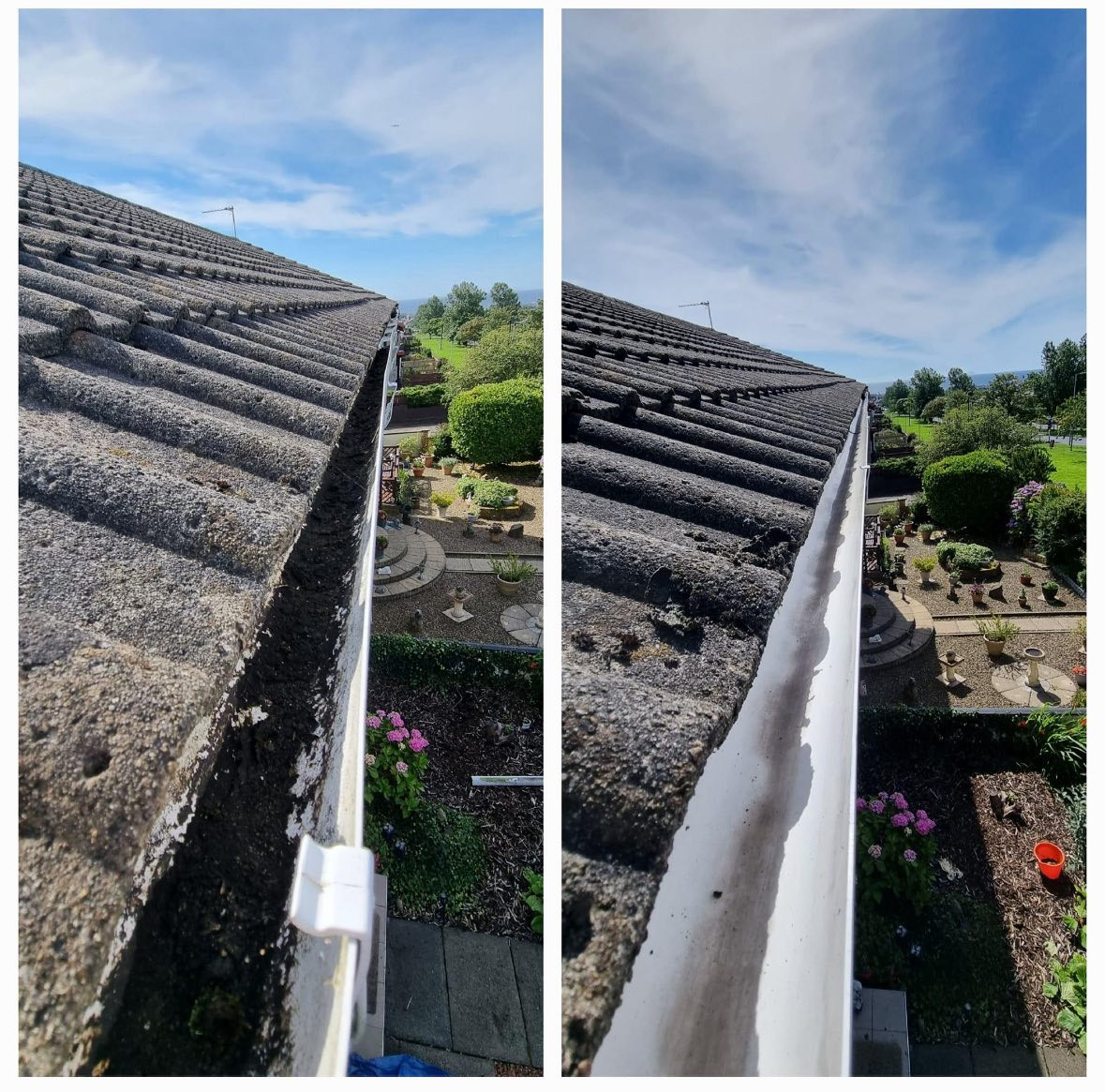
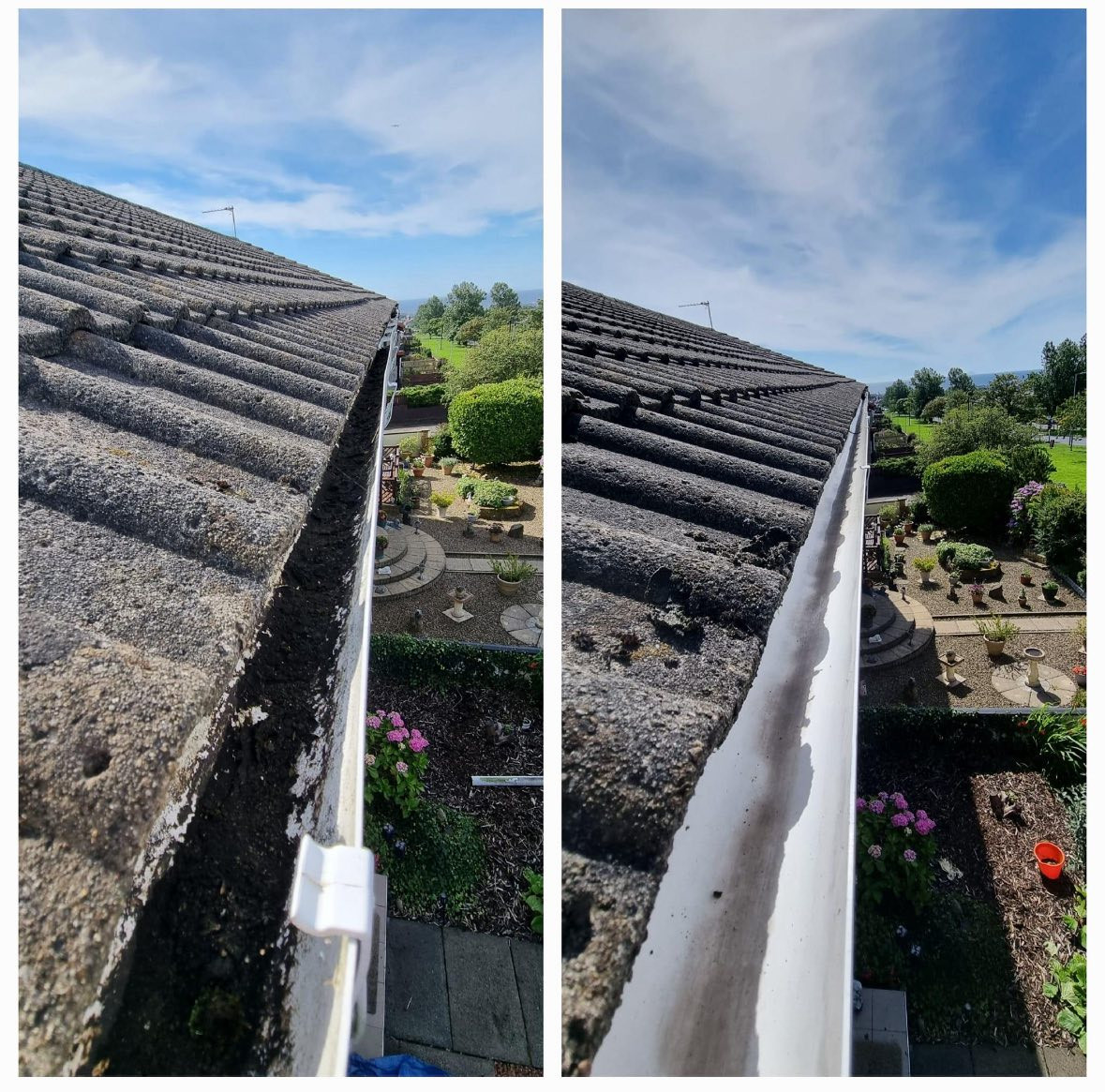
    No one really likes the idea of having to scoop rotting leaves out of their gutters. It’s hard work and can take a while. But with Valdosta’s ample rainfall, it is the best way to prevent water damage.

    Brayson Doward, the owner of Customary Professionals, says, “Seasonal gutter care is essential in South Georgia because we get so much rain. The water packs leaves and other debris into the downspouts, increasing the chances of clogs. The high humidity means that mosquitoes breed in standing water, causing a safety hazard.”

    The Hidden Damage That Can Start With One Clogged Gutter

    What’s the big deal about a blockage? Gutters are designed to lead water away from the most critical parts of your home. When they’re clogged, there’s a risk that the moisture will rot the fascia and roof edge. Standing water provides the ideal breeding ground for mosquitoes, increasing the importance of regular gutter cleaning for homes. 

    More importantly, though, it seeps over the sides, getting behind the siding and increasing the chance of mold. It also floods the area around the home, creating a swampy mess. 

    The worst part is that it collects around the foundation and actively damages the slab. It can also cause the ground to settle, which can cause serious structural damage. 

    Recommended Cleaning Frequency for Homes in South Georgia

    The ideal schedule for Valdosta home protection depends on: 

    • Tree coverage: If there are a lot of trees in your yard, muck out the gutters at least twice a year. 
    • Seasonal storms: It’s a good idea to clean after a heavy storm season and also after the trees lose their leaves in the fall. 
    • Pine needles and heavy debris: Property owners with pine trees should also take extra care because the needles clog downspouts quickly. 

    What Homeowners Can Expect From a Professional Gutter Cleaning Visit

    Routine gutter maintenance from Customary Professionals starts with full manual debris removal services. The team then flushes the downspouts and makes sure that the water flows freely. They then take photos and clean up the area before asking for feedback. 

    Local Quote on Prevention and Long-Term Home Care

    According to Brayson, “We recommend cleaning your gutters every 6-12 months in Valdosta to stave off problems. If you don’t have a lot of tree coverage, you can do it once a year when you clean your roof. Getting regular care prevents long-term damage.” 

    Learn More From Customary Professionals

    Those wanting to learn more about the importance of regular gutter cleaning for homes and the best schedule should read the guide or contact Customary Professionals online

    Contact Information:

    Customary Professionals

    715 Lausanne Dr
    Valdosta, GA 31601
    United States

    Brayson Doward
    (912) 335-3140
    https://www.customaryprofessionals.com/

    Facebook Instagram Pinterest LinkedIn

    Original Source: https://www.customaryprofessionals.com/press/

  • Dr. Eric Cornidez of Pain Institute of Southern Arizona Awarded As 2025 AZ Top Doc

    Eric Cornidez, MD, MBA of Pain Institute of Southern Arizona has been reviewed and approved based on merit by AZ Top Docs for 2025.

    Dr. Cornidez provides exceptional care and a genuine connection with his patients, fostering positive patient experiences that make a meaningful impact in their lives.”
    — Christine Willour

    TUCSON, AZ, UNITED STATES, February 13, 2026 /EINPresswire.com/ — Eric Cornidez, MD, MBA of Pain Institute of Southern Arizona has been reviewed and approved based on merit by AZ Top Docs for 2025. Dr. Cornidez is a Diplomate of the American Board of Anesthesiology, a Fellowship-Trained Interventional Pain Specialist, and is Board Certified in both Anesthesiology and Pain Medicine. Proudly serving the greater Tucson region, he brings exceptional expertise to his role as a managing partner at the Pain Institute of Southern Arizona (PISA), which operates across Tucson and San Tan Valley. His leadership helps ensure that patients throughout Southern Arizona have access to top-tier pain management.

    A Tucson native, Dr. Cornidez has long been driven by a commitment to elevate the level of care available in his hometown. After earning his medical degree from Stanford University, he returned to Tucson for his surgical internship at the University of Arizona. He then advanced his training in anesthesiology at the Mayo Clinic in Scottsdale, becoming the clinic’s first Chief Resident in Anesthesiology and specializing in Interventional Pain Management. Today, Dr. Cornidez remains at the forefront of his field, regularly serving as a consultant, investigator, and instructor on cutting-edge pain management modalities, including neuromodulation.

    As Chief Medical Officer and managing partner at PISA, Dr. Cornidez helps guide the largest and most respected pain management center in Southern Arizona. His dedication to expanding his leadership capabilities led him to complete the Executive MBA Program at the University of Arizona’s Eller College of Business. Widely recognized for his clinical skill, Dr. Cornidez is considered among the top pain physicians in the nation, and his compassionate, team-centered leadership inspires excellence throughout the organization.

    “Dr. Cornidez provides exceptional care and a genuine connection with his patients, fostering positive patient experiences that make a meaningful impact in their lives.” says Christine Willour, the Marketing Director and Provider Liaison of Pain Institute of Southern Arizona.

    Dr. Cornidez’s commitment extends far beyond clinical practice. He serves as a Clinical Assistant Professor at the University of Arizona, sits on the executive board of the Tucson Metro Chamber, and serves as a Deacon at Catalina Foothills Church. He is actively engaged with Corazon Ministries and contributes his expertise to professional organizations such as the Pacific Spine and Pain Society and the Arizona Society of Interventional Pain Physicians.

    His service and leadership have earned him numerous accolades, including the Outstanding Community Service Award from the U.S. Department of Justice, the 40 Under 40 Achievement Award, the Tucson Hispanic Chamber of Commerce’s 2019 Businessman of the Year, and most recently, 2025 Father of the Year / Father’s Day Council Tucson Honoree. Through his unwavering dedication to patient care, professional advancement, and community service, Dr. Cornidez continues to shape the future of pain management while making a lasting difference throughout Southern Arizona.

    To learn more about Dr. Cornidez please visit: https://aztopdocs.com/doctors/dr-eric-cornidez/

    About Us

    AZ Top Docs is a comprehensive, trusted and exclusive healthcare resource featuring reviewed and approved Top Doctors and Dentists in Arizona online in an easy to use format. AZ Top Docs only reviews and approves providers based on merit after they have been extensively vetted.

    AZ Top Docs is a division of USA Top Docs which allows patients to meet providers online before making their appointment.

    For more information, e-mail us at info@AZTopDocs.com and/or visit www.AZTopDocs.com.

    You can also follow us on Facebook, Twitter, & Instagram.

    Desiree Cruz
    USA Top Docs
    +1 908-288-7240
    email us here
    Visit us on social media:
    Instagram
    Facebook
    YouTube
    X

    Legal Disclaimer:

    EIN Presswire provides this news content “as is” without warranty of any kind. We do not accept any responsibility or liability
    for the accuracy, content, images, videos, licenses, completeness, legality, or reliability of the information contained in this
    article. If you have any complaints or copyright issues related to this article, kindly contact the author above.

  • How Often Should Rental Inspections Be Done? Texas Property Managers Explain

    Property inspections represent one of the most critical responsibilities for rental property owners, yet many landlords struggle with knowing when and how to conduct them effectively. The difference between a thriving rental investment and a financial burden often comes down to catching problems early through strategic inspection timing.

    Critical Inspection Windows That Protect Your Investment

    Smart landlords understand that property inspections aren’t just about checking boxes — they’re about protecting substantial financial investments. The timing of these inspections can mean the difference between a $200 repair and a $2,000 emergency. Most successful property owners follow a structured approach that includes mandatory move-in and move-out inspections, combined with regular maintenance checks throughout the tenancy.

    The key lies in establishing inspection windows that align with both property needs and tenant expectations. Experts at Texas-based Westrom Group Property Management note that consistent inspection schedules help landlords identify potential issues before they become major expenses, while also maintaining positive tenant relationships through clear communication and respect for privacy rights.

    Move-In and Move-Out Inspections

    1. Establishing Baseline Condition Documentation

    Move-in inspections serve as the foundation for all future property assessments. This initial walkthrough creates a detailed record of the property’s condition when tenants take possession, documenting everything from wall scuffs to appliance functionality. Quality documentation includes timestamped photographs, detailed written descriptions, and tenant acknowledgment signatures.

    The baseline inspection should cover every room, noting the condition of floors, walls, fixtures, and appliances. Pay special attention to areas prone to wear, such as kitchen countertops, bathroom tiles, and carpeted areas. This detailed documentation becomes invaluable when determining security deposit deductions at lease termination.

    2. Security Deposit Protection Through Documentation

    Proper move-out inspections protect both landlords and tenants by providing clear evidence of property condition changes. The comparison between move-in and move-out documentation determines legitimate security deposit deductions versus normal wear and tear. Detailed records prevent disputes and ensure fair treatment for all parties involved.

    Successful move-out inspections involve side-by-side comparisons with move-in documentation, photographic evidence of any damage beyond normal wear, and written assessments that clearly differentiate between acceptable aging and tenant-caused damage. This process protects landlords from unfounded claims while ensuring tenants aren’t charged for pre-existing conditions.

    3. Best Practices for Avoiding Tenant Disputes

    Transparency throughout the inspection process builds trust and reduces conflicts. Invite tenants to participate in both move-in and move-out inspections, providing them with copies of all documentation. This collaborative approach helps tenants understand property expectations while giving them opportunities to address concerns before they become deposit deductions.

    Clear communication about inspection findings, repair timelines, and cost responsibilities prevents misunderstandings. When tenants understand the process and feel fairly treated, they’re more likely to maintain the property well and renew their leases.

    Establishing Your Routine Inspection Schedule

    Annual Inspections as Your Foundation

    Annual property inspections form the backbone of effective rental property management. These thorough reviews allow landlords to assess overall property condition, identify maintenance needs, and ensure lease compliance. Most property management professionals recommend conducting annual inspections at the same time each year to establish consistency and help tenants plan accordingly.

    Annual inspections should be thorough, covering interior and exterior elements, safety systems, and major appliances. This systematic approach helps landlords budget for upcoming repairs, plan maintenance schedules, and address issues before they impact tenant satisfaction or property value.

    Benefits of More Frequent Property Checks

    While annual inspections provide a solid foundation, quarterly or bi-annual checks offer additional protection for high-value properties or situations requiring closer monitoring. More frequent inspections help identify seasonal issues, such as HVAC performance during peak usage periods or roof integrity after severe weather events.

    Frequent inspections also demonstrate landlord commitment to property maintenance, often improving tenant satisfaction and retention rates. When tenants see proactive property care, they’re more likely to report issues promptly rather than attempting repairs themselves or ignoring problems until they worsen.

    Texas Notice Requirements and Tenant Rights

    24-Hour Notice as Standard Practice

    Texas law doesn’t mandate specific notice requirements for landlord property access, but industry best practice requires providing tenants with at least 24-hour written notice before conducting inspections. This notice should specify the inspection date, approximate time window, and purpose of the visit.

    Professional property managers typically provide 24 to 48 hours’ notice to ensure tenant convenience and legal compliance. Clear notice requirements should be outlined in lease agreements, establishing expectations for both parties and reducing potential conflicts over property access.

    Balancing Access Rights with Quiet Enjoyment

    Landlords must respect tenants’ rights to quiet enjoyment while maintaining necessary property oversight. Excessive inspections can lead to tenant complaints and potential legal issues, making it vital to balance property protection with tenant privacy rights.

    Effective inspection scheduling respects tenant schedules while meeting property management needs. Many successful landlords offer multiple time options for inspections, work around tenant preferences when possible, and clearly communicate the business necessity for property access.

    Property Inspection Checklist

    1. HVAC System Performance and Filter Status

    HVAC systems represent significant property investments requiring regular monitoring. Inspection should include checking thermostat functionality, listening for unusual noises, examining ductwork for damage, and replacing air filters. Poor HVAC maintenance can lead to expensive system failures and tenant comfort complaints.

    Pay particular attention to filter condition and replacement schedules. Clogged filters reduce system efficiency, increase energy costs, and can cause premature equipment failure. Document filter conditions and provide tenants with replacement schedules to maintain optimal system performance.

    2. Plumbing Leaks and Water Damage Prevention

    Water damage prevention starts with thorough plumbing inspections. Check all visible pipes for leaks, test faucets and toilets for proper operation, examine water pressure, and look for signs of water damage around fixtures. Early leak detection prevents structural damage and expensive repairs.

    Focus on high-risk areas such as bathroom and kitchen plumbing, water heater connections, and basement or crawl space pipes. Small leaks can quickly escalate into major problems, making thorough plumbing assessments vital during every inspection.

    3. Electrical Safety and Smoke Detector Testing

    Electrical system safety protects both property and occupants. Inspect electrical panels for proper labeling, check GFCI outlets in bathrooms and kitchens, test smoke and carbon monoxide detectors, and examine visible wiring for damage or wear.

    Document smoke detector battery replacement dates and ensure all safety devices function properly. Electrical issues pose serious safety risks and potential liability concerns, making thorough electrical inspections non-negotiable during property assessments.

    4. Roof, Gutters, and Exterior Maintenance

    Exterior inspections protect properties from weather damage and structural issues. Examine roofing materials for loose or missing shingles, check gutters for clogs or damage, assess exterior paint and siding condition, and inspect foundation areas for cracks or settling.

    Seasonal exterior maintenance prevents small issues from becoming major expenses. Regular gutter cleaning, roof inspections after severe weather, and prompt repair of exterior damage help maintain property value and prevent interior damage from water intrusion.

    Why Professional Property Management Delivers Superior Inspection Results

    Expert Eye for Costly Problems Before They Escalate

    Professional property managers bring years of experience to property inspections, recognizing subtle signs of developing problems that inexperienced eyes might miss. This expertise helps identify issues in early stages when repairs are less expensive and less disruptive to tenants.

    Experienced property managers understand how different property systems interact and can spot potential problems before they manifest as obvious damage. This proactive approach saves landlords significant money while maintaining property conditions that attract and retain quality tenants.

    Legal Documentation and Evidence Protection

    Professional property management companies maintain detailed inspection records that provide legal protection for landlords. These thorough documents include timestamped photographs, detailed written assessments, and proper formatting that stands up in legal proceedings if disputes arise.

    Quality documentation protects landlords from tenant claims, supports security deposit decisions, and provides evidence of proper property maintenance for insurance purposes. Professional documentation standards ensure that inspection records serve their intended legal and financial protection purposes.

    Partner with Experts Who Know Property Protection

    Effective property inspection requires experience, attention to detail, and understanding of local market conditions. Property owners who understand the importance of strategic inspection timing often find that professional property management delivers superior results while reducing the time and stress associated with rental property ownership.

    The most successful rental property investors recognize that proper inspection procedures protect their investments while maintaining positive tenant relationships. When inspection schedules align with property needs and tenant expectations, rental properties generate consistent returns with minimal surprises.


    Westrom Group Property Management

    1297 Avondale-Haslet Road
    Haslet
    Texas
    76052
    United States

  • Preparing For Your First Teletherapy Session: What To Expect From Your Therapist

    Key Takeaways

    • Create a quiet, private space with good lighting and minimal distractions for optimal remote therapy sessions in Virginia, California, and Washington
    • Test your technology beforehand including internet connection, audio, video, and have backup plans ready for technical issues
    • Each state has specific telehealth regulations and privacy protections that ensure secure, HIPAA-compliant mental health care
    • Remote therapy has proven as effective as in-person treatment for conditions like anxiety, depression, and chronic pain
    • Mental preparation involves reflecting on therapy goals and managing first-session nerves through simple strategies

    Starting remote therapy can feel overwhelming, especially when navigating state-specific requirements and technical setup. The good news is that with proper preparation, virtual therapy sessions can be just as effective as traditional in-person treatment while offering greater accessibility and convenience for residents across Virginia, California, and Washington.

    What to Expect in Your First Remote Therapy Session

    Remote therapy mirrors traditional face-to-face counseling but takes place through secure video conferencing platforms. The first session typically focuses on getting acquainted with your therapist, discussing confidentiality policies, and establishing session logistics rather than diving deep into personal issues immediately.

    Most therapists begin by asking about your day, how you found the login process, and what brought you to seek therapy. They’ll review electronic paperwork including privacy policies, emergency procedures, and payment information. This administrative foundation ensures both parties understand the therapeutic framework before meaningful work begins.

    Unlike in-person therapy where travel time provides natural transition periods, virtual sessions require intentional boundaries. Professional guidance on teletherapy preparation can help maximize the effectiveness of these sessions from the start.

    Creating the Perfect Virtual Therapy Environment

    1. Choose a Private, Comfortable Space

    Select a quiet area where confidential conversations won’t be overheard by family members, roommates, or neighbors. Avoid spaces associated with work or daily stressors, as this helps your mind transition into therapy mode. The ideal location should feel safe and allow for open expression without fear of interruption.

    Position yourself in a comfortable chair that supports good posture for sessions lasting up to an hour. Having a different designated therapy space helps create psychological boundaries between treatment time and regular daily activities.

    2. Optimize Lighting and Minimize Distractions

    Proper lighting ensures clear video quality without harsh shadows or glare. Avoid sitting with bright windows directly behind you, which creates a silhouette effect, or with light shining directly into your eyes, causing discomfort during longer sessions.

    Turn off phone notifications, close unnecessary computer applications, and inform household members about your session time. These small steps significantly improve focus and therapeutic engagement while demonstrating respect for the process.

    3. Prepare Essential Comfort Items

    Gather items that improve comfort and functionality: a warm blanket, water or herbal tea, tissues, and a notebook with pen for jotting down insights or questions. Having these readily available prevents mid-session disruptions and allows full attention on therapeutic work.

    Technology Setup and Testing Checklist

    1. Pre-Session Device and Connection Testing

    Ensure your chosen device—laptop, tablet, or smartphone—is fully charged and plugged in if possible. Test your internet connection stability by conducting a video call with a friend using the same platform scheduled for therapy. Weak wifi signals can be improved with signal boosters or by moving closer to the router.

    Download and familiarize yourself with the therapy platform ahead of time. Log in several minutes early to handle any unexpected updates or technical glitches without added stress.

    2. Audio and Video Quality Checks

    Test your camera, microphone, and speakers to ensure clear communication. Headphones can improve audio quality and provide additional privacy, especially in shared living spaces. If using external microphones or cameras, verify they’re properly connected and functioning.

    Check video framing to ensure your face is well-lit and centered on screen. This helps your therapist read non-verbal cues and maintain stronger therapeutic connection despite physical distance.

    3. Backup Plans for Technical Issues

    Discuss contingency plans with your therapist beforehand, such as switching to phone-only sessions if video fails or using alternative platforms if the primary system experiences outages. Having your therapist’s direct phone number provides immediate alternative contact during technical emergencies.

    Keep backup devices charged and ready. Many therapists recommend having both wifi and mobile data options available to maintain session continuity during internet disruptions.

    Mental and Emotional Preparation Strategies

    Reflecting on Your Therapy Goals

    Before your first session, spend time considering what brought you to seek therapy. Write down specific concerns, recent struggles, or general areas where you’d like support. This preparation helps overcome initial nervousness and ensures important topics aren’t forgotten during the session.

    Remember that therapists don’t expect clients to have all the answers immediately. Sometimes the goal is simply examining feelings of confusion or uncertainty. Honest reflection about your current mental state provides valuable starting points for therapeutic work.

    Managing First-Session Nerves

    Feeling nervous before therapy is completely normal and expected. Practice deep breathing exercises or brief meditation before logging in to help manage anxiety. Remind yourself that seeking help demonstrates strength and self-awareness, not weakness.

    If specific concerns about virtual therapy arise, write them down to discuss with your therapist. Most practitioners are well-versed in addressing technology anxieties and can provide reassurance about the process.

    State-Specific Telehealth Regulations and Privacy

    Virginia Telehealth Mental Health Requirements

    Licensing and Standards of Care for Virginia Practitioners

    Virginia mental health professionals providing telehealth services must hold valid state licenses and adhere to identical quality and ethical standards required for in-person care. The Virginia Board of Counseling governs the practice and recommends training or demonstrated expertise in technology-assisted counseling, particularly concerning confidentiality and security.

    Licensed professionals must complete the same documentation, assessment, and treatment planning processes used in traditional therapy settings. This regulatory consistency protects patients while maintaining professional accountability across service delivery methods.

    Audio-Video Requirements and Exceptions for Established Patients

    Virginia generally requires initial mental health evaluations to include both audio and video components to ensure thorough assessment. However, established patients may have greater flexibility in using audio-only sessions when clinically appropriate and with provider approval.

    Specific provisions for temporary exceptions to video requirements may apply for established patients experiencing technology limitations, but these decisions must be documented and justified within clinical records.

    PSYPACT Interstate Practice for Out-of-State Psychologists

    The Psychology Interjurisdictional Compact (PSYPACT) allows licensed psychologists from participating states to provide temporary telehealth services to Virginia residents without obtaining separate Virginia licensure. This increases access to specialized providers while maintaining regulatory oversight and consumer protection.

    California Online Therapy Privacy Protections

    HIPAA-Compliant Platform Requirements and Patient Rights

    California has robust digital privacy laws that provide strong patient protections for telehealth services. Mental health providers must use encrypted, secure communication channels that meet stringent data protection standards. The California Consumer Privacy Act (CCPA) provides patients with significant rights regarding their personal information, including the ability to request detailed information about its usage and to opt-out of its sale.

    Therapists must provide clear privacy policies explaining data collection, storage, and sharing practices. Under the CCPA, patients have rights regarding data access and deletion, while the right to correction of personal health information is primarily governed by HIPAA.

    Washington State Virtual Mental Health Standards

    Audio-Only Coverage Under Apple Health and Insurance Guidelines

    Washington State’s definition of telemedicine includes audio-only telephone services. However, specific Apple Health (Medicaid) coverage for audio-only mental health services requires verification with current program guidelines, as coverage policies may vary.

    This flexibility particularly benefits rural residents, individuals with disabilities, or those lacking reliable high-speed internet access while maintaining appropriate clinical oversight.

    Mandatory Telemedicine Training for Healthcare Professionals

    Washington requires mental health professionals to complete specific telemedicine training covering technology use, privacy protection, emergency procedures, and clinical adaptations for virtual care delivery. This ensures practitioners develop competency in remote therapy techniques beyond basic clinical skills.

    Senate Bill 6061 Telemedicine Training Requirements

    Senate Bill 6061 establishes telemedicine training requirements for healthcare professionals in Washington, including mental health services. These regulations ensure consistent quality, accessibility, and privacy protection across healthcare systems.

    Ensuring Your Privacy During Sessions

    Use secure wifi networks rather than public internet connections, which can compromise session confidentiality. Ensure you’re in a private location where conversations cannot be overheard or interrupted by others. Review your therapist’s platform privacy policies to understand data encryption and storage practices.

    Be aware of potential security vulnerabilities like devices sharing screens or accounts with other family members. Create separate user profiles if necessary and log out completely after sessions to protect sensitive information.

    Proven Benefits and Effectiveness of Remote Therapy

    Conditions Successfully Treated Through Online Therapy

    Research demonstrates remote therapy effectiveness for anxiety disorders, depression, post-traumatic stress disorder, and chronic pain management. Cognitive Behavioral Therapy (CBT) delivered virtually shows particularly strong outcomes, often matching or exceeding in-person treatment results in clinical studies.

    Virtual therapy works well for relationship counseling, grief processing, stress management, and many other common mental health concerns. However, severe psychiatric conditions requiring crisis intervention may still need in-person or intensive treatment options.

    Key Benefits: Accessibility, Convenience, and Privacy

    Remote therapy eliminates transportation barriers, reduces scheduling conflicts, and increases access to specialized providers regardless of geographic location. This convenience particularly benefits parents with young children, individuals with mobility limitations, or those living in underserved rural areas.

    Many clients report reduced stigma and increased comfort discussing sensitive topics from familiar environments. The flexibility of virtual sessions often leads to better attendance rates and more consistent therapeutic engagement compared to traditional in-person treatment.

    Post-Session Processing and Next Steps

    Creating Transition Time After Your Session

    Unlike in-person therapy where travel time provides natural decompression, virtual sessions end abruptly without built-in transition periods. Deliberately create 10-15 minutes of quiet time after logging off to process emotions or insights that emerged during the session.

    Consider taking a short walk, practicing breathing exercises, or engaging in light stretching to help shift from therapy mode back to daily routines. This intentional transition prevents jarring returns to regular activities immediately after emotionally intensive work.

    Reflecting and Preparing for Future Sessions

    Keep a therapy journal to record insights, questions, or concerns that arise between sessions. This practice helps track progress over time and ensures important topics aren’t forgotten during subsequent appointments.

    Note any patterns in thoughts, emotions, or behaviors discussed during therapy. These observations provide valuable material for future sessions and demonstrate active engagement in the therapeutic process.

    Start Your Remote Therapy Journey with Confidence

    Remote therapy offers an effective, convenient path to improved mental health when approached with proper preparation and realistic expectations. By creating an optimal environment, testing technology beforehand, and understanding state-specific regulations, residents can access high-quality mental health care from the comfort of their homes.

    Remember that building therapeutic relationships takes time, whether virtual or in-person. Be patient with yourself as you adapt to this format, and communicate openly with your therapist about any concerns or preferences that arise during the process.

    The combination of proper preparation, state regulatory protections, and proven clinical effectiveness makes remote therapy a valuable option for anyone seeking mental health support. With these guidelines, you’re well-equipped to begin this important journey toward improved wellbeing.


    Mission Connection

    30310 Rancho Viejo Rd.
    San Juan Capistrano
    California
    92675
    United States

  • 7 Ways DFW Families Pay for Memory Care Without Insurance or Savings

    Key Takeaways

    • Memory care costs in Dallas-Fort Worth range from $3,800 to $14,200 monthly, with most families needing multiple funding sources to cover these expenses.
    • Texas Medicaid STAR+PLUS waiver programs cover memory care services but not room and board, requiring families to meet strict income limits of $2,982 for singles in 2026.
    • VA Aid & Attendance benefits can provide up to $2,424 monthly for qualifying veterans, while selling your parent’s home may offer the largest funding source but requires careful tax planning.
    • Life insurance settlements and strategic timing of asset liquidation can bridge funding gaps during the transition to long-term care.
    • DFW families have access to free guidance through Area Agencies on Aging and elder law attorneys who specialize in Medicaid planning strategies.

    When families face the reality that their loved one needs memory care but lack the immediate funds to pay for it, the situation can feel overwhelming. The good news is that multiple funding strategies exist specifically for Dallas-Fort Worth families, often involving a combination of government benefits, asset liquidation, and creative financial planning.

    Memory Care Costs $3,800-$14,200 Monthly in DFW

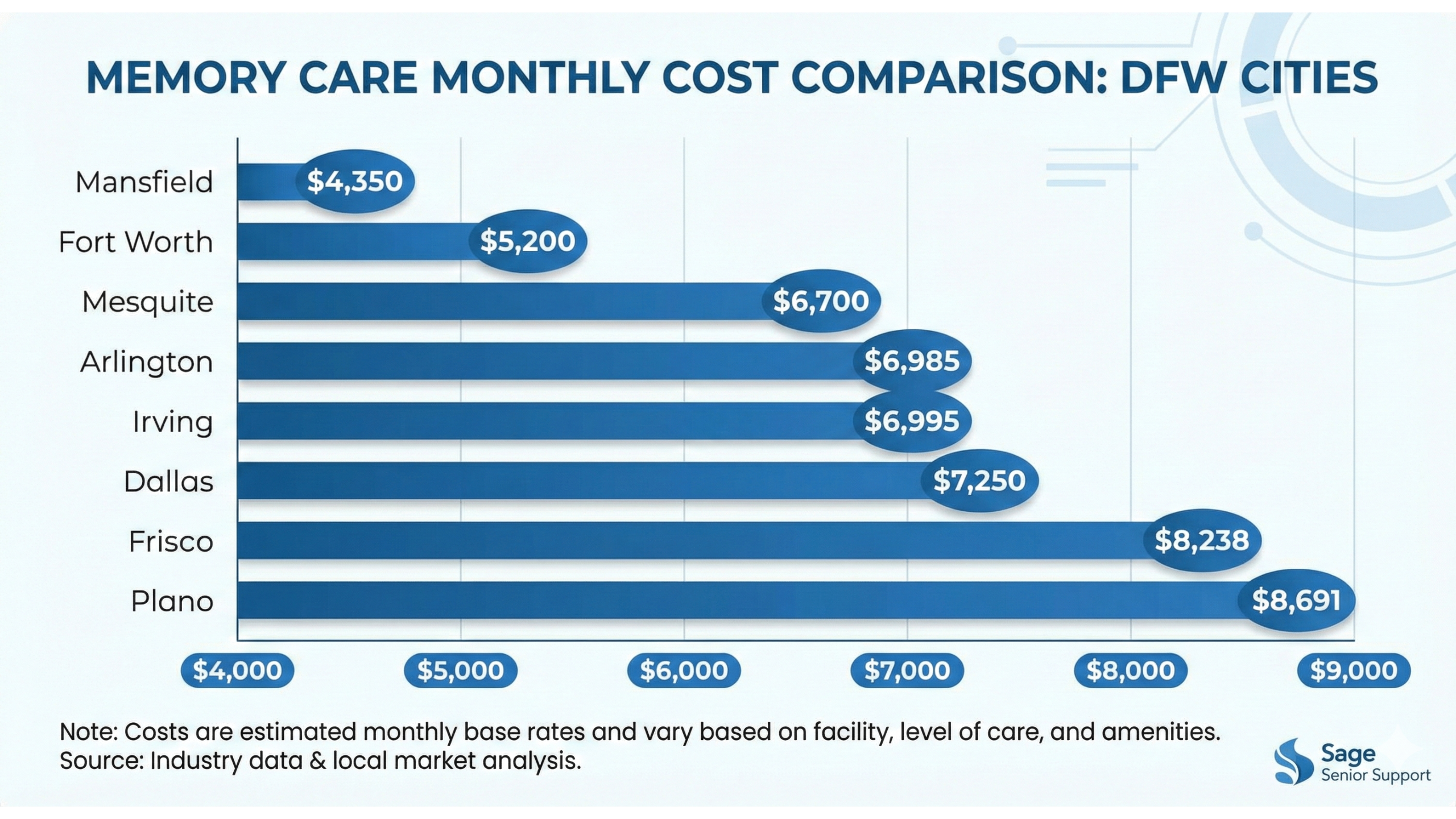
    Memory care facilities in the Dallas-Fort Worth metroplex charge significantly different rates depending on location and level of service. In Dallas proper, families can expect to pay around $5,244 monthly, while suburbs like Southlake average $5,831. More affordable options exist in areas like Carrollton at $5,525 monthly or Mansfield at $4,827.

    These costs typically include room and board, three meals daily, laundry services, and specialized dementia programming. However, many facilities charge additional “level of care” fees for residents requiring help with medication management, incontinence care, or physical transfers. These add-ons can push a base rate of $6,000 to over $8,000 monthly.

    Beyond monthly fees, most DFW memory care facilities require a community fee or move-in fee ranging from $1,000 to $5,000. Sage Senior Support helps families navigate these complex costs by facilitating home sales and connecting them with funding resources throughout the transition process. The reality is that Social Security benefits, averaging $2,071 monthly, cover approximately 40% of typical memory care costs in the region.

    Texas Medicaid Programs That Pay for Memory Care

    Texas operates two primary Medicaid pathways for memory care funding, each with distinct advantages and limitations. Understanding these programs early in the planning process can mean the difference between affordable care and financial catastrophe.

    STAR+PLUS Waiver Covers Services, Not Room and Board

    The STAR+PLUS Home and Community-Based Services waiver allows Medicaid to pay for memory care services in assisted living facilities, but it comes with a crucial limitation. Unlike nursing home Medicaid, which covers both services and room and board, the waiver only pays for the care services portion. Residents must still pay for room and board using their Social Security, pension, or other income.

    This program operates on a slot system with approximately 24,000 available positions statewide. Once these slots fill up, additional applicants join an interest list that can stretch for months or even years. Families should apply immediately upon receiving a dementia diagnosis, as eligibility isn’t determined until a slot becomes available.

    2026 Income Limits: $2,982 Single, $5,964 Married

    Medicaid eligibility requires meeting strict financial criteria that are updated annually. For 2026, single applicants can have monthly gross income up to $2,982 and countable assets limited to $2,000. Married couples where both spouses are applying face income limits of $5,964 monthly and asset limits of $3,000.

    When an individual’s income exceeds these limits, Texas allows the creation of a Qualified Income Trust, also called a Miller Trust. This legal instrument enables applicants to “divert” excess income into the trust, making them eligible for Medicaid while ensuring the funds go toward their care costs.

    Protecting Your Home from Medicaid Recovery

    The family home typically remains an exempt asset during the Medicaid recipient’s lifetime, provided it meets certain equity limits ($730,000 for single applicants in 2026). However, Texas operates a Medicaid Estate Recovery Program that can place claims against the estate after death to recover care costs paid by the state.

    Families can protect the home through legal instruments like Lady Bird Deeds (Enhanced Life Estate Deeds) or Transfer on Death Deeds. These tools transfer property ownership outside of probate, and since Texas currently only targets probate assets for recovery, the home often remains protected for heirs.

    VA Aid & Attendance Benefits for Veterans and Spouses

    Veterans and their surviving spouses have access to a valuable but underutilized benefit that can provide substantial financial assistance for memory care costs.

    Eligibility Requirements and Maximum Benefit Rates

    To qualify, veterans must have served at least 90 days of active duty with at least one day during a recognized wartime period. The veteran doesn’t need combat experience or service-connected disabilities. Medically, applicants must require assistance with activities of daily living, which virtually all memory care residents meet.

    The 2026 maximum monthly benefits are significant: $2,424 for single veterans, $2,874 for married veterans, and $1,558 for surviving spouses. These tax-free payments are added to the veteran’s pension and can substantially offset memory care costs.

    How Memory Care Costs Reduce Your Countable Income

    The VA uses a net worth limit of $163,699 for eligibility through November 2026. Critically, unreimbursed medical expenses—including the full cost of memory care—are deducted from the applicant’s income for calculation purposes. A veteran with $6,000 monthly income but $7,000 in monthly care costs may effectively have zero countable income for benefit purposes.

    The application process typically takes four to six months, but benefits are retroactive to the first day of the month following application receipt. Despite this program’s value, fewer than one-third of eligible veterans currently receive these benefits.

    Selling Your Parent’s Home: Timing Is Everything

    For most DFW families, home equity represents the largest available asset to fund memory care. However, the timing and method of sale carry significant tax and Medicaid implications that require careful planning.

    Capital Gains vs. Stepped-Up Basis at Inheritance

    The decision to sell a home during the parent’s lifetime versus after death can create dramatic tax differences. When parents gift homes to children while alive, the children inherit the original purchase price as their cost basis. If they later sell, they owe capital gains taxes on decades of appreciation.

    Conversely, inherited homes receive a “stepped-up basis” to fair market value at the time of death, potentially eliminating capital gains taxes entirely. In DFW’s high-growth market, where homes purchased for $50,000 in 1980 might sell for $450,000 today, this tax difference can exceed $60,000.

    Cash Sales for Immediate Funding

    Traditional home sales in the DFW market can take 90 days or longer from listing to closing. For families paying $6,500 monthly for memory care, a four-month wait represents $26,000 in out-of-pocket costs. Cash sales to investors can close in 7-10 days, albeit at lower sale prices than traditional market sales.

    The trade-off between speed and price depends on the family’s immediate cash needs and their ability to cover care costs during a traditional sale process.

    Financial Bridge Solutions During Home Sale Process

    Bridge loans offer an alternative solution for families who want to pursue a traditional sale while accessing funds immediately. These short-term loans are specifically designed for seniors moving into care, providing funds that “bridge” the gap until home sales complete or other benefits begin.

    Some bridge loan products can be approved within 24 hours with no upfront costs, making them valuable tools for families facing immediate care needs while waiting for asset liquidation.

    Life Insurance Settlements Provide Immediate Cash

    Life insurance policies often represent overlooked assets that can be converted to immediate cash for memory care funding.

    Viatical Settlements for Terminal or Chronic Illness

    Viatical settlements allow individuals with chronic or terminal illnesses, including advanced Alzheimer’s disease, to sell their life insurance policies for immediate cash. Because of shortened life expectancy, these settlements typically pay 50% to 80% of the policy’s face value—significantly more than cash surrender values.

    Life settlements for healthier individuals over 65 generally provide 3 to 7 times more than cash surrender values, though less than viatical settlements. The key is working with reputable settlement companies that provide competitive bidding processes.

    Tax Advantages Under IRS Guidelines for Qualifying Conditions

    Viatical settlement proceeds are typically tax-free under IRS guidelines when the insured has a chronic illness requiring long-term care. This tax advantage, combined with the higher payout compared to surrender values, makes life settlements particularly valuable for memory care funding.

    Texas has passed specific laws promoting the use of life settlements in Medicaid planning, allowing applicants to sell policies and use proceeds for care without disqualifying them from benefits under certain conditions.

    DFW Resources That Provide Free Guidance

    North Texas offers several specialized resources to help families navigate memory care funding challenges without cost.

    Area Agencies on Aging Benefits Counseling

    The Area Agencies on Aging in Dallas and Tarrant Counties provide free benefits counseling to help families understand transitions from Medicare to Medicaid. These agencies offer care coordination, legal assistance referrals, and specialized veteran benefits counseling.

    The Dallas County AAA and Tarrant County AAA both maintain ombudsman programs and caregiver support services. The Aging and Disability Resource Center of Tarrant County provides information and assistance for long-term care planning, and may offer guidance on related needs such as housing.

    Elder Law Attorneys for Medicaid Planning

    Elder law attorneys in the DFW area specialize in “Medicaid Planning,” using legal tools like irrevocable trusts to move assets out of parents’ names five years before care is needed. They also create Qualified Income Trusts to solve over-income problems and implement Lady Bird Deeds to protect homes from Medicaid Estate Recovery.

    These attorneys understand Texas-specific regulations and can coordinate with families’ existing financial advisors to create funding strategies. Many offer initial consultations to assess family situations and recommend appropriate planning approaches.

    Sage Senior Support Helps DFW Families Navigate Memory Care Funding Through Home Sales

    When families need to liquidate their parent’s home quickly to fund memory care, having an experienced partner makes all the difference. Understanding both the emotional weight of selling a family home and the financial pressures of immediate care needs requires specialized expertise in the senior care transition process.

    The key is finding professionals who understand not just real estate transactions, but the complex interplay between home sales, Medicaid planning, tax implications, and family dynamics. Successful memory care funding often requires coordinating multiple strategies simultaneously—from initiating benefit applications to timing asset sales for optimal tax treatment.

    Families benefit most when working with advisors who can explain how home sale proceeds affect Medicaid eligibility, coordinate with elder law attorneys for asset protection, and provide realistic timelines for both traditional and expedited sale processes. This integrated approach ensures that families maximize their resources while maintaining eligibility for government benefits.

    Visit Sage Senior Support to learn how their team helps Dallas-Fort Worth families sell homes quickly while managing the complex financial aspects of memory care transitions.


    Sage Senior Support

    1452 Hughes Rd
    Suite 200
    Grapevine
    Texas
    76051
    United States